Lesson 8 of 8 · about 26 minutes
A Field Guide to Those Who Just Talk About Liberty
You'll be able to
- Apply the five tests to real cases and name which test each case fails
- Recognize counterfeits of both of Isaiah Berlin's concepts, protection as well as provision
- Read a statute's operative text against its title, in both directions
- Avoid the reverse error of calling every public program or product a counterfeit
- Use verified figures, cited, when making the case
Article 127 of the constitution the Soviet Union adopted in December 1936 reads like something a careful drafter of the Bill of Rights might have written: "Citizens of the U.S.S.R. are guaranteed inviolability of the person. No person may be placed under arrest except by decision of a court or with the sanction of a procurator."1 In the two years that followed, according to figures from the Russian State Archives, 1,372,382 people were arrested for "counter-revolutionary" crimes and 681,692 of them were shot.2
Some people and institutions praise liberty, name their laws or products after it, or promise to protect it, while their actions add to someone's power over someone else. Call them those who just talk about liberty. The phrase describes a gap between speech and conduct. It makes no claim about anyone's private motives, and some of the people below sincerely believed what they said.
Each case runs the same way: the words, the record, and which of the five tests from lesson 07 it fails. Tests 1 and 2 are Isaiah Berlin's. Test 3, "freedom from him, or freedom through him?", is Jeff A. Pierson's.3 Tests 4 (follow the power) and 5 (read the text, not the title) are this course's working rules. The cases come from different countries, different decades, both government and private hands, and from people who would have described their own politics in very different ways. No label is attached to any of them here. The record is enough.
Constitutions and walls
Case 1: The Soviet constitution of 1936
The words. Chapter X of the 1936 constitution promised the right to work, to rest and leisure, to maintenance in old age and sickness, and to free education.4 Article 125 promised "freedom of speech; freedom of the press," and the right to hold mass meetings and street processions. Article 127 promised that no one would be arrested without a court or a procurator.51
The record. Nikolai Yezhov took over the secret police, the NKVD, on 26 September 1936, shortly before the constitution's adoption, and the mass arrests of his tenure ran through 1938.6 The archival figures above count more than 1.3 million arrests for political crimes in 1937 and 1938 and 681,692 executions. Some scholars treat these numbers with caution, because the files were kept by the successor of the very agency that made the arrests.2
Which tests it fails. Test 5 catches it first. The speech and press rights in Article 125 were granted "In conformity with the interests of the working people, and in order to strengthen the socialist system," and were delivered by placing presses and paper at the disposal of approved organizations. Article 126 then named the Communist Party as "the leading core of all organizations of the working people, both public and state."5 That is Test 1's second question answered in black ink: the Party claimed to be the master. Test 4 finishes the case. Every right in Chapter X ran through the state, and the state could take any of them back, along with the citizen.
Jeff A. Pierson puts the point in five words in his essay on the two views of liberty, writing about the provision rights in Chapter X: "The rights were the leash."7 Defenders of social rights will answer that the failure lay in the dictatorship, not in promising education or care in old age, and that many democracies have made similar promises without purges. That answer deserves to be heard, and the reverse-error section below takes it seriously. The 1936 text still teaches the main lesson of Test 5: a guarantee is only as good as the hands that hold it.
Case 2: The wall built for "protection"
The words. East Germany's rulers did not call their barrier a prison wall. The ruling party, the SED, called it the antifaschistischer Schutzwall, usually translated as the Anti-Fascist Protection Rampart: a wall, they said, to protect the people from the West.8
The record. From August 13, 1961 to November 9, 1989, a wall 155 kilometers long surrounded West Berlin. The Berlin Wall Foundation states its purpose without euphemism: the Wall "was designed to prevent people from escaping to the West from East Berlin," and the soldiers who guarded it were ordered to use their weapons if they could not stop an escape any other way.9 Researchers at the Centre for Contemporary History in Potsdam and the Berlin Wall Memorial have documented at least 140 people killed at the Wall or dying in direct connection with the border regime.10
The regime's best case was survival. By August 1961, the Foundation notes, East Germany had lost a sixth of its population, at least four million people, and the open sector border in Berlin was the last easy way out.9 That was a real crisis for the state. The Wall was its answer, and the answer pointed the guns at the people leaving.
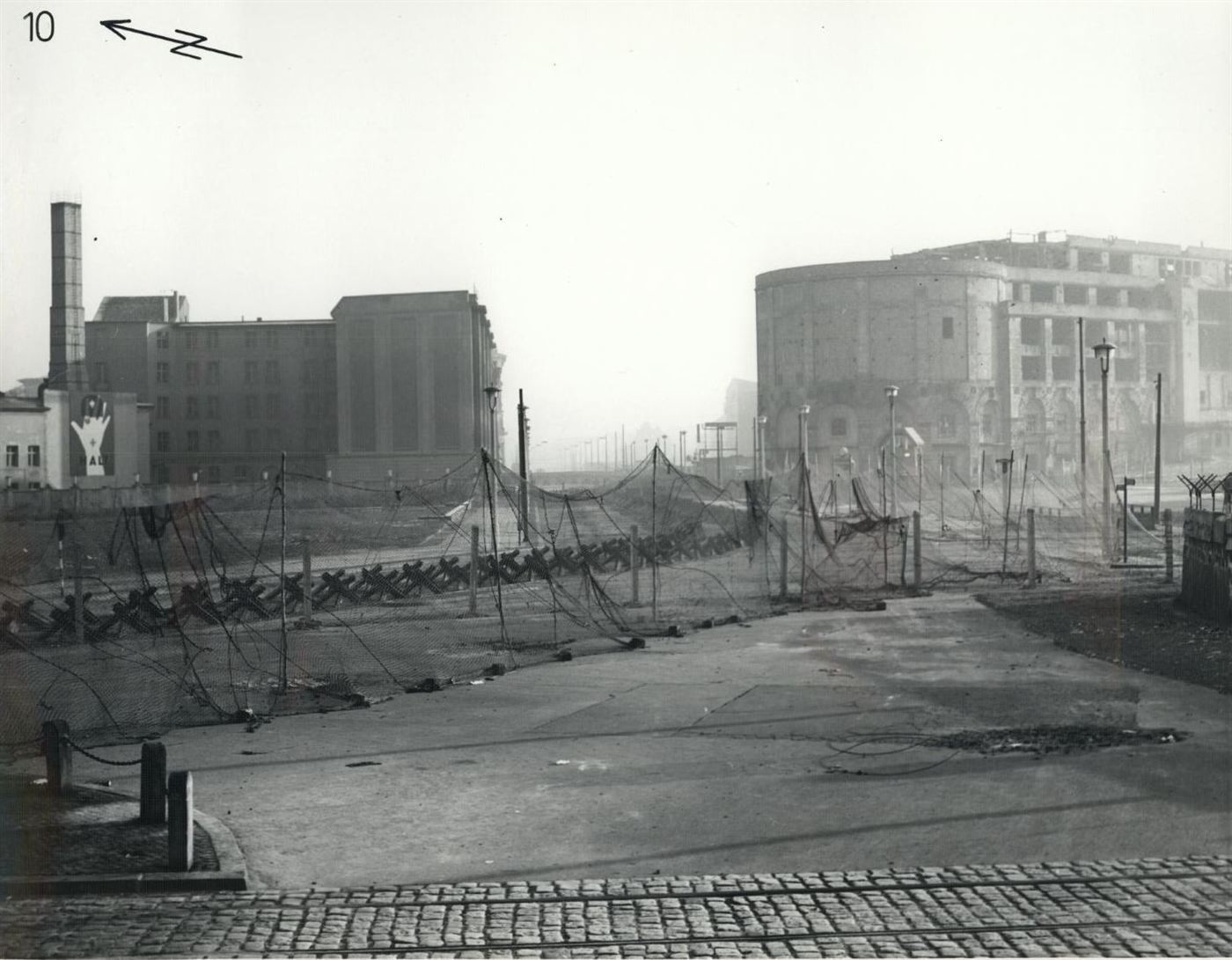
Which tests it fails. This is a counterfeit of the first concept, liberty as protection, and it shows that negative liberty can be forged too. Test 1 settles it with Berlin's first question: who is interfering with whom? The guns faced the people the wall claimed to protect. Test 4 adds the rest: after the "protection" was in place, the state held the only key to the door.
Wartime liberty
Case 3: "The tested foundations of political liberty," 1917 to 1919
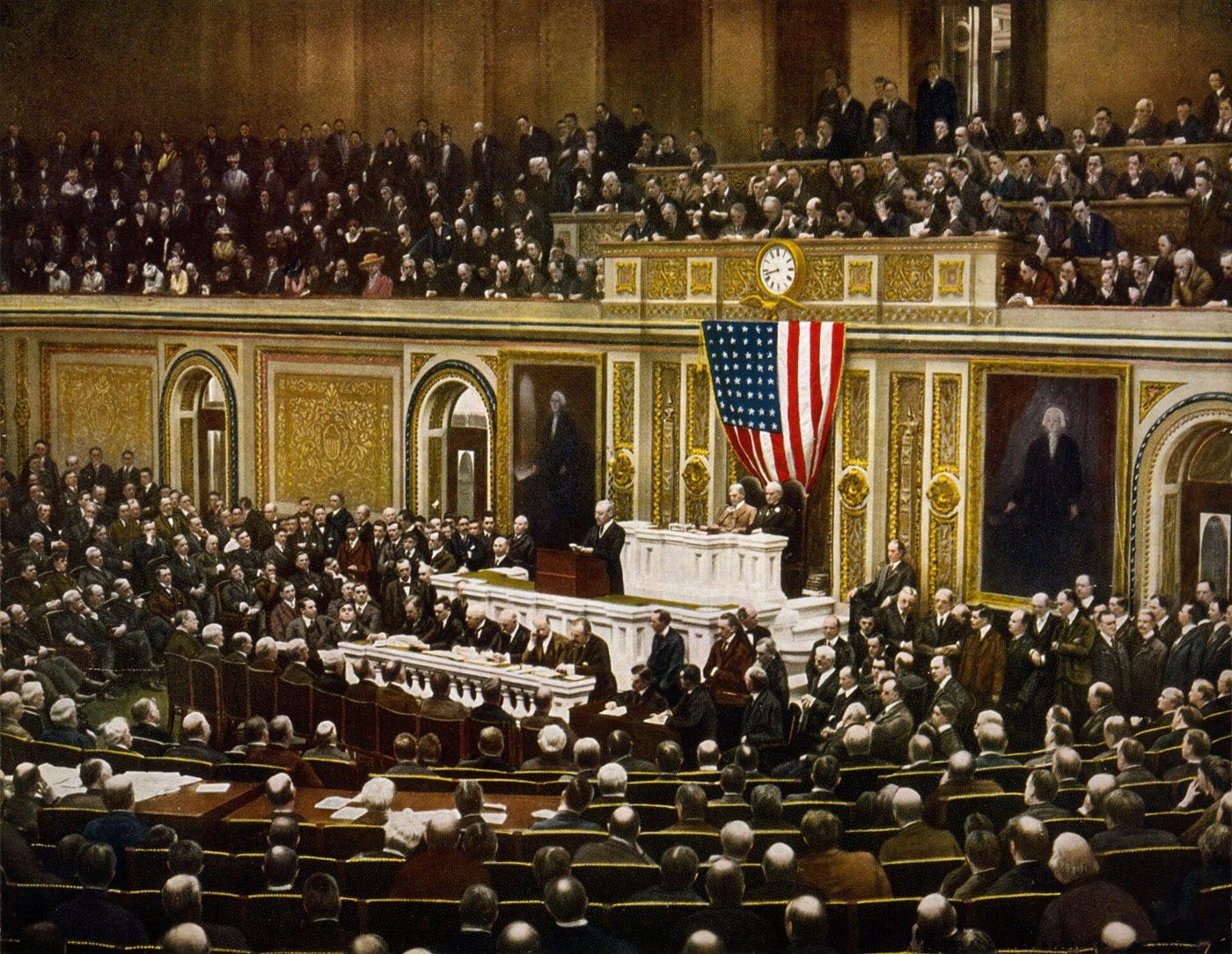
The words. On April 2, 1917, President Woodrow Wilson asked Congress to declare war on Germany, which he called a "natural foe to liberty." His most famous line followed: "The world must be made safe for democracy. Its peace must be planted upon the tested foundations of political liberty."11
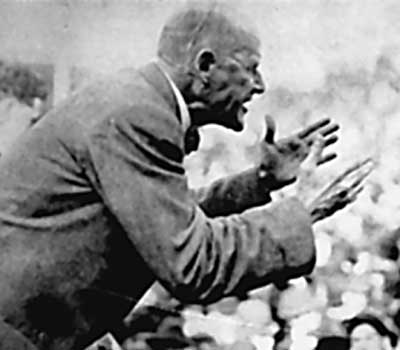
The record. On June 16, 1918, the labor leader Eugene V. Debs gave a speech against the war in Canton, Ohio. He was charged under the Espionage Act as amended on May 16, 1918, convicted, and "sentenced to ten years' imprisonment on each of the two counts, the punishment to run concurrently on both."12 The Supreme Court upheld the conviction unanimously on March 10, 1919, in an opinion by Justice Oliver Wendell Holmes.13 Holmes granted that "The main theme of the speech was socialism, its growth, and a prophecy of its ultimate success. With that we have nothing to do," and then held that the general theme might not protect the speech if part of its intent was to obstruct recruiting.12 Debs stayed in prison until President Warren G. Harding commuted his sentence in December 1921.14
Which tests it fails. Test 3 fits it best. Liberty abroad was to be won through the government's war power, and the same power reached home to imprison a man for a speech. Test 2 helps too. The good Wilson pursued, victory and a safer world, may have been worth pursuing. Calling the speech prosecutions part of liberty's defense hid what they cost. The government's best case was the one the Court accepted without dissent: a nation raising an army in wartime may punish speech meant to obstruct recruiting.
Case 4: A law named PATRIOT, and a law named FREEDOM
The words. Signing the USA PATRIOT Act on October 26, 2001, President George W. Bush told the country it had passed with overwhelming agreement "because it upholds and respects the civil liberties guaranteed by our Constitution."15 The law's full title, Uniting and Strengthening America by Providing Appropriate Tools Required to Intercept and Obstruct Terrorism, was built so its initials would spell PATRIOT.16
The record. Section 215 let the FBI apply for an order requiring "the production of any tangible things (including books, records, papers, documents, and other items)" for certain investigations.16 Under that section the National Security Agency collected Americans' telephone records in bulk for years. In January 2014 the Privacy and Civil Liberties Oversight Board reported that "we have not identified a single instance involving a threat to the United States in which the telephone records program made a concrete difference in the outcome of a counterterrorism investigation." Two of the five board members wrote separate statements disagreeing with much of the majority's analysis.17 In May 2015 the Second Circuit held that the program "exceeds the scope of what Congress has authorized."18
Then the twist. In June 2015 Congress passed the USA FREEDOM Act, another title built for its initials. Here the text matched the name better than the critics of clever acronyms might expect. Section 103 says that no order "may authorize the collection of tangible things without the use of a specific selection term."19 Bulk collection under Section 215 was banned.
Which tests it fails. Test 5 cuts both ways here, which is why it matters. The PATRIOT title and the signing speech promised respect for liberty; the operative text handed the government a power broad enough that a federal appeals panel later held the program built on it went past what Congress had authorized. The FREEDOM title sounds like the same marketing trick, yet its text actually restrained the government. Titles mislead in both directions. Only the text tells you which way the power runs.
Laws named for individual liberty
Case 5: The Individual Freedom Act, Florida, 2022
The words. In 2022 the Florida Legislature passed a law it titled the Individual Freedom Act. Its promoters also called it the Stop W.O.K.E. Act.20
The record. Among other things, the act made it an unlawful employment practice for a private employer to require workers to attend any training or "required activity" that "espouses, promotes, advances, inculcates, or compels" belief in any of eight listed concepts about race, color, sex or national origin.21 A federal district court blocked that provision in August 2022. On March 4, 2024, the Eleventh Circuit affirmed. Florida, the panel noted, conceded that the law drew its lines by viewpoint, and argued it regulated conduct rather than speech.20 The court rejected that argument: "Banning speech on a wide variety of political topics is bad; banning speech on a wide variety of political viewpoints is worse."22 Because the provision undermined the principle of letting the people, rather than the government, settle such disputes, "it must be enjoined."23
Which tests it fails. Fairness first. A worker who is forced to sit through a lecture telling him what to believe about his own race has a real liberty interest, and the statute's own wording speaks of training that "compels" belief. But Test 1 asks who is interfering with whom, and the operative text answered: the state, with what private employers and their invited speakers could say, depending on which side of eight questions they took. Test 5 completes it. The title said individual liberty. The text, as the court read it, said the government would choose which viewpoints a private meeting could endorse.
Private counterfeits
Case 6: "Torches of Freedom," 1929
The words. On Easter Sunday, March 31, 1929, young women walked in New York's Fifth Avenue parade smoking cigarettes in public, which was still widely frowned on. The next day the New York Times reported the smoking under a subhead that presented it as a gesture of liberty.24
The record. The gesture was staged. George Washington Hill, president of the American Tobacco Company, wanted to break the taboo against women smoking in public and enlisted the publicist Edward Bernays. Bernays recruited young women to light cigarettes as they marched down Fifth Avenue on Easter Sunday, and he used his press connections to make sure the parade was widely photographed. A psychoanalyst he consulted supplied the phrase: the cigarettes would be "torches of freedom."25 The phrase "torches of freedom" stuck, and public health researchers still use it as shorthand for marketing cigarettes to women as liberation.26 In 1988 the Surgeon General issued a full report on the product's central property, titled The Health Consequences of Smoking: Nicotine Addiction.27
Which tests it fails. The taboo was real, and a woman's right to smoke in public on the same terms as a man was a genuine question of social liberty. But Test 2 asks what was on offer, and the good on offer was a product, sold under liberty's name so the buyer would not weigh its price. Test 4: after the purchase, who holds power over whom? An addictive product gives its maker a hold on the customer that the customer cannot easily take back. The parade sold dependence and called it liberation.
Case 7: Safety, peace of mind, and the camera
The words. Ring, the home security camera company owned by Amazon, describes its mission this way: "Our mission is simple: make neighborhoods safer." It says it strives "to make safety and peace of mind accessible to everyone."28 That is the language of protection, the job negative liberty assigns to the guardian who keeps others out.
The record. In May 2023 Ring agreed to pay $5.8 million to settle claims by the Federal Trade Commission. According to the FTC's complaint, as TechCrunch reported it, Ring had given every employee, as well as hundreds of contractors based in Ukraine, "full access to every customer video," "regardless of whether the employee or contractor actually needed that access to perform his or her job function." The FTC said that on at least two occasions employees improperly viewed private videos of women, in one case for months. Ring also agreed to keep a data security program, with regular assessments, for 20 years. Ring told TechCrunch it disagreed with the FTC's allegations and denied violating the law.29
Which tests it fails. The camera's good is real: owners can see who is at their own door. Test 4 asks the next question. Follow the power after the promise. The customer bought a camera to watch his own door. The arrangement left the company, and anyone it let in, able to watch the customer.
The reverse error
Run enough cases and a new temptation shows up: calling everything a counterfeit. Every public program, every regulation, every company that sells safety. That is the same mistake in reverse, and it ruins the tests as surely as ignoring them does.
Start with Berlin. He never treated liberty as the only good, and he said so plainly: there are "other goods besides freedom, such as, for example, security or peace or culture."30 He later regretted saying too little about the abuses carried out in negative liberty's name, such as exploitation under laissez-faire capitalism.31 A reader who uses Berlin to condemn all provision has not read him.
Jeff A. Pierson draws the same line in his own essay, even as he argues hard against liberty as provision: "None of this means hardship is fake or that neighbors shouldn't be helped."32 His case is about who provides, through what covenant, and with what power left behind. It is an argument, and it has to be made with evidence each time.
Some public programs pass the tests, at least in part. The Homestead Act of 1862 gave settlers 160 acres for five years of work, and then title "free and clear." The government kept no switch.33 The same National Archives page records that the act "proved to be no panacea for poverty" and invited fraud.33 Passing the tests does not make a program wise. It only means the program is honestly labeled.
Run the tests on your own side first, as Orwell insisted when he wrote that political language deceives "with variations" in every party.34 Name the good on offer even when you think it is worth the price. And say what you found in plain words: "this trades some liberty for security," not "this is tyranny" or "this is liberty." Lincoln's sheep and wolf disagreed about a definition. Most real arguments are closer than that, and they deserve the courtesy of exact words.35
Pictures, Numbers and Infographics
The record in numbers
| Case | The words | The number | Source |
|---|---|---|---|
| USSR, 1937-38 | "inviolability of the person" (art. 127) | 1,372,382 arrested for political crimes; 681,692 executed | Russian State Archives figures, via Letkemann2 |
| Berlin Wall, 1961-89 | "Anti-Fascist Protection Rampart" | At least 140 killed | Chronik der Mauer10 |
| Debs, 1918 | "the tested foundations of political liberty" | 10 years for one speech | Debs v. United States12 |
| Section 215 phone records | "upholds and respects the civil liberties" | 0 instances found of a concrete difference in a counterterrorism case | PCLOB, 201417 |
| Ring, 2023 | "make neighborhoods safer" | $5.8 million settlement; 20 years of security assessments | FTC complaint, via TechCrunch29 |
The two liberties and the five tests
The original works
- Sedition Act of 1798, Avalon Project: The statute text.
- Virginia Resolution of 1798, Avalon Project: Protest against the Alien and Sedition Acts.
- Federalist No. 48, Avalon Project: Madison on parchment barriers.
- Washington, Farewell Address, Avalon Project: Full text of the 1796 address.
- The Founders' Constitution, University of Chicago Press: Founders' comments organized by clause of the Constitution.
Learn more
- Constitution of the USSR (1936), chapter X: read articles 118 to 133 with Test 5 in hand.
- Chronik der Mauer: Victims at the Berlin Wall: a biography for each of the 140 dead.
- Berlin Wall Foundation: The Berlin Wall: how the border system was built and guarded.
- Debs v. United States (1919): Holmes's short opinion, with long passages from the Canton speech.
- PCLOB report on the Section 215 program (2014): the majority report and both separate statements.
- USA FREEDOM Act of 2015: compare its section 103 with section 215 of the 2001 act.
- Honeyfund.com v. Governor (11th Cir. 2024): a 22-page opinion that states Florida's arguments before answering them.
- Amos and Haglund, "From social taboo to 'torch of freedom'" (2000): how cigarette marketing to women was built on the language of liberation.
Notes
- Constitution of the USSR (1936), chapter X, article 127. English text hosted by Bucknell University. Read it online. ↩
- Letkemann, "Mennonite Victims of 'The Great Terror,'" 35, reporting figures drawn by Robert Thurston from the Russian State Archives: 1,372,382 persons arrested for counter-revolutionary crimes in 1937-38, of whom 681,692 were executed. He sets them beside the archival study of J. Arch Getty, Gábor T. Rittersporn and Viktor N. Zemskov (American Historical Review, 1993), who found it "difficult to arrive at an estimate as high as 2.5 million arrests on all charges in 1937-1938." Letkemann also notes doubts some scholars hold about figures kept by the successor of the agency that made the arrests. Read it online. ↩
- Pierson, essay on the two views of liberty (2025), section "What to do with this." Author's manuscript. ↩
- Constitution of the USSR (1936), chapter X, articles 118 (work), 119 (rest and leisure), 120 (maintenance in old age and sickness) and 121 (education). Bucknell University text. Read it online. ↩
- Constitution of the USSR (1936), articles 125 and 126. Bucknell University text. Read it online. ↩
- Peter Letkemann, "Mennonite Victims of 'The Great Terror,' 1936-1938," Journal of Mennonite Studies 16 (1998): 33, on Nikolai Yezhov's appointment as head of the NKVD on 26 September 1936 and the period of mass arrests that followed. Read it online. ↩
- Pierson, essay on the two views of liberty (2025), section "The record," on the 1936 Soviet constitution. Author's manuscript. ↩
- Bundeszentrale fur politische Bildung (German Federal Agency for Civic Education), "Das Quiz zum Mauerbau": "Die SED sprach von einem 'antifaschistischen Schutzwall'" (the SED spoke of an anti-fascist protective wall). The English rendering "Anti-Fascist Protection Rampart" follows Wikipedia, "Berlin Wall," section on names. Read it online. ↩
- Stiftung Berliner Mauer (Berlin Wall Foundation), "The Berlin Wall": the 155-kilometer Wall surrounded West Berlin from August 13, 1961 to November 9, 1989, "was designed to prevent people from escaping to the West," and was guarded by soldiers ordered to use their weapons; by August 1961 the GDR had lost a sixth of its population, at least four million people, and the open sector borders in Berlin were the last opening. Read it online. ↩
- Chronik der Mauer, "Victims" (Centre for Contemporary History Potsdam and Berlin Wall Foundation): "Between 1961 and 1989, at least 140 people were killed at the Berlin Wall or died under circumstances directly connected with the GDR border regime." See also Hans-Hermann Hertle and Maria Nooke, The Victims at the Berlin Wall, 1961-1989. Read it online. ↩
- Woodrow Wilson, "Address to a Joint Session of Congress Requesting a Declaration of War Against Germany," April 2, 1917, American Presidency Project. Read it online. ↩
- Debs v. United States, 249 U.S. 211 (1919), opinion of Justice Holmes: the counts charged a speech at Canton, Ohio, on or about June 16, 1918, under the Espionage Act as amended May 16, 1918 (40 Stat. 553); Debs "was sentenced to ten years' imprisonment on each of the two counts, the punishment to run concurrently on both." Library of Congress, U.S. Reports. Read it online. ↩
- "Debs v. United States," Oyez: decided March 10, 1919; unanimous opinion by Justice Oliver Wendell Holmes upholding the conviction. Read it online. ↩
- The Houston Post, 24 December 1921, page 1, reporting President Harding's Christmas clemency and that Debs would be released from the Atlanta penitentiary on Christmas Day. Portal to Texas History, University of North Texas. Read it online. ↩
- George W. Bush, "Remarks on Signing the USA PATRIOT ACT of 2001," October 26, 2001, American Presidency Project. Read it online. ↩
- Uniting and Strengthening America by Providing Appropriate Tools Required to Intercept and Obstruct Terrorism (USA PATRIOT ACT) Act of 2001, Pub. L. 107-56, 115 Stat. 272 (Oct. 26, 2001), section 215, at 115 Stat. 287. GovInfo. Read it online. ↩
- Privacy and Civil Liberties Oversight Board, Report on the Telephone Records Program Conducted under Section 215 of the USA PATRIOT Act and on the Operations of the Foreign Intelligence Surveillance Court (January 23, 2014), Part 2, Executive Summary. Board members Rachel Brand and Elisebeth Collins Cook filed separate statements disagreeing with much of the majority's analysis (Annexes A and B). Read it online. ↩
- ACLU v. Clapper, No. 14-42 (2d Cir. May 7, 2015), opinion of Judge Gerard E. Lynch, reported at 785 F.3d 787. Justia. Read it online. ↩
- Uniting and Strengthening America by Fulfilling Rights and Ensuring Effective Discipline Over Monitoring Act of 2015 (USA FREEDOM Act), Pub. L. 114-23, 129 Stat. 268 (June 2, 2015), section 103, "Prohibition on bulk collection of tangible things," at 129 Stat. 272. GovInfo. Read it online. ↩
- Honeyfund.com, Inc. v. Governor, State of Florida, No. 22-13135 (11th Cir. Mar. 4, 2024), opinion of Judge Grant, slip op. 2-3 and footnote 1; reported at 94 F.4th 1272. CourtListener. Read it online. ↩
- Honeyfund.com, Inc. v. DeSantis, No. 4:22cv227 (N.D. Fla. Aug. 18, 2022), order granting preliminary injunction in part, pages 1-2, describing the Individual Freedom Act's employment provision. Copy hosted by Cooley LLP. Read it online. ↩
- Honeyfund.com v. Governor, 11th Cir. Mar. 4, 2024, slip op. 17. Read it online. ↩
- Honeyfund.com v. Governor, 11th Cir. Mar. 4, 2024, slip op. 22. Read it online. ↩
- "Easter Sun Finds the Past in Shadow at Modern Parade," New York Times, April 1, 1929, headline as indexed in the Times archive. The archive page could not be opened for checking, so the subhead is paraphrased here rather than quoted. Read it online. ↩
- Joseph Malherek, "Creating Circumstances: Edward Bernays, Psychoanalysis, and the Making of American Consumer Culture," Perspectives on History (American Historical Association), March 2017, on Hill, Bernays, the Easter Sunday march and the psychoanalyst's phrase "torches of freedom"; see also the account of Allan Brandt's research in Harvard Magazine, January-February 1996, which dates the march to 1929. Read it online. ↩
- Amanda Amos and Margaretha Haglund, "From social taboo to 'torch of freedom': the marketing of cigarettes to women," Tobacco Control 9, no. 1 (March 2000): 3-8. Read it online. ↩
- U.S. Surgeon General, The Health Consequences of Smoking: Nicotine Addiction (1988). National Library of Medicine, Profiles in Science. Read it online. ↩
- Ring, "About Ring" page, accessed October 2026. Read it online. ↩
- Zack Whittaker, "Amazon's Ring to pay $5.8M after staff and contractors caught snooping on customer videos, FTC says," TechCrunch, May 31, 2023, quoting the Federal Trade Commission's complaint. Read it online. ↩
- Isaiah Berlin, answer to Bamber Gascoigne, recorded 10 January 1962 for the ATV programme "Freedom of Speech," broadcast 11 February 1962; transcript "What is Freedom?" on the Two Concepts of Liberty page, Isaiah Berlin Virtual Library. Read it online. ↩
- Joshua Cherniss and Henry Hardy, "Isaiah Berlin," Stanford Encyclopedia of Philosophy (substantive revision 12 February 2022), section on the two concepts of liberty. Read it online. ↩
- Jeff A. Pierson, essay on the two views of liberty (2025), subtitled "How the founders built liberty as a system, and how modern operatives sell its replacement," section "What to do with this." Author's manuscript. ↩
- "Homestead Act (1862)," Milestone Documents, National Archives, including its note that the act "proved to be no panacea for poverty" and invited fraud. Read it online. ↩
- George Orwell, "Politics and the English Language," Horizon, April 1946, closing paragraph. The Orwell Foundation. Read it online. ↩
- Abraham Lincoln, "Address at Sanitary Fair in Baltimore: A Lecture on Liberty," April 18, 1864, American Presidency Project. Read it online. ↩
Check yourself
1. Article 127 of the 1936 Soviet constitution guaranteed "inviolability of the person." What do archival figures show for 1937-38?
Figures from the Russian State Archives, reported by Letkemann (1998), put political arrests above 1.3 million and executions at 681,692.
2. The name East Germany's ruling party, the SED, gave the Berlin Wall presented it as what?
The SED called it an anti-fascist protective wall, a claim of protection, while the Wall was designed to keep East Berliners from escaping. It fails Test 1: the interference ran against the people it claimed to protect.
3. Why does the USA FREEDOM Act of 2015 matter for Test 5?
Section 103 bars any order collecting tangible things without a specific selection term. Only the text tells you which way the power runs.
4. What did the Eleventh Circuit hold about the employment provision of Florida's Individual Freedom Act in March 2024?
Judge Grant's opinion rejected Florida's conduct argument: banning speech on many political viewpoints is worse than banning topics.
5. The 1929 "Torches of Freedom" stunt fails which tests most clearly?
An addictive product was relabeled as women's liberation. After the sale, the power runs to the seller.
6. Which statement best describes the reverse error?
Berlin himself said security and peace are real goods, and Pierson writes that hardship is real. The tests reveal what is offered; they do not convict everything.
Terms in this lesson
- Those who just talk about liberty
- People or institutions whose words praise liberty while their laws, policies or products add to someone's power over others. The phrase describes a gap between words and record, not a motive.
- Operative section
- The part of a law that actually commands, permits or punishes, such as Section 215 of the 2001 PATRIOT Act or Section 103 of the 2015 USA FREEDOM Act.
- Bulk collection
- Gathering records about large numbers of people without a specific selection term tied to a target; banned for Section 215 orders by the USA FREEDOM Act.
- Viewpoint discrimination
- A rule that allows speech on a topic from one side and forbids it from another; the ground on which the Eleventh Circuit upheld the injunction against Florida's employment provision.
- Reverse error
- Calling every public program or protective product a counterfeit, so that the tests stop telling honest cases from dishonest ones.
- Anti-Fascist Protection Rampart
- The ruling SED party's name for the Berlin Wall (antifaschistischer Schutzwall), a protection claim for a barrier built to keep its own people in.
Sources
- Constitution of the USSR (1936), chapter X (Bucknell University) checked 2026-10
- Letkemann, Mennonite Victims of 'The Great Terror,' 1936-1938, Journal of Mennonite Studies 16 (1998) checked 2026-10
- Chronik der Mauer: Victims at the Berlin Wall checked 2026-10
- Berlin Wall Foundation: The Berlin Wall checked 2026-10
- Bundeszentrale fur politische Bildung (bpb): Das Quiz zum Mauerbau checked 2026-10
- Wilson, Address Requesting a Declaration of War, April 2, 1917 (American Presidency Project) checked 2026-10
- Debs v. United States, 249 U.S. 211 (1919) (Library of Congress) checked 2026-10
- USA PATRIOT Act, Pub. L. 107-56 (GovInfo) checked 2026-10
- PCLOB, Report on the Telephone Records Program (2014) checked 2026-10
- USA FREEDOM Act, Pub. L. 114-23 (GovInfo) checked 2026-10
- Honeyfund.com v. Governor, 11th Cir. (March 4, 2024) checked 2026-10
- Joseph Malherek, Creating Circumstances: Edward Bernays, Psychoanalysis, and the Making of American Consumer Culture, Perspectives on History (AHA), March 2017 checked 2026-10
- Amos and Haglund, From social taboo to 'torch of freedom' (Tobacco Control, 2000) checked 2026-10
- TechCrunch: Amazon's Ring to pay $5.8M (May 31, 2023) checked 2026-10
- National Archives: Homestead Act (1862) checked 2026-10
- Stanford Encyclopedia of Philosophy: Isaiah Berlin checked 2026-10