Lesson 4 of 8 · about 20 minutes
Berlin's Warning and the Plurality of Goods
You'll be able to
- Explain why Berlin thought positive liberty was easier to corrupt, and what he admitted about the abuses of negative liberty
- Describe the retreat to the inner citadel and why Berlin called it a form of sour grapes
- State Berlin's value pluralism in plain words and the main objections to it
- Use Berlin's rule to test whether a good on offer is liberty or another good under liberty's name
A page from the end of the lecture comes a carpenter's proverb. Isaiah Berlin, forty-nine years old and Chichele Professor of Social and Political Theory since 1957, was nearing the close of his inaugural lecture at Oxford on 31 October 1958 when he borrowed a line from Immanuel Kant: "Out of the crooked timber of humanity no straight thing was ever made."12 He had spent the hour taking the word liberty apart into two concepts, negative and positive, a distinction this course credits to him. Kant's sentence was his reason for refusing to bolt them back together into one shining machine.
The two concepts came with a warning, and the warning rested on a larger idea Berlin called pluralism. Of everything in the lecture, that idea does the most to help an ordinary reader catch a counterfeit.
Why Berlin feared the second concept more
Berlin did not think positive liberty was a mistake. He thought it was a real and noble ideal, the wish to be one's own master, and he said so plainly near the end of the lecture: he did not condemn the ideal of self-perfection in itself, and he did not think its defenders were all confused or dishonest.3 His fear was about what the idea could be turned into. According to the Stanford Encyclopedia's entry on Berlin, he focused on positive liberty because he judged it the more ambiguous of the two ideas and the one more open to distortion, and he traced that distortion through Rousseau's general will, Kant's followers, Fichte and Hegel, down to the regimes of his own century.4
The mechanism runs like this. Once liberty means mastery by my true or rational self, someone can claim to know that self better than I do. A party, a church, a nation or a reformer then says that when it overrides my wishes, it is only obeying my real will. Coercion gets renamed as liberation. Berlin quoted Kant against this move: "Nobody may compel me to be happy in his own way," and paternalism is "the greatest despotism imaginable."5 To treat people as raw material for a benevolent plan, Berlin wrote, is to treat them "as objects without wills of their own, and therefore to degrade them."6
Negative liberty can be abused too, and Berlin knew it. The same entry records that he later regretted not saying more about the evils negative liberty had been used to justify, such as exploitation under laissez-faire capitalism.7 In the lecture itself he granted that the classical English thinkers who held the negative view were ready to curtail liberty for the sake of justice, happiness, security or equality.8 So his preference was a judgment about risk. A thin idea of liberty can leave the weak exposed. A swollen idea of liberty can be used to march them off in its name. Berlin had seen the revolutions of 1917 in Petrograd as a boy and lived to see what was done afterward across Europe in liberty's name. He weighed the second danger as the graver one.4
The retreat to the inner citadel
The third part of the lecture opens with a figure most readers recognize from life, if not from philosophy. A man wants things. Nature, accident or other men keep him from getting them. So he decides to stop wanting them. If the tyrant threatens his property, his liberty or the people he loves, and he has trained himself not to care about any of these, the tyrant has nothing left to grab.
"It is as if I had performed a strategic retreat into an inner citadel."
Isaiah Berlin, "Two Concepts of Liberty," 1958. 9
Berlin traced the line from the Stoics through Kant, for whom liberty meant obeying a law I give myself, and he respected its dignity. It has sustained prisoners and martyrs. But he refused to call it an enlargement of liberty. Teaching yourself not to desire what you cannot have, he wrote, is "a sublime, but, it seems to me, unmistakable, form of the doctrine of sour grapes."10 His picture of the danger is physical. Lock yourself indoors against an enemy and you may be safer than if he had captured you, but you are not as free as if you had beaten him. "If I go too far, contract myself into too small a space, I shall suffocate and die."10
Berlin noticed something else about the citadel. The doctrine tends to appear when the outside world has turned cruel. He pointed to Rome after the end of the Republic and to the German states after the Thirty Years War, where public life forced decent people into what he called "a kind of inner emigration."10 He also noted that this withdrawal is a form of the search for security, though it "has also been called the search for personal or national freedom or independence."11 Safety relabeled as liberty is the first small counterfeit the lecture catches.
Why the citadel matters to a ruler
A government that cannot give people what they want has a cheap substitute: teach them to want less, and call the result liberty. Followed all the way, the citadel's logic would count a perfectly contented slave as free. Berlin rejected that conclusion, calling a tyrant's success at training his subjects to want only what he allows "the very antithesis of political freedom."10 The Stanford Encyclopedia's entry on positive and negative liberty notes that theorists who define liberty as getting what you want face the same trap, since one could then become freer simply by desiring less.12
Status is a real need, and it is not liberty
The most overlooked pages of the lecture deal with what Berlin called the search for status. People want to be recognized. They want their class, their nation, their faith or their race to be treated as somebody. Berlin thought this hunger explained a puzzle of his time: why people in newly independent states could be rudely governed by their own leaders and still say they enjoyed more liberty than under a gentle foreign administrator.13
He took the hunger seriously. But he would not let it borrow liberty's name. He called it "something akin to, but not itself, freedom," closer to solidarity, fraternity and mutual understanding.13 And he named the danger exactly: the confusion of liberty with the craving for status and understanding is what lets people who submit to oligarchs or dictators claim that this in some sense liberates them.13
Berlin even asked himself whether recognition might be liberty "in some third sense," and answered no. Quentin Skinner, who disagreed with him on other grounds, reported that answer in his 2001 Isaiah Berlin Lecture: Berlin held that to call dependence a lack of liberty would confound liberty with other ideas.14
Value pluralism: the goods are many
Underneath everything Berlin said about liberty sits a larger claim about values. His name for the view he opposed was monism. The Stanford Encyclopedia summarizes it in three assumptions: every genuine question has one true answer, there is a dependable path to finding it, and all the true answers fit together.15 If monism were true, a wise enough planner could design a society where liberty, equality, justice, order and happiness all reach their fullest at once. Anyone who resisted the plan would simply be wrong, and coercing him would harm no real value.
Berlin thought monism was false. If the ends of men are many, he wrote, and not all of them are in principle compatible, then conflict, and tragedy, can never be wholly removed from human life.16
"The necessity of choosing between absolute claims is then an inescapable characteristic of the human condition."
Isaiah Berlin, "Two Concepts of Liberty," 1958. 16
So a people's liberty to live as they choose has to be weighed against other claims. Berlin listed equality, justice, happiness, security and public order as the most obvious.17 The weighing cannot be done by arithmetic. To assume all values can be graded on one scale, he wrote, is "to represent moral decision as an operation which a slide-rule could, in principle, perform."18 The word for values that share no common measure is incommensurable. Liberty and security are like inches and pounds. You can trade one for the other, but no conversion table tells you the right price.
Everything is what it is
From pluralism Berlin drew a rule about language that is the center of this course. If goods differ, they should be called by their own names. When he revised the lecture for Four Essays on Liberty he put it in one sentence:
"Everything is what it is: liberty is liberty, not equality or fairness or justice or culture, or human happiness or a quiet conscience."
Isaiah Berlin, "Two Concepts of Liberty," revised text, 1969. 19
The sentence does not say those other goods are unimportant. Berlin thought a society might rightly give up some liberty to reduce shameful inequality. His point was that the trade should be described as a trade. In a 1962 television interview he said the same thing more bluntly. There are good reasons to limit liberty, among them other goods such as security or peace, and the need to stop one man taking so much that others lose their liberty. "Still, curtailing freedom isn't the same as freedom."20 In that interview he also observed that "some of the world's worst tyrannies have been undertaken in the name of freedom."20
Kant's crooked timber
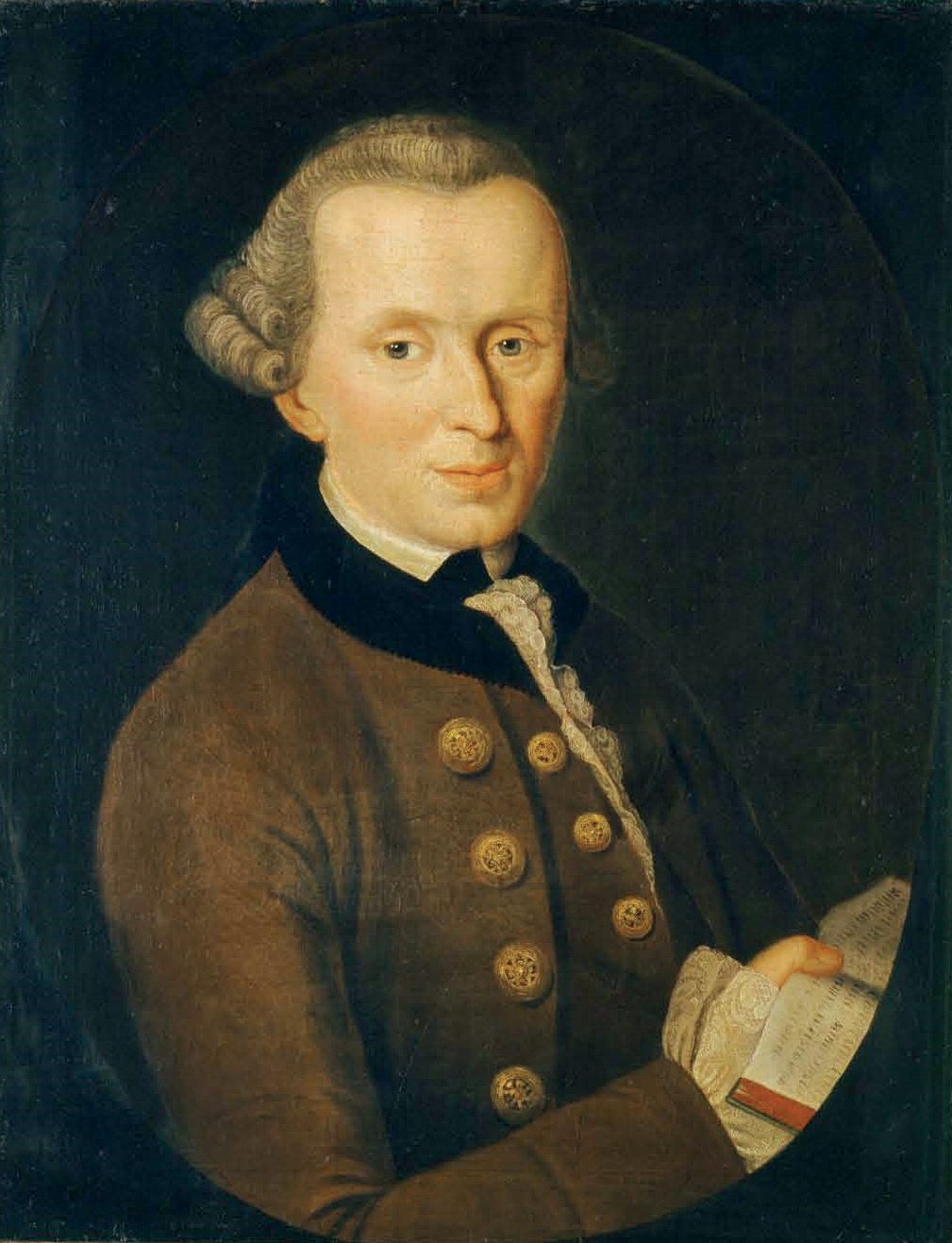
The line Berlin borrowed comes from Kant's 1784 essay "Idea for a Universal History with a Cosmopolitan Purpose," in the Sixth Proposition. The setting matters. Kant argues there that a human being living among others needs a master, because each of us will abuse liberty toward others when he can. But where does the master come from? Only from the human race, and he too is an animal who needs a master. The highest ruler is supposed to be just in himself and yet a man. Kant calls this the hardest task of all and says its perfect solution is impossible: "aus so krummem Holze, als woraus der Mensch gemacht ist, kann nichts ganz Gerades gezimmert werden." From wood as crooked as that which man is made of, nothing quite straight can be built.21
A few lines later Berlin called pluralism, "with the measure of 'negative' liberty that it entails," a "truer and more humane ideal" than the goals of those who seek positive self-mastery in great disciplined, authoritarian structures.2 He liked it enough to make it the title of a later collection, The Crooked Timber of Humanity, edited by Henry Hardy and published by John Murray in 1990.22 Read beside Kant's own paragraph, the proverb carries a second edge. Anyone who promises to straighten the timber is also made of it.
The case against pluralism
The oldest objection is that pluralism collapses into relativism. Leo Strauss made this charge in 1961, and the historian Arnaldo Momigliano made a version of it in 1976.23 If no scale ranks the goods, why is Berlin's preference for liberty anything more than a taste? Berlin answered by drawing a line. Relativism, as he defined it, is the claim that moral views are like preferring coffee black or white, so that understanding between them is impossible. Pluralism holds that people can understand values they do not share, because those values answer to a common human nature.24 He also believed in a core of shared values; the encyclopedia entry quotes him counting slavery, ritual murder and the Nazi gas chambers as plainly wrong.15
John Gray, the writer most responsible for the modern debate, pressed from another side. Gray holds that pluralism is true, that it undermines liberalism, and that liberalism should therefore give up its traditional claim to universal standing.25 George Crowder and William Galston have argued the reverse, that pluralism and liberalism can be reconciled, though Crowder later narrowed his claim to modern conditions.25
A quieter complaint is that Berlin never gave a full account of how to choose when goods conflict. The encyclopedia entry notes that he appealed to a moral sense and to judgment of particular cases, without a systematic theory of that kind of reasoning.26 A reader who wants a formula will find none. Berlin would say that was the point.
The first tool: name the good
Berlin's rule gives anyone a first test to apply to a speech, a bill, a program or an advertisement that promises liberty. Before asking whether the offer is good, ask what it is. Strip the word liberty off the label and say plainly which good is being offered. Security? Equality? Prosperity? Recognition? Comfort? Then ask what liberty, if any, it costs, and who pays.
This test does not condemn the offer. Plenty of trades of liberty for other goods are wise. A society that taxes its citizens to fund roads has traded some liberty for something else, and most people think the trade is worth it. The test only demands honesty about the trade, which is exactly what Berlin asked for.
Practice labels
Each of these is invented for practice, and each comes from a different direction. A "Safe Streets and Liberty Act" that funds automated cameras on every corner offers security; ask what record of your movements it creates and who can search it. A "Freedom from Debt" plan that forgives loans offers relief and a kind of equality; ask who pays and what conditions come attached. A phone company's "Freedom Plan" offers convenience; read the contract and see what the company may do with your data. In every case the good may be worth having. In none of them is the good liberty.
Of the five tests in this course, this one is the simplest, and it belongs entirely to Berlin. The other four come later.
The original works
- Isaiah Berlin, Two Concepts of Liberty (1958), Isaiah Berlin Virtual Library: The lecture itself, still under copyright. Link only.
- Federalist No. 10, Avalon Project: Madison on faction and diverse interests.
- Washington to the Hebrew Congregation at Newport, Teaching American History: Full letter with an editor's introduction.
- The Federalist Papers, Avalon Project, Yale Law School: The added quotations from the Federalist can be checked here.
- The Founders' Constitution, University of Chicago Press: Founders' comments organized by clause of the Constitution.
Learn more
- Isaiah Berlin Virtual Library: Two Concepts of Liberty: drafts of the lecture, recordings of Berlin's dictation, and his 1962 television answer to the question "What is Freedom?"
- The text Berlin sent to the Clarendon Press: the 1958 wording of the inner citadel and search for status sections, with page markers keyed to Liberty (2002).
- Stanford Encyclopedia of Philosophy: Isaiah Berlin: the best short guide to his pluralism and the debates over it.
- Stanford Encyclopedia of Philosophy: Positive and Negative Liberty: how philosophers have used and argued with Berlin's distinction.
- Kant's Sixth Proposition, Akademie edition page 8:23: the German original of the crooked timber passage.
- Quentin Skinner, "A Third Concept of Liberty": a respectful challenge to Berlin's refusal of a third sense.
Notes
- Isaiah Berlin Virtual Library, bibliography of Berlin's writings, entries for "Two Concepts of Liberty," Inaugural Lecture as Chichele Professor of Social and Political Theory (Oxford: Clarendon Press, 1958), 55 pp., reprinted in Four Essays on Liberty and Liberty, and for the concise delivery text, "What Isaiah Berlin Said on 31 October 1958." Read it online. ↩
- Berlin, "Two Concepts of Liberty," Liberty, ed. Henry Hardy (Oxford University Press, 2002), p. 216. Quotations from the lecture in this lesson follow the 2002 text. The 1958 text delivered to the Clarendon Press, posted by the Isaiah Berlin Virtual Library with page markers keyed to Liberty, has the same Kant line at marker [216] but words the passage after it differently. Read it online. Read it online. ↩
- Berlin, "Two Concepts of Liberty," Liberty, ed. Henry Hardy (Oxford University Press, 2002), p. 214. Read it online. ↩
- Joshua Cherniss and Henry Hardy, "Isaiah Berlin," Stanford Encyclopedia of Philosophy (substantive revision 12 February 2022), sections 1 and 5.1, on his childhood in Riga and Petrograd during the revolutions of 1917 and on his focus on positive liberty. Read it online. ↩
- Berlin, "Two Concepts of Liberty," Liberty, ed. Henry Hardy (Oxford University Press, 2002), p. 183, quoting Kant. Read it online. ↩
- Berlin, "Two Concepts of Liberty," Liberty, ed. Henry Hardy (Oxford University Press, 2002), p. 184. Read it online. ↩
- Cherniss and Hardy, "Isaiah Berlin," Stanford Encyclopedia of Philosophy, section 5.1. Read it online. ↩
- Berlin, "Two Concepts of Liberty," Liberty, ed. Henry Hardy (Oxford University Press, 2002), pp. 170-1. Read it online. ↩
- Berlin, "Two Concepts of Liberty," Liberty, ed. Henry Hardy (Oxford University Press, 2002), section III, "The retreat to the inner citadel," pp. 181-2. Read it online. ↩
- Berlin, "Two Concepts of Liberty," Liberty, ed. Henry Hardy (Oxford University Press, 2002), p. 186. The 1958 Clarendon Press text reads "a sublime, but unmistakable, form," without "it seems to me." Read it online. Read it online. ↩
- Berlin, "Two Concepts of Liberty," Liberty, ed. Henry Hardy (Oxford University Press, 2002), p. 183. Read it online. ↩
- Ian Carter and Ilkin Huseynli, "Positive and Negative Liberty," Stanford Encyclopedia of Philosophy (substantive revision 28 June 2026), discussion of the contented slave. Read it online. ↩
- Berlin, "Two Concepts of Liberty," Liberty, ed. Henry Hardy (Oxford University Press, 2002), section VI, "The search for status," pp. 203-4. Read it online. ↩
- Quentin Skinner, "A Third Concept of Liberty," London Review of Books 24, no. 7 (4 April 2002), the text of his Isaiah Berlin Lecture, read at the British Academy on 21 November 2001 and printed in Proceedings of the British Academy 117 (2002), 237-268. Read it online. ↩
- Cherniss and Hardy, "Isaiah Berlin," Stanford Encyclopedia of Philosophy, section 4.1, "Berlin's Definition of Value Pluralism," and the discussion of a core of universal values, citing The Crooked Timber of Humanity (1990), p. 19. Read it online. ↩
- Berlin, "Two Concepts of Liberty," Liberty, ed. Henry Hardy (Oxford University Press, 2002), p. 214. Read it online. ↩
- Berlin, "Two Concepts of Liberty," Liberty, ed. Henry Hardy (Oxford University Press, 2002), p. 215. Read it online. ↩
- Berlin, "Two Concepts of Liberty," Liberty, ed. Henry Hardy (Oxford University Press, 2002), p. 216. The 1958 Clarendon Press text has "is to turn moral decision into an operation" in place of "to represent moral decision as an operation." Read it online. Read it online. ↩
- Berlin, "Two Concepts of Liberty," Liberty, ed. Henry Hardy (Oxford University Press, 2002), p. 172, checked word for word against a scan of that page; first printed in Four Essays on Liberty (London and New York: Oxford University Press, 1969), pp. 118-172, at p. 125 (the standard citation; that page was not checked against a scan). The sentence does not appear in the 1958 text sent to the Clarendon Press and was added in revision. Read it online. ↩
- Isaiah Berlin, answer to Bamber Gascoigne, recorded 10 January 1962 for the ATV program "Freedom of Speech," broadcast 11 February 1962, lightly edited transcript in Isaiah Berlin Virtual Library, "Two Concepts of Liberty," section "What is Freedom?" Read it online. ↩
- Immanuel Kant, "Idee zu einer allgemeinen Geschichte in weltbürgerlicher Absicht" (1784), Sechster Satz, in Kant's gesammelte Schriften, Akademie-Ausgabe, vol. 8, p. 23, lines 1-24. The English rendering in the text is a plain translation for this lesson. Read it online. ↩
- Isaiah Berlin Virtual Library, bibliography, entry 199: The Crooked Timber of Humanity: Chapters in the History of Ideas, ed. Henry Hardy (London: John Murray, 1990). Read it online. ↩
- Cherniss and Hardy, "Isaiah Berlin," Stanford Encyclopedia of Philosophy, section 4.4, citing Leo Strauss, "Relativism," in Relativism and the Study of Man, ed. H. Schoeck and J. Wiggins (Princeton: Van Nostrand, 1961), and Momigliano (1976). Read it online. ↩
- Cherniss and Hardy, "Isaiah Berlin," Stanford Encyclopedia of Philosophy, section 4.4, on Berlin's definition of relativism and his distinction between relativism and pluralism. Read it online. ↩
- Cherniss and Hardy, "Isaiah Berlin," Stanford Encyclopedia of Philosophy, sections 4.4 and 5.2, citing John Gray, Isaiah Berlin (London: HarperCollins, 1995), and George Crowder, Liberalism and Value Pluralism (London and New York: Continuum, 2002), with William Galston (2002, 2004). Read it online. ↩
- Cherniss and Hardy, "Isaiah Berlin," Stanford Encyclopedia of Philosophy, section 4.4, on incommensurability and non-systematic reasoning. Read it online. ↩
Check yourself
1. In Berlin's lecture, what is the 'retreat to the inner citadel'?
Berlin describes a person who, unable to get what he wants, kills the wants themselves so that no tyrant can touch him. He called this a sublime form of the doctrine of sour grapes, and he doubted it enlarged anyone's liberty.
2. Which sentence comes from Berlin's 'Two Concepts of Liberty'?
The 'everything is what it is' sentence is Berlin's, added when he revised the lecture for Four Essays on Liberty (1969); it is on p. 172 of Liberty (2002). The other options state the very blending of goods that Berlin warned against.
3. What does Berlin's value pluralism claim?
Berlin held that the ends of men are many and not all compatible, so choice and loss cannot be removed from life. He denied that this was relativism, and he did not say liberty always wins.
4. Berlin said the craving for status and recognition is:
Berlin treated the desire for recognition as a deep human need, closer to solidarity and fraternity. He refused to call it liberty in a third sense.
5. A city council passes the 'Neighborhood Freedom Ordinance', which pays for more patrol cameras. Under Berlin's rule, what is the first honest step?
Berlin's rule asks you to call each good by its own name. Security can be worth having. The question is what it costs in liberty, and whether people are told the truth about the trade.
Terms in this lesson
- Value pluralism
- Berlin's view that human goods are many, that some of them conflict, and that no single scale or formula can rank them all. Choosing among them means real loss.
- Monism
- Berlin's name for the opposing view: every real question has one true answer, there is a sure way to find it, and all the true answers fit together.
- Incommensurable
- Having no common measure. Berlin thought some values cannot be weighed on one scale, the way inches and pounds cannot.
- Inner citadel
- Berlin's image for the person who secures himself against tyrants by giving up every desire they could frustrate.
- Paternalism
- Ruling people for their own good as the ruler sees it. Berlin cites Kant calling it the greatest despotism imaginable.
- Recognition
- The desire to be seen and respected as somebody by others. Berlin called it a real human need that is often mislabeled as liberty.
Sources
- Isaiah Berlin, Two Concepts of Liberty, text delivered to the Clarendon Press (Isaiah Berlin Virtual Library) checked 2026-10
- Isaiah Berlin Virtual Library: Two Concepts of Liberty (drafts, background, 1962 interview) checked 2026-10
- Isaiah Berlin Virtual Library: bibliography of Berlin's writings checked 2026-10
- Joshua Cherniss and Henry Hardy, Isaiah Berlin, Stanford Encyclopedia of Philosophy checked 2026-10
- Ian Carter and Ilkin Huseynli, Positive and Negative Liberty, Stanford Encyclopedia of Philosophy checked 2026-10
- Immanuel Kant, Idee zu einer allgemeinen Geschichte in weltbürgerlicher Absicht (1784), Akademie-Ausgabe vol. 8, p. 23 checked 2026-10
- Quentin Skinner, A Third Concept of Liberty, London Review of Books, 4 April 2002 checked 2026-10
- Isaiah Berlin, Two Concepts of Liberty, in Liberty, ed. Henry Hardy (Oxford University Press, 2002), pp. 166-217 checked 2026-10