Lesson 5 of 8 · about 20 minutes
The Debate Since Berlin
You'll be able to
- State MacCallum's triadic formula and use it to translate any claim about liberty
- Explain Taylor's difference between an opportunity concept and an exercise concept of liberty
- Describe liberty as non-domination as Pettit and Skinner propose it, and why they say a slave with a kind master is still unfree
- Explain Sen's capabilities and how they differ from what Berlin meant by positive liberty
- Use the debate to ask what any speaker counts as an obstacle to liberty
On 21 November 2001, four years after Isaiah Berlin's death, Quentin Skinner rose at the British Academy in London to give the Isaiah Berlin Lecture.1 He began with one of the claims most widely accepted in the field: that all intelligible talk about liberty fits one overarching formula, so that "There is, in other words, only one concept of liberty." He credited that belief largely to a single article by an American philosopher named Gerald MacCallum.2 Then he spent the evening arguing that Berlin had missed a concept, and that MacCallum's formula missed it too.
Forty-three years after Berlin's lecture, people were still fighting over it, and most of the fight ran along lines drawn by a handful of writers. Their arguments deserve to be heard in their own terms before anyone uses them.
MacCallum: one relation with three parts
Gerald C. MacCallum Jr. published "Negative and Positive Freedom" in The Philosophical Review in July 1967. His opening sentence challenged the view that we can usefully distinguish "two kinds or concepts of political and social freedom." His proposal was to treat it "as always one and the same triadic relation," and to recognize that the contending parties disagree about what fills each slot.3
"x is (is not) free from y to do (not do, become, not become) z"
Gerald C. MacCallum Jr., "Negative and Positive Freedom," 1967. 4
Here x is an agent, y is a preventing condition such as a constraint, restriction, interference or barrier, and z ranges over actions or conditions of character or circumstance.4 The Stanford Encyclopedia's entry on positive and negative liberty notes that Felix Oppenheim had used a triadic structure in the 1950s and 1960s, and that MacCallum's step was to generalize it so the variables could be filled in any way.5
Try it on a sentence from the news. "The new law frees parents to choose their children's school." The agent is parents. The thing they can now do is choose a school. The obstacle is left unstated. Is it the district's assignment rules, which is a classic negative claim, or the cost of tuition, which some would call a lack of means? The formula forces the hidden slot into the open.
On MacCallum's reading, the so-called negative camp tends to count only external obstacles and any action a person might desire, while the so-called positive camp widens the obstacles to include internal ones and narrows the actions to rational or virtuous ones.6 So the quarrel is real, but it is a quarrel about the extension of the variables. Where he agrees with Berlin: the disagreements matter and track real political divisions. Where he disagrees: he denies there are two concepts at all.
Berlin's own negative concept already fits the formula comfortably. His lecture holds that you lack political liberty only when other human beings prevent you, and that "Mere incapacity to attain your goal is not lack of political freedom."7 That is a decision about the y slot.
Taylor: liberty as something you exercise
The Canadian philosopher Charles Taylor answered from the other direction in "What's Wrong with Negative Liberty," published in 1979 in The Idea of Freedom, a volume of essays in Berlin's honor edited by Alan Ryan.8 Taylor drew a line between an opportunity concept of liberty and an exercise concept. On the first, liberty is a matter of what options are open, or as Berlin put it, how many doors are open. On the second, liberty is actually directing one's own life.9
His argument was that the purely negative view, which he associated with Hobbes and Bentham, cannot be defended. A person can be blocked by fears, spite or false beliefs about what he wants. If so, any serious account of liberty has to make some judgment about which motives are truly the agent's own, and so it cannot rule out, in principle, that someone else might be right to second-guess him. Taylor thought defenders of negative liberty refuse that step out of fear of where it leads, digging in at a fixed line of defense, a strategy he compared to the Maginot Line.10
Where Taylor agrees with Berlin: the danger Berlin described is real, and a theory of liberty that hands rulers the authority to define your true self is bad. Where he disagrees: Berlin's retreat to a purely negative view buys safety at the cost of truth, because people really can be unfree through their own inner obstacles. The Stanford Encyclopedia adds a caution against too neat a picture. Eric Nelson argued in 2005 that most thinkers usually placed in the positive camp, such as T. H. Green and Bernard Bosanquet, did not themselves distinguish liberty as absence of constraint from liberty as self-realization.11
Taylor's point is a useful reminder for anyone hunting counterfeits. Admitting that people can be unfree inside does not settle who gets to diagnose it. Berlin's warning was about the person who claims the diagnosis and then the power to treat it.
Skinner and Pettit: liberty as non-domination
Skinner's lecture told a historical story, and it is a good one. The Digest of Roman law opens its law of persons with the division that all men and women are either free or slaves, and it defines slavery as an institution by which someone is, contrary to nature, subjected to the dominion of someone else.12 English critics of the royal prerogative in the seventeenth century took that idea and turned it on the Crown. If your rights depend on the king's goodwill, they argued, you are living as a slave even on days when he leaves you alone.
"To accept that we hold our liberties at discretion, they retort, is to accept that we are living in dependence on the will of the king."
Quentin Skinner, "A Third Concept of Liberty," 2002, describing the Parliamentarian argument. 13
The argument came to a crisis in 1642. After the war, Skinner notes, it was used to justify the regicide and the abolition of the monarchy. The charge against Charles I at his trial was that he had ruled by his arbitrary will, and the Act of March 1649 abolishing the office of king declared monarchy "dangerous to the liberty, safety, and public interest of the people."14
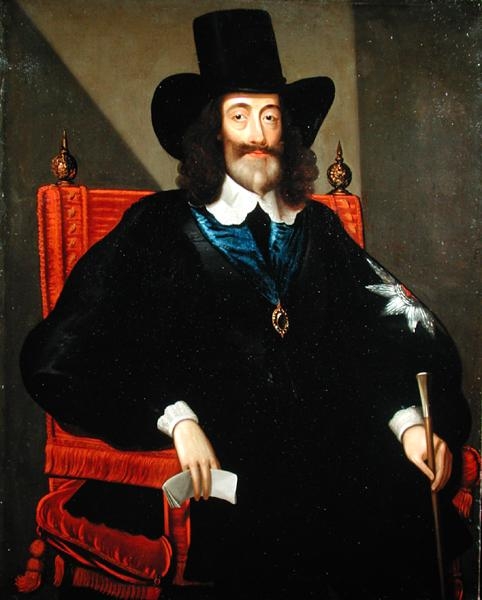
Skinner's claim against Berlin is pointed. Berlin had asked whether the desire for recognition might be a demand for liberty "in some third sense" and had said no. Skinner first sided with Berlin against MacCallum, arguing that the self-realization ideal of Green and Bosanquet is a genuinely distinct concept that the triadic formula cannot hold. Then he went further. A third concept, liberty as independence from anyone's arbitrary power, was coherent and had a long pedigree, and since on that view the mere knowledge of dependence makes a person unfree, no act of constraint is needed.15
Philip Pettit built the idea into a full theory in Republicanism: A Theory of Freedom and Government (Oxford University Press, 1997). The Stanford Encyclopedia summarizes his view this way. Even if a slave enjoys non-interference, Pettit says she is dominated, because she is subject to her owner's arbitrary power whether or not he uses it. And a person can be interfered with and still be undominated, if the interference is constrained to track her avowed interests through republican power structures. Only arbitrary power is the enemy of liberty on this view, not power as such.16 Pettit's account is his and Skinner's proposal. It is offered as a third concept by its authors, and this course reports it as theirs.
Where they agree with Berlin: liberty is about relations between people, and the self-realization version of positive liberty is dangerous. The encyclopedia notes that republican liberty does not consist in virtuous participation and has commitments to liberal-democratic institutions built in, so it cannot lead to the oppressive results Berlin feared.17 Where they disagree: Berlin's negative liberty treats a kindly despot's subjects as potentially free, and the republicans say they are not.
The theory has its own critics. One line of objection asks what counts as being safe from arbitrary power. If a stranger could stab me with impunity, am I unfree to walk down the street? Republicans have answered with an impunity requirement, and critics such as Thomas Simpson have pressed on whether that requirement can be stated without absurd results.18 And because the idea is flexible, it has been applied to relations between employers and workers, husbands and wives, and able-bodied and disabled people.19 That flexibility is a strength in a seminar. In a campaign it can make almost any rule sound like liberation.
Sen: what people are actually able to do and be
Amartya Sen is an economist and philosopher. In his 1979 Tanner Lecture, "Equality of What?", he asked his audience to picture two people with the same resources, one of whom is disabled. Equal resources, he argued, leave them unequal in what they can do.20 From that example grew the capability approach, set out for a general audience in Development as Freedom (Knopf, 1999).21
The vocabulary is simple once learned. Functionings are doings and beings a person has achieved, such as being well nourished, educated or married. Capabilities, in the summary by Ingrid Robeyns and Morten Fibieger Byskov, "are the real freedoms that people have to achieve their potential doings and beings."22 Between resources and capabilities sit conversion factors. A bicycle gives great mobility to an able-bodied person taught to ride as a child, and little to someone never taught, or to a woman where social norms do not allow women to ride.22
Is this positive liberty? Not in Berlin's sense. The Stanford Encyclopedia warns that calling ability-based liberty "positive" is confusing, "given that it is very different from what Berlin meant by positive freedom."23 Sen's view has nothing to say about a higher self. It is about options. Its sharp break with Berlin is on the y slot: Sen's approach and the views grouped with it count some inabilities as lacks of liberty, where Berlin counted poverty as a lack of liberty only if other people's arrangements caused it.2324
Where Sen agrees with Berlin: individuals and their choices are what count, and a theory that ignores what people value for themselves is wrong. Where he disagrees: a person too poor to eat is, for Sen, short of liberty whatever its cause. Some philosophers meet Sen partway from the negative side. The encyclopedia records the argument, made by G. A. Cohen, Jeremy Waldron and others, that in a market economy money is a reliable indicator of how far other people will stop you from doing things, so lack of money is strongly correlated with lack of negative liberty.25
The four positions side by side
| Thinker | What counts as an obstacle | Main claim against Berlin | Main agreement with Berlin |
|---|---|---|---|
| Gerald MacCallum (1967) | Open: each side fills the slot differently | There is one concept, not two | The disputes are real and political |
| Charles Taylor (1979) | Includes inner obstacles such as fear and false belief | Pure negative liberty cannot be defended | Rulers who define your true self are a danger |
| Philip Pettit (1997) and Quentin Skinner (1998, 2002) | Living under another's arbitrary power, used or not | A third concept exists: non-domination | Liberty concerns relations among people |
| Amartya Sen (1979, 1999) | Lack of real ability to achieve valued doings and beings | Inability can be a lack of liberty | The individual and her own choices are what count |
What each theory can be used to sell
None of these thinkers wrote to deceive anyone, and each made a serious case. But every account of liberty can be borrowed by someone with less honest aims, and knowing the source lets a reader ask the right follow-up question.
Berlin's negative liberty can be borrowed to call any private power liberty, as long as the state is not the one doing the pushing; the saying he quoted about the pike and the minnows was a warning against that. Taylor's exercise concept can be borrowed by anyone who wants to tell you what your real purposes are. Non-domination can be borrowed to justify any new regulation as an escape from someone's arbitrary power, without asking whether the regulator's power is itself arbitrary. And capability language can be borrowed to call any program a gift of liberty, since nearly every program expands somebody's abilities.
The defense is MacCallum's formula, used as a habit. Who is the agent? What is the obstacle, and who put it there? What will the agent be able to do? And who gains power over the agent in the process? Berlin's question, in a sentence he wrote in 1958, still sits underneath all four answers: the extent of anyone's liberty "must be weighed against the claims of many other values."26
The original works
- Isaiah Berlin, Two Concepts of Liberty (1958), Isaiah Berlin Virtual Library: The lecture itself, still under copyright. Link only.
- Madison, Property, The Founders' Constitution: Full text of the 1792 essay.
- The Federalist Papers, Avalon Project, Yale Law School: The added quotations from the Federalist can be checked here.
- The Founders' Constitution, University of Chicago Press: Founders' comments organized by clause of the Constitution.
Learn more
- Stanford Encyclopedia of Philosophy: Positive and Negative Liberty: the clearest single map of MacCallum, Taylor, the republicans and the ability theorists.
- Quentin Skinner, "A Third Concept of Liberty," London Review of Books: the argument for non-domination told through Roman law and the English civil wars.
- Skinner's lecture in the Proceedings of the British Academy: the full version with notes.
- MacCallum, "Negative and Positive Freedom" (JSTOR): the 1967 article that proposed one triadic relation.
- Stanford Encyclopedia of Philosophy: The Capability Approach: Sen and Nussbaum's framework in plain terms.
- Stanford Encyclopedia of Philosophy: Isaiah Berlin: how Berlin's critics read him, and how he answered.
- Wikipedia: Two Concepts of Liberty: a short overview with a summary of Taylor's objection.
Notes
- Quentin Skinner, "A Third Concept of Liberty," Isaiah Berlin Lecture, read at the British Academy 21 November 2001, Proceedings of the British Academy 117 (2002), 237-268. Berlin died in 1997, according to Cherniss and Hardy, "Isaiah Berlin," Stanford Encyclopedia of Philosophy, section 1. Read it online. ↩
- Quentin Skinner, "A Third Concept of Liberty," London Review of Books 24, no. 7 (4 April 2002). Read it online. ↩
- Gerald C. MacCallum Jr., "Negative and Positive Freedom," The Philosophical Review 76, no. 3 (July 1967), 312-334, at p. 312. Read it online. ↩
- MacCallum, "Negative and Positive Freedom," p. 314. Read it online. ↩
- Ian Carter and Ilkin Huseynli, "Positive and Negative Liberty," Stanford Encyclopedia of Philosophy (substantive revision 28 June 2026), section on the one concept view, citing Oppenheim. Read it online. ↩
- Carter and Huseynli, "Positive and Negative Liberty," on how the two camps assign different extensions to the three variables. Read it online. ↩
- Isaiah Berlin, "Two Concepts of Liberty," text delivered to the Clarendon Press (1958), ed. Henry Hardy, Isaiah Berlin Virtual Library, before page marker [170] (Liberty, ed. Henry Hardy, Oxford University Press, 2002, p. 169). Wording checked against this draft. Read it online. ↩
- Charles Taylor, "What's Wrong with Negative Liberty," in Alan Ryan, ed., The Idea of Freedom: Essays in Honour of Isaiah Berlin (Oxford: Oxford University Press, 1979); reprinted in Taylor, Philosophy and the Human Sciences: Philosophical Papers 2 (Cambridge: Cambridge University Press, 1985), 211-229, and in David Miller, ed., The Liberty Reader (2006), 141-162, as listed by the Stanford Encyclopedia. Read it online. ↩
- Carter and Huseynli, "Positive and Negative Liberty," section on why the distinction persists, citing C. Taylor 1979. Read it online. ↩
- Charles Taylor, "What's Wrong with Negative Liberty" (1979), reprinted in Philosophy and the Human Sciences: Philosophical Papers 2 (Cambridge University Press, 1985), 211-229 (Cambridge Core). The full text is behind a paywall, so this lesson paraphrases Taylor rather than quoting him; the paraphrase follows the summary of his argument in Wikipedia, "Two Concepts of Liberty," section "Criticism." Read it online. ↩
- Carter and Huseynli, "Positive and Negative Liberty," citing Eric Nelson (2005). Read it online. ↩
- Skinner, "A Third Concept of Liberty," London Review of Books, on the Digest of Roman law. Read it online. ↩
- Skinner, "A Third Concept of Liberty," London Review of Books, on the critics of the royal prerogative. Read it online. ↩
- Skinner, "A Third Concept of Liberty," London Review of Books, on 1642, the trial of Charles I and the Act of March 1649. Read it online. ↩
- Skinner, "A Third Concept of Liberty," London Review of Books, on Berlin's question about "some third sense"; see also Skinner, Liberty before Liberalism (Cambridge: Cambridge University Press, 1998). Read it online. ↩
- Carter and Huseynli, "Positive and Negative Liberty," section 6.1, on liberty as non-domination, citing Philip Pettit, Republicanism: A Theory of Freedom and Government (Oxford: Oxford University Press, 1997). Read it online. ↩
- Carter and Huseynli, "Positive and Negative Liberty," section 6.1, on how non-domination differs from positive liberty as Berlin described it. Read it online. ↩
- Carter and Huseynli, "Positive and Negative Liberty," on the impunity requirement, citing Pettit (2008), Skinner (2008) and T. W. Simpson, "The Impossibility of Republican Freedom," Philosophy and Public Affairs 45 (2017), 28-53. Read it online. ↩
- Carter and Huseynli, "Positive and Negative Liberty," citing Breen and McBride (2015), Lovett (2022), and De Wispelaere and Casassas (2014). Read it online. ↩
- Ingrid Robeyns and Morten Fibieger Byskov, "The Capability Approach," Stanford Encyclopedia of Philosophy (substantive revision 17 April 2025), citing Amartya Sen, "Equality of What?" in S. McMurrin, ed., Tanner Lectures on Human Values (Cambridge: Cambridge University Press), 197-220. Read it online. ↩
- Amartya Sen, Development as Freedom (New York: Knopf, 1999), as listed in Robeyns and Byskov, "The Capability Approach." Read it online. ↩
- Robeyns and Byskov, "The Capability Approach," sections 1.1 and 2.1 to 2.3 on functionings, capabilities and conversion factors. Read it online. ↩
- Carter and Huseynli, "Positive and Negative Liberty," section 6.1, on liberty as ability and the capability approach, citing Sen (1985, 1988, 1992). Read it online. ↩
- Berlin, "Two Concepts of Liberty," Clarendon Press text, at page marker [170] (Liberty, p. 170), on poverty and the theory of its causes. Read it online. ↩
- Carter and Huseynli, "Positive and Negative Liberty," section 6.1, on purchasing power and negative liberty, citing G. A. Cohen (1995, 2011) and Jeremy Waldron (1993). Read it online. ↩
- Berlin, "Two Concepts of Liberty," Clarendon Press text, at page marker [215] (Liberty, p. 215). Read it online. ↩
Check yourself
1. Gerald MacCallum's 1967 article argued that:
MacCallum's formula is 'x is (is not) free from y to do (not do, become, not become) z.' He said the two camps disagree about the range of the variables, not about two different concepts.
2. Charles Taylor's 'exercise concept' of liberty means:
Taylor contrasted an opportunity concept, about what options are open, with an exercise concept, about actually governing one's life. He argued the second cannot avoid judging which purposes are really one's own.
3. On the non-domination view of Pettit and Skinner, a slave whose master never interferes with him is:
Pettit says such a person is dominated: the master could interfere at will. Skinner traces the same idea to Roman law and to Parliament's arguments against the Crown in the 1640s.
4. Which statement about Sen's capability approach is accurate?
Sen measures what people are actually able to do and be. The Stanford Encyclopedia notes that calling this positive freedom is confusing, since it is very different from what Berlin meant by the term.
5. Berlin wrote that 'Mere incapacity to attain your goal is not lack of political freedom.' Which thinker most directly disputes that line?
Sen's approach, and the ability-based views the Stanford Encyclopedia groups with it, count inability itself as a shortfall in freedom. Berlin counted it as lack of liberty only when other people's arrangements caused it.
6. A senator says a new rule 'frees workers from domination by employers.' Which framework is the senator borrowing?
The Stanford Encyclopedia notes that non-domination has been applied to employers and workers. Knowing the source lets you ask the follow-up: does the rule also create a new arbitrary power over the same workers?
Terms in this lesson
- Triadic relation
- MacCallum's term for liberty as a relation among three things: an agent, a preventing condition, and something the agent does or becomes.
- Opportunity concept
- Charles Taylor's name for liberty as the options open to a person, whether or not he uses them.
- Exercise concept
- Taylor's name for liberty as actually directing one's own life, which requires some judgment about one's real purposes.
- Non-domination
- The republican account of liberty proposed by Philip Pettit and traced historically by Quentin Skinner: being free means not living under anyone's arbitrary power, even a power that is never used.
- Capability
- In Amartya Sen's approach, a real opportunity to achieve some doing or being, such as being well fed or educated.
- Conversion factor
- In the capability approach, how well a person can turn a resource into a capability. A bicycle gives little mobility to someone never taught to ride.
Sources
- Gerald C. MacCallum Jr., Negative and Positive Freedom, The Philosophical Review 76, no. 3 (1967): 312-334 (JSTOR) checked 2026-10
- Ian Carter and Ilkin Huseynli, Positive and Negative Liberty, Stanford Encyclopedia of Philosophy checked 2026-10
- Quentin Skinner, A Third Concept of Liberty, London Review of Books, 4 April 2002 checked 2026-10
- Quentin Skinner, A Third Concept of Liberty, Proceedings of the British Academy 117 (2002): 237-268 checked 2026-10
- Ingrid Robeyns and Morten Fibieger Byskov, The Capability Approach, Stanford Encyclopedia of Philosophy checked 2026-10
- Isaiah Berlin, Two Concepts of Liberty, text delivered to the Clarendon Press (Isaiah Berlin Virtual Library) checked 2026-10
- Charles Taylor, What's Wrong with Negative Liberty, in Philosophy and the Human Sciences (Cambridge University Press, 1985), Cambridge Core checked 2026-10
- Wikipedia: Two Concepts of Liberty (summary of Taylor's criticism) checked 2026-10
- Joshua Cherniss and Henry Hardy, Isaiah Berlin, Stanford Encyclopedia of Philosophy checked 2026-10