Lesson 7 of 8 · about 24 minutes
How to Identify Counterfeits
You'll be able to
- Explain Lincoln's 1864 point that one word, liberty, was covering two incompatible things
- Use Orwell's 1946 essay to spot a word used with a private definition
- Apply the five tests, crediting Berlin for the first two and Jeff A. Pierson for the third
- Recognize that counterfeits can imitate either of Berlin's two concepts
- Avoid the reverse error of treating every public program as a counterfeit
Baltimore, April 18, 1864. Three years earlier, as Lincoln reminded the crowd, Union soldiers "could not so much as pass through Baltimore." Now the city was holding a Sanitary Fair to raise money for those same soldiers, and the President of the United States stood up to say a few words.1 He did not talk long. But in the middle of his remarks he said something worth keeping in a pocket.
"The world has never had a good definition of the word liberty, and the American people, just now, are much in want of one. We all declare for liberty; but in using the same word we do not all mean the same thing."
Abraham Lincoln, Address at Sanitary Fair in Baltimore, April 18, 1864.2
Ninety-four years later, Isaiah Berlin made the same problem the subject of his inaugural lecture at Oxford. The two concepts this course studies belong to Berlin: negative liberty, the area in which no one interferes with you, and positive liberty, the wish to be your own master.34 Lincoln saw that the word was being fought over. Berlin showed how one word could carry two different questions. And the gap between those questions is where counterfeits are made.
A counterfeit, for the rest of this course, means a claim that borrows liberty's name and good reputation to sell something else. Usually the something else is power over you. Sometimes it is a product. Sometimes it is a perfectly decent good, like safety or comfort, sold under the wrong label so you will not weigh the price.
The shepherd, the wolf and the sheep
Lincoln built his whole argument on one picture. Read it slowly, because it is the oldest counterfeit detector in American public speech.
"The shepherd drives the wolf from the sheep's throat, for which the sheep thanks the shepherd as his liberator, while the wolf denounces him for the same act, as the destroyer of liberty, especially as the sheep was a black one. Plainly, the sheep and the wolf are not agreed upon a definition of the word liberty..."
Lincoln, Baltimore, April 18, 1864.5
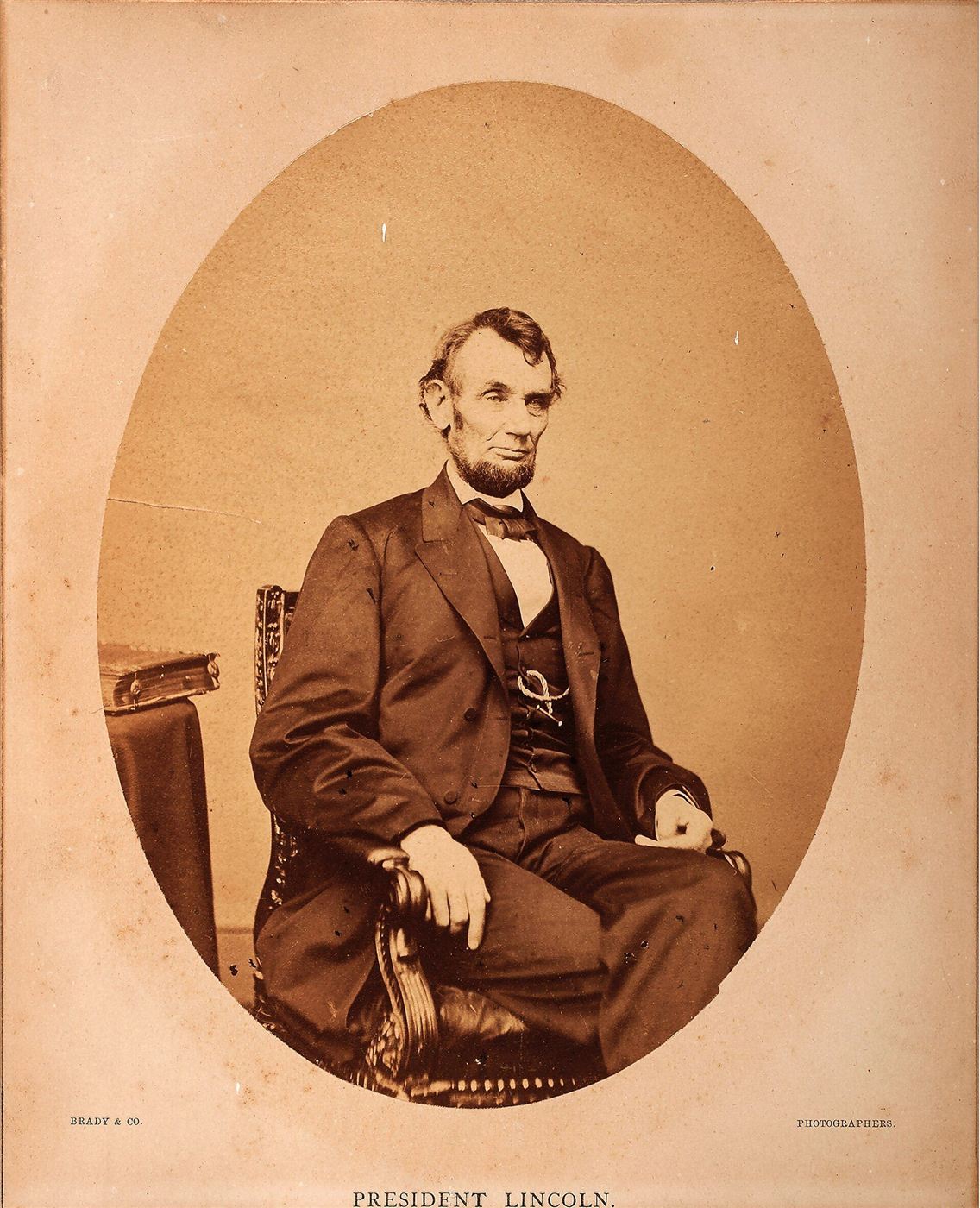
Just before the picture, Lincoln laid out the two meanings in plain words. For some, liberty meant "for each man to do as he pleases with himself, and the product of his labor." For others it meant "for some men to do as they please with other men, and the product of other men's labor."2 The slaveholder called his power liberty. The enslaved man called his rescue liberty. Same word, opposite things, and each side called the other side's version tyranny.
Notice what Lincoln did not do. He did not argue about the word. He looked at who was doing what to whom. The wolf's claim fails the moment you ask what the wolf is free to do: hold a living creature by the throat. Lincoln's test is about the act, and about the direction power runs. Whose throat? Whose labor? Who profits?
He ended that passage by thanking the people of Maryland, who had "been doing something to define liberty," because in what they had done "the wolf's dictionary has been repudiated."5 A dictionary is exactly the right word for what a counterfeiter needs. He needs your words to mean his things.
Lincoln then turned to a "painful rumor" that had just reached him: the massacre of some three hundred Black soldiers and their white officers at Fort Pillow, Tennessee.6 The definition of liberty was not an abstract matter in that room. Men were dying over which dictionary would win.
Orwell and the dishonest word
George Orwell came at the same problem from the writer's desk. In "Politics and the English Language," published in the magazine Horizon in April 1946, he listed political words that had been abused until they could mean almost anything. The word "freedom" was on the list.
"The words democracy, socialism, freedom, patriotic, realistic, justice, have each of them several different meanings which cannot be reconciled with one another."
George Orwell, "Politics and the English Language," 1946.7
Then he named the trick. "Words of this kind are often used in a consciously dishonest way," he wrote. "That is, the person who uses them has his own private definition, but allows his hearer to think he means something quite different."7 His example could have been written for this course: the statement that "The Soviet press is the freest in the world," which he said was almost always made "with intent to deceive."7
Orwell also explained why the trick exists. Some policies can only be defended "by arguments which are too brutal for most people to face," so the language has to cover them. Villages bombed from the air become "pacification." People shot or sent to Arctic camps become the "elimination of unreliable elements."8 The pleasant word is there to keep you from seeing the picture.
And he did not let any camp off the hook. Political language, he wrote, "is designed to make lies sound truthful and murder respectable, and to give an appearance of solidity to pure wind," and he said this held, with variations, for all political parties.9 Hold onto that. The tests below are worthless if you only point them at people you already distrust.
Berlin said much the same thing in plainer form on British television in 1962. Asked what the word really means, he answered that it "has a very great many senses" and that "some of the world's worst tyrannies have been undertaken in the name of freedom."10
Myth: Franklin's "essential Liberty" line was a warning about trading privacy for security
The words "Those who would give up essential Liberty, to purchase a little temporary Safety, deserve neither Liberty nor Safety" are real, and Franklin is credited with them. They come from a reply the Pennsylvania Assembly sent to its governor on 11 November 1755, drafted by a committee that included Franklin. The fight was over money: whether the Assembly could tax the lands of the colony's proprietors, the Penn family, to pay for frontier defense.11 The line is real. The modern meaning hung on it is mostly ours. Quoting it honestly means saying what it was about.
Myth: Jefferson said "Eternal vigilance is the price of liberty"
The Thomas Jefferson Foundation at Monticello lists this as a spurious quotation and reports no evidence that Jefferson said or wrote it. Its research traces the idea to the Irish lawyer John Philpot Curran, whose version begins "The condition upon which God hath given liberty to man is eternal vigilance."12 A counterfeit quotation about liberty is a small counterfeit of its own: it borrows a founder's authority for words he never used.
Five questions for any claim of liberty
Anyone can run this field test in a few minutes on a speech, a bill, an ad or a program. Each test is credited to the person who supplied it. The first two come from Berlin. The third is Jeff A. Pierson's. The fourth and fifth are working rules for this course, built on Lincoln's wolf and Orwell's warning; neither man stated them in these words.
| Test | Whose it is | The question | A failing answer sounds like |
|---|---|---|---|
| 1. The two questions | Isaiah Berlin | Who is interfering with whom? And who claims to be the master, the one entitled to decide? | "We are removing obstacles," when the speaker is the obstacle, or "We know what you really want." |
| 2. Liberty is liberty | Isaiah Berlin | Is the good on offer liberty, or another good (safety, equality, comfort, status) carrying liberty's name? | A real good with a false label, so its cost in liberty never gets counted. |
| 3. From him, or through him? | Jeff A. Pierson | "Freedom from him, or freedom through him?" | Liberty that arrives only by way of the speaker's office, budget or product. |
| 4. Follow the power | This course, after Lincoln | After the promise is kept, who holds more authority over whom, and who can take it back? | The giver keeps a switch it can turn off. |
| 5. Read the text, not the title | This course, after Orwell | What does the bill, contract or policy actually command, permit and punish? | A title full of liberty over a text full of new powers, or a right "guaranteed" with a condition attached. |
Test 1: Berlin's two questions
Berlin built his lecture on two questions, and he meant them to be kept apart. The negative concept answers this one: "What is the area within which the subject ... is or should be left to do or be what he is able to do or be, without interference by other persons?" The positive concept answers a different one: "What, or who, is the source of control or interference that can determine someone to do, or be, this rather than that?"13 The first concept marks the absence of obstacles. The second asks about the presence of control, about who rules.14
Turn those into a field test and you get two plain questions. First: in this proposal, who is interfering with whom, and does the proposal shrink that interference or add to it? Second: who is claiming the right to be in charge, and on whose behalf? Berlin's sharpest warning lives in the second question. He traced how Rousseau and later thinkers moved from what a person actually wants to what that person "ought to desire," a "real" interest that someone else may know better than he does.15 Once a party, a state or an expert claims to speak for your true self, it can override your actual self and call the result your liberation.
So listen for the phrase that swaps the person in front of you for an idealized version of him. "What people really want." "Their true interests." "Once they understand." Each one is a claim to be the master.
Test 2: Berlin's rule that liberty is liberty
Berlin never pretended liberty was the only good. He said in 1962 that there are "other goods besides freedom, such as, for example, security or peace or culture," and that one person's too-great liberty can crush others, "freedom for the pike means death to the carp." Those are good reasons to limit liberty, he said. "Still, curtailing freedom isn't the same as freedom."10 His 1958 lecture made the same point in its famous line that everything is what it is (lesson 04 gives the exact words).
That rule is the second test. A trade between liberty and another good can be wise. A program can be worth its cost. But the cost has to be named. The counterfeit hides it by relabeling: security becomes "freedom from fear," a subsidy becomes "freedom," a ban becomes "protecting your liberty." Ask what the good really is, and then ask what liberty, if any, is being spent to buy it.
Test 3: "Freedom from him, or freedom through him?"
Jeff A. Pierson supplies the third test, in an essay that credits Berlin for the distinction itself. Pierson gives the two concepts plain names of his own: negative liberty is "liberty as protection," and the political, budget-bearing form of positive liberty is "liberty as provision."16 He is careful to say that philosophers use positive liberty more broadly, to include self-mastery and rational autonomy, and that his names address its political form.17 Then he reduces the difference to one question.
"So when a politician offers you freedom, ask one question: freedom from him, or freedom through him? The first kind restrains his power. The second kind grows it, every single time, without exception, by definition."
Jeff A. Pierson, essay on the two views of liberty, 2025.18
The question works because it moves the eye from the gift to the giver. A liberty that runs "from him" ties his hands: he may not censor you, search you or take your property. A liberty that runs "through him" passes through his office, his budget or his approval, and he grows with every delivery. Pierson argues that the second kind grows the giver's power every time. Readers who defend public provision will dispute how far that reaches; lesson 06 sets out their strongest reply, and lesson 08 returns to it. As a question, though, it costs nothing to ask and very little to answer.
The question also works on private actors. A company that offers "freedom" through its app, its account or its device is offering liberty through itself.
Test 4: Follow the power
Lincoln's wolf gives this test its shape. Look past the promise to the arrangement that will exist after it is kept. Who now holds authority over whom? Can the person who received the benefit walk away with it? Or can the giver revoke it, condition it or switch it off?
A good comparison sits on Lincoln's own desk. In 1862 he signed the Homestead Act, which offered 160 acres of public land to a settler who lived on it and improved it for five years. At the end the settler owned it, in the words of the National Archives, "free and clear," except for a small fee.19 Whatever you think of the program, the power ran one way and then stopped. The government gave, and then it had no switch. Compare an arrangement where the benefit continues only as long as you keep meeting conditions someone else writes. Both are provision. They leave very different people behind.
Test 5: Read the text, not the title
Orwell's advice was to see the picture behind the word. For a law, the picture is the text. Titles are written to be repeated. Operative sections are written to be enforced.
Take the Soviet constitution of 1936, which lesson 06 and lesson 08 treat at length. Article 125 guaranteed "freedom of speech; freedom of the press," and the liberty to assemble and to march in the streets. Read the whole sentence, though. Those rights were granted "In conformity with the interests of the working people, and in order to strengthen the socialist system," and they were to be "ensured" by placing printing presses, paper and public buildings at the disposal of the working people and their organizations.20 The next article named who led all those organizations: the Communist Party, "the leading core of all organizations of the working people, both public and state."21 The liberty in Article 125 ran through the state's presses and the Party's organizations. The title said speech. The text said permission.
Running a claim through the tests
Here is how the five tests work together, drawn as a path. A claim does not have to fail all five to be a counterfeit, and passing all five does not make a policy wise. The tests tell you what is really being offered. Whether to accept the offer is still your call.
A short drill: Lincoln's wolf, run through the tests
Test 1: who interferes with whom? The wolf, with the sheep. Who claims to be master? The wolf, over the sheep's body. Test 2: the good the wolf wants is a meal, and power over another creature, filed under liberty. Test 3: the wolf's liberty runs entirely through the sheep. Test 4: afterward, the wolf holds everything and the sheep holds nothing it can keep. Test 5: the wolf's dictionary says liberty; the act says throat. Lincoln's audience did not need a philosophy seminar to see it.5 Most real cases are harder, which is why lesson 08 takes them one at a time.
Counterfeits come in both denominations
It would be easy to read Berlin as saying that only positive liberty gets counterfeited. He did fear its perversion more, because he judged it more ambiguous and more open to "sinister transformation."22 But negative liberty has its own forgeries. A ruler can sell a wall as protection when the wall faces inward. A company can sell surveillance as security. A man can call his power over other men's labor his "liberty," which was the wolf's whole case in 1864. Berlin himself later regretted that he had not said more about evils defended in negative liberty's name, such as exploitation under laissez-faire capitalism.22
So run the tests on protection claims as hard as on provision claims. Who is being protected, from whom, and who holds the keys afterward?
There is a second caution. The tests can be misused in the other direction, by calling every public program a counterfeit because government is involved. Pierson himself writes that "None of this means hardship is fake or that neighbors shouldn't be helped."23 A test that convicts everything is as useless as one that convicts nothing. Lesson 08 shows the tests applied to real cases from several directions, government and private, and then turns them on the reverse error.
Carry this card: Who interferes, and who claims to be master? Is it liberty, or another good with liberty's name? From him, or through him? Afterward, who holds the switch? What does the text actually say?
The original works
- Lincoln, Address at the Sanitary Fair, Baltimore, 1864: Full text with an editor's introduction.
- Isaiah Berlin, Two Concepts of Liberty (1958), Isaiah Berlin Virtual Library: The lecture itself, still under copyright. Link only.
- Jefferson to Isaac Tiffany, April 4, 1819, Founders Online: Jefferson's definition of rightful liberty.
- The Federalist Papers, Avalon Project, Yale Law School: The added quotations from the Federalist can be checked here.
- The Founders' Constitution, University of Chicago Press: Founders' comments organized by clause of the Constitution.
Learn more
- Lincoln, Address at Sanitary Fair in Baltimore (1864): the whole speech is short. Read the Fort Pillow passage too.
- Orwell, "Politics and the English Language" (1946): his six rules for writers work as rules for listeners.
- Isaiah Berlin Virtual Library: Two Concepts of Liberty: drafts of the lecture, the dictation recordings, and Berlin's 1962 television answer.
- Stanford Encyclopedia of Philosophy, "Positive and Negative Liberty": the standard survey, with Berlin's two questions quoted and cited.
- Stanford Encyclopedia of Philosophy, "Isaiah Berlin": how Berlin read Rousseau, Kant and their heirs.
- Founders Online: Pennsylvania Assembly, Reply to the Governor (1755): the real setting of Franklin's famous line.
- Monticello: "Eternal vigilance" (spurious quotation): how a misattribution spreads, traced step by step.
- Constitution of the USSR (1936), chapter X: practice Test 5 on articles 118 to 133.
Notes
- Lincoln, "Address at Sanitary Fair in Baltimore," April 18, 1864, opening paragraphs (Baltimore three years earlier; "man proposes and God disposes"). American Presidency Project. Read it online. ↩
- Abraham Lincoln, "Address at Sanitary Fair in Baltimore: A Lecture on Liberty," April 18, 1864, in Gerhard Peters and John T. Woolley, The American Presidency Project, University of California, Santa Barbara. Read it online. ↩
- Henry Hardy, "Two Concepts of Liberty," Isaiah Berlin Virtual Library, Wolfson College, Oxford (last updated 11 March 2025): the lecture was Berlin's inaugural lecture as Chichele Professor of Social and Political Theory, delivered and published in 1958. Read it online. ↩
- Isaiah Berlin, Two Concepts of Liberty (Oxford: Clarendon Press, 1958); reprinted in Four Essays on Liberty (Oxford University Press, 1969) and in Liberty, ed. Henry Hardy (Oxford University Press, 2002). Bibliography in Joshua Cherniss and Henry Hardy, "Isaiah Berlin," Stanford Encyclopedia of Philosophy (substantive revision 12 February 2022). Read it online. ↩
- Lincoln, "Address at Sanitary Fair in Baltimore," April 18, 1864, paragraph on the shepherd, the wolf and the sheep, ending with "the wolf's dictionary has been repudiated." American Presidency Project. Read it online. ↩
- Lincoln, "Address at Sanitary Fair in Baltimore," April 18, 1864, closing section on the reported massacre at Fort Pillow, Tennessee. American Presidency Project. Read it online. ↩
- George Orwell, "Politics and the English Language," Horizon, April 1946, section on meaningless words. Text at The Orwell Foundation. Read it online. ↩
- Orwell, "Politics and the English Language," 1946, paragraph beginning "In our time, political speech and writing are largely the defence of the indefensible." The Orwell Foundation. Read it online. ↩
- Orwell, "Politics and the English Language," 1946, closing paragraph. The Orwell Foundation. Read it online. ↩
- Isaiah Berlin, answer to Bamber Gascoigne on what "freedom" means, recorded 10 January 1962 for the ATV programme "Freedom of Speech" and broadcast 11 February 1962; lightly edited transcript, "What is Freedom?", on the Two Concepts of Liberty page of the Isaiah Berlin Virtual Library. Read it online. ↩
- Benjamin Franklin for the Pennsylvania Assembly, "Pennsylvania Assembly: Reply to the Governor," 11 November 1755, with editorial note on the dispute over taxing the Proprietors' estates to pay for frontier defense; the note records that the reply was drafted by a committee that included Franklin. Founders Online, National Archives. Read it online. ↩
- "Eternal vigilance is the price of liberty (Spurious Quotation)," Thomas Jefferson Encyclopedia, Thomas Jefferson Foundation, Monticello. Read it online. ↩
- Isaiah Berlin, "Two Concepts of Liberty," in Four Essays on Liberty (Oxford University Press, 1969), 121-22, as quoted in Ian Carter and Ilkin Huseynli, "Positive and Negative Liberty," Stanford Encyclopedia of Philosophy (substantive revision 28 June 2026), section 1. Read it online. ↩
- Carter and Huseynli, "Positive and Negative Liberty," Stanford Encyclopedia of Philosophy, section 1, on why Berlin's labels fit: one concept marks the absence of obstacles, the other the presence of control or self-mastery. Read it online. ↩
- Cherniss and Hardy, "Isaiah Berlin," Stanford Encyclopedia of Philosophy, section on the two concepts of liberty: Berlin's reading of Rousseau's general will and of the move from what a person desires to what he "ought to desire." Read it online. ↩
- Jeff A. Pierson, essay on the two views of liberty (2025), subtitled "How the founders built liberty as a system, and how modern operatives sell its replacement," section "The two views." Author's manuscript. The essay credits Berlin with the distinction and cites Berlin, Four Essays on Liberty (1969), 118-172. ↩
- Pierson, essay on the two views of liberty (2025), section "The two views," where he notes that philosophers use positive liberty more broadly, to include self-mastery and rational autonomy, and that his essay addresses its political form. Author's manuscript. ↩
- Pierson, essay on the two views of liberty (2025), section "What to do with this." Author's manuscript. ↩
- "Homestead Act (1862)," Milestone Documents, National Archives: 160 acres of surveyed public land, five years of residence, then title "free and clear" except for a small fee. Read it online. ↩
- Constitution of the USSR (1936), chapter X, articles 118-121 and 125. English text hosted by Bucknell University. Read it online. ↩
- Constitution of the USSR (1936), chapter X, article 126 (the Communist Party as "the leading core of all organizations of the working people, both public and state"). Bucknell University text. Read it online. ↩
- Cherniss and Hardy, "Isaiah Berlin," Stanford Encyclopedia of Philosophy: Berlin focused on positive liberty because he judged it more ambiguous and more open to "sinister transformation"; he later regretted not saying more about evils done in negative liberty's name, such as exploitation under laissez-faire capitalism. Read it online. ↩
- Pierson, essay on the two views of liberty (2025), section "What to do with this": "None of this means hardship is fake or that neighbors shouldn't be helped." Author's manuscript. ↩
Check yourself
1. In Lincoln's Baltimore address of April 18, 1864, why does the wolf call the shepherd a destroyer of liberty?
Lincoln's picture shows two incompatible things called by one name: the sheep's rescue and the wolf's power over the sheep.
2. Which two questions did Isaiah Berlin use to separate negative from positive liberty?
Berlin's questions, quoted in the Stanford Encyclopedia from Four Essays on Liberty, pp. 121-22, ask about the area of non-interference and about the source of control.
3. The test question "freedom from him, or freedom through him?" comes from whom?
It is Jeff A. Pierson's question, from his 2025 essay on the two views of liberty, which credits Berlin for the distinction itself.
4. Article 125 of the 1936 Soviet constitution guaranteed freedom of the press. What does a reading of the full text (Test 5) show?
The qualifying clause and the means of delivery turned the right into permission that ran through the state and the Party.
5. Berlin said in 1962 that there are good reasons to limit liberty, such as security or peace. What did he add?
His point is Test 2: a trade between liberty and another good can be wise, but the other good should not be relabeled as liberty.
6. Franklin's line about giving up "essential Liberty, to purchase a little temporary Safety" first appeared in what setting?
Founders Online prints the reply of 11 November 1755; the dispute concerned taxing the Penn family's estates to fund defense.
Terms in this lesson
- Counterfeit liberty
- A claim that borrows liberty's name to sell something else, often power over the listener, a product, or another good whose cost in liberty goes unnamed.
- The wolf's dictionary
- Lincoln's 1864 phrase for a definition of liberty that means power over others.
- Berlin's two questions
- Isaiah Berlin's questions about the area of non-interference (negative liberty) and the source of control (positive liberty).
- Liberty as protection / liberty as provision
- Jeff A. Pierson's plain names for Berlin's negative liberty and for the political, budget-bearing form of positive liberty.
- Follow the power
- This course's working test: after the promise is kept, who holds authority over whom, and who can take the benefit back.
- Operative text
- The sections of a law or contract that command, permit or punish, as distinct from its title or preamble.
Sources
- Lincoln, Address at Sanitary Fair in Baltimore (American Presidency Project) checked 2026-10
- Orwell, Politics and the English Language (Orwell Foundation) checked 2026-10
- Isaiah Berlin Virtual Library: Two Concepts of Liberty checked 2026-10
- Stanford Encyclopedia of Philosophy: Positive and Negative Liberty checked 2026-10
- Stanford Encyclopedia of Philosophy: Isaiah Berlin checked 2026-10
- Founders Online: Pennsylvania Assembly, Reply to the Governor, 11 November 1755 checked 2026-10
- Monticello: Eternal vigilance is the price of liberty (spurious quotation) checked 2026-10
- Constitution of the USSR (1936), chapter X (Bucknell University) checked 2026-10
- National Archives: Homestead Act (1862) checked 2026-10