Lesson 8 of 10 · about 23 minutes
The Founders on Natural Rights
You'll be able to
- Trace the shift in colonial argument from chartered English rights to natural rights between 1764 and 1776
- Quote and explain Hamilton's 1775 sentence that the rights of mankind are written 'as with a sun beam'
- Describe what Samuel Adams listed as the natural, Christian and civil rights of the colonists in 1772
- Compare Jefferson's rough draft of the Declaration with the text Congress adopted and with Mason's Virginia Declaration of Rights
- Name the contradiction that Otis and the Summary View exposed, and say why it matters for how these texts are read
On February 23, 1775, a young New Yorker published a pamphlet answering a Westchester writer who called himself "A. W. Farmer." The Farmer was Samuel Seabury, and he had spent the winter defending Parliament and condemning the Continental Congress. Alexander Hamilton's reply took on the Farmer's claim point by point, and then, in the middle of an argument about charters and old statutes, he wrote a sentence that did more work than all the rest.1
"The sacred rights of mankind are not to be rummaged for, among old parchments, or musty records. They are written, as with a sun beam, in the whole volume of human nature, by the hand of the divinity itself; and can never be erased or obscured by mortal power."
Alexander Hamilton, The Farmer Refuted, February 23, 1775.2
Hamilton was saying something new about where rights come from. For ten years the colonists had argued from the paper trail: Magna Carta, the common law, their own charters. That argument was good as far as it went, and lesson 3 showed how far. But paper can be construed, repealed or reinterpreted by whoever holds the pen. Hamilton wanted to stand on something no Parliament could reach. This lesson follows how seven writers got there, in the order they wrote.
James Otis, 1764: Rights Born with the Man
James Otis of Boston published The Rights of the British Colonies Asserted and Proved in 1764, three years after his argument against the writs of assistance, which lesson 4 told. His starting point is the English one. Every British subject born in America, he wrote, "is by the law of God and nature, by the common law, and by act of Parliament (exclusive of all charters from the crown), entitled to all the natural, essential, inherent, and inseparable rights of our fellow subjects in Great Britain."3
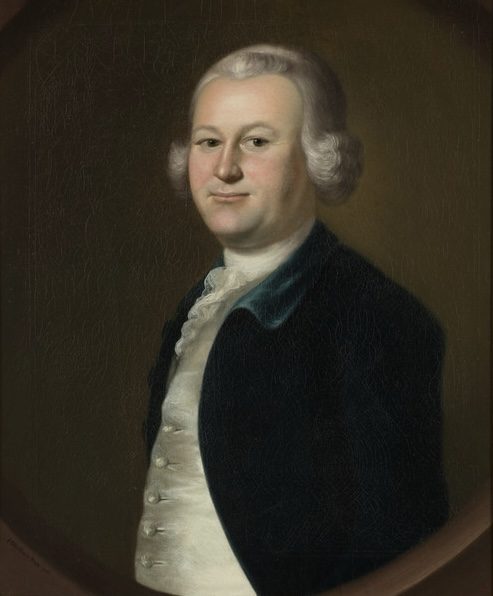
Notice the order: God and nature first, then the common law, then statute. The colonists' charters come last, and Otis puts them in parentheses. The rights do not depend on the charters at all.
A few pages later Otis wrote the sentence for which the pamphlet is best remembered today. "The Colonists are by the law of nature free born, as indeed all men are, white or black."4 He did not stop there. He went on to attack the enslavement of Africans and to ask whether any argument for it could be drawn from skin or hair. This was in Boston in 1764, a dozen years before the Declaration. It mattered then and it matters now, because it shows that the claim "all men" was heard as a claim about all men by at least one of the men who made it.
John Dickinson, 1767 to 1768: Property and the Farmer's Letters
The next voice came from Philadelphia. John Dickinson, a Philadelphia barrister, wrote twelve essays in the guise of a Pennsylvania farmer. The first appeared in the Pennsylvania Chronicle at the end of November 1767, and the editor of a later collection says they were reprinted in almost all the colonial newspapers.5
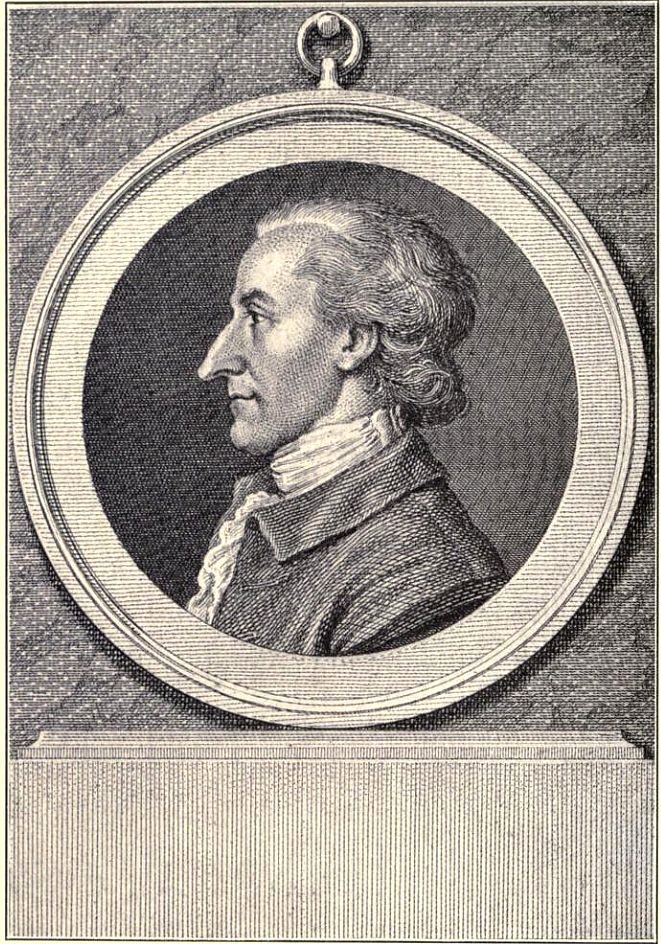
Dickinson's argument was narrower than Otis's. The question in the letters is what Parliament may do in the way of taxes, and Dickinson argued on English constitutional ground. But in the last letter he gathered the whole case into a chain that begins with happiness and ends in property:
Dickinson's last letter gathers the whole case into a chain of three links. "We cannot be happy without being free," he writes. Nor can we be free "without being secure in our property." And we cannot be secure in our property "if, without our consent, others may, as by right, take it away."5 That is the whole argument for no taxation without representation in a few lines. Every claim rests on the one before it, and the chain starts with a plain human desire to be happy.
The chain reads like Locke, who defined property as life, liberty and estate together.6 Dickinson made it personal. A man's freedom depends on his holdings being safe from anyone who can reach in without his consent. In the same letter he asks his countrymen to think of themselves as "Freemen" and as "Christian men," and he ends by borrowing a line of Scripture: "Teach them diligently unto your children, and talk of them when you sit in your houses."5 He meant these truths as something for families to hand down. That habit of teaching is what this site is for.
John Adams, 1765: A Right Derived from Our Maker
Two years before Dickinson began, John Adams, a young Massachusetts lawyer, had written his own essay, A Dissertation on the Canon and the Feudal Law, which the Boston printers Edes and Gill ran in the Boston Gazette in 1765. It named the "two greatest systems of tyranny" since the promulgation of Christianity: "the canon and the feudal law." Near its end, Adams wrote:
"liberty must at all hazards be supported. We have a right to it, derived from our Maker. But if we had not, our fathers have earned, and bought it for us, at the expence of their ease, their estates, their pleasure, and their blood."
John Adams, A Dissertation on the Canon and Feudal Law, 1765.7
The two arguments sit together. The right comes from the Creator. And if a reader doubts that, the right has also been bought, with the lives and savings of the people who came first. Adams used both. Then he gave his readers an instruction that is easy to pass over: "Let us dare to read, think, speak and write," and "Let us study the law of nature."7 Rights, in this account, come with a duty to know what they are. A people that has never studied the principles of government cannot defend them.
Earlier in the essay Adams had put the source of rights as plainly as anyone did. People have rights "antecedent to all earthly government," he wrote, rights "that cannot be repealed or restrained by human laws" and that are "derived from the great Legislator of the universe."7 Then he drew a conclusion that bears on any citizen who reads a county budget or a board's minutes. The people, he said, have "an indisputable, unalienable, indefeasible, divine right" to "that most dreaded and envied kind of knowledge, I mean, of the characters and conduct of their rulers." And rulers "are no more than attorneys, agents, and trustees for the people." If the trust is betrayed, "the people have a right to revoke the authority that they themselves have deputed."7 That is Locke's trust in plain Massachusetts English, and it makes the right to know what officials are doing a natural right and not a courtesy of the office. It also fits the old rule that those who hold power on trust answer for how they use it.
Samuel Adams, 1772: The List
In November 1772 the Boston town meeting received the report of its Committee of Correspondence, which is attributed to Samuel Adams. The Rights of the Colonists sets out, in numbered paragraphs, what the colonists claimed and why. The first part is headed "Natural Rights of the Colonists as Men."
"Among the natural rights of the Colonists are these: First, a right to life; Secondly, to liberty; Thirdly, to property; together with the right to support and defend them in the best manner they can. These are evident branches of, rather than deductions from, the duty of self-preservation, commonly called the first law of nature."
Samuel Adams, The Rights of the Colonists, November 20, 1772.8
The rest of the passage supplies the machinery. Government comes into being "by voluntary consent." Every natural right "not expressly given up, or, from the nature of a social compact, necessarily ceded, remains." And "All positive and civil laws should conform, as far as possible, to the law of natural reason and equity."8 The clause about rights never given up is an idea the Ninth Amendment would echo, as lesson 9 shows.
The document then widens. Part II lists "The Rights of the Colonists as Christians," which it says "may be best understood by reading and carefully studying the institutes of the great Law Giver and Head of the Christian Church, which are to be found clearly written and promulgated in the New Testament." Part III lists the rights of the colonists as subjects, and here the language of Blackstone shows up: "The absolute rights of Englishmen and all freemen, in or out of civil society, are principally personal security, personal liberty, and private property."9 Lesson 5 followed those three rights to their source in the Commentaries. Here they arrive in Boston, with Adams reading them as the rights of all freemen and not only of subjects of the crown.
A word of caution about what the paper does not say. The 1772 report extends religious toleration under the Toleration Act and the Massachusetts charter to Christians "except Papists." It was a document of its place and time, and its natural-rights language outran some of its practice.9 The principle was larger than the first people who stated it, which is how the principle outlived them.
One other line in the section is worth a pause. Adams argues that liberty is a gift that cannot be given up: "it is not in the power of man to alienate this gift and voluntarily become a slave."10 That is the sense of the word unalienable. A right of this kind is not a thing a man owns and may sell. It is a duty to the One who made him.
Hamilton, 1775: The Sun Beam
Return now to Hamilton and Seabury. The Farmer had argued that the colonists' rights came from their charters, and that charters can be changed. Hamilton had just finished showing that the charters, rightly read, did not support Parliament's claim at all. Then he went further. New York had no charter, he noted, but could still plead the common principles of colonization. "There is no need, however, of this plea," he wrote, and the sun beam sentence followed.2
The next paragraph goes on to say that the people of Turkey, Russia, France and Spain, "and all other despotic kingdoms," have an inherent right whenever they please to shake off the yoke of servitude, even if centuries of use have sanctified it.2 In this account a right to freedom belongs to all people everywhere, and the long habit of submission does not cancel it. Here a young man was defending the principle in its plainest form.
To read him fairly: Hamilton was not rejecting the English inheritance. He had just used it at length. He was saying that the inheritance rested on something deeper, and that if the paper ever failed, the deeper thing would still stand.
Jefferson, 1774 and 1776: From the Summary View to the Declaration
The Summary View
Thomas Jefferson wrote A Summary View of the Rights of British America in 1774 for the Virginia delegates heading to the First Continental Congress. He meant it as proposed instructions for the Virginia delegates. The Congress took a more moderate course, but Jefferson's friends printed the tract and it circulated in London, New York and Philadelphia.11 Its argument is the one Hamilton later made. The American colonists were free inhabitants of the British dominions who had used "a right which nature has given to all men" to leave their country and found new societies, just as the Saxons had done before them.12 No claim of superiority, Jefferson noted, had been asserted over the Saxons by the country they left, and none should be asserted over Americans. The pamphlet closes with a sentence that sounds like Otis, Adams and Dickinson together:
"The God who gave us life gave us liberty at the same time; the hand of force may destroy, but cannot disjoin them."
Thomas Jefferson, A Summary View of the Rights of British America, 1774.12
The same pamphlet says that "kings are the servants, not the proprietors of the people." It also contains a line on slavery that deserves honest attention: "The abolition of domestic slavery is the great object of desire in those colonies, where it was unhappily introduced in their infant state." Jefferson blamed the king for blocking Virginia's attempts to end the slave trade. That is true as far as it goes. It is also a convenient thing for a slaveholder to say, and Jefferson was one all his life.1211
The rough draft and the final text
Two years later Jefferson drafted the Declaration for a committee of five. His "original Rough draught," in Julian Boyd's reconstruction, reads in its second paragraph:
"We hold these truths to be sacred & undeniable; that all men are created equal & independant, that from that equal creation they derive rights inherent & inalienable, among which are the preservation of life, & liberty, & the pursuit of happiness."
Thomas Jefferson, original Rough draught of the Declaration of Independence, June 1776, as reconstructed by Julian Boyd.13
The committee revised the draft and submitted it to Congress on June 28, and Congress approved the declaration on July 4, 1776.14 Put the two texts side by side and the changes are small and telling. The rough draft's "sacred & undeniable" is "self-evident" in the adopted text. Its "created equal & independant" is "created equal." And its "rights inherent & inalienable" became a plainer line that names the source: "that they are endowed by their Creator with certain unalienable rights."15 The final version states outright what the draft left implied. The rights come from the Creator, and no government gave them, so no government can honestly take them away.
One more difference rewards a look. Locke had written of "life, liberty and estate."6 Jefferson's draft said "the preservation of life, & liberty, & the pursuit of happiness," and the final text dropped "the preservation of." Property is missing from both, though the other founders named it often, as the Adamses and Dickinson did. Why Jefferson chose as he did, the documents do not say.
George Mason, June 1776: Article One
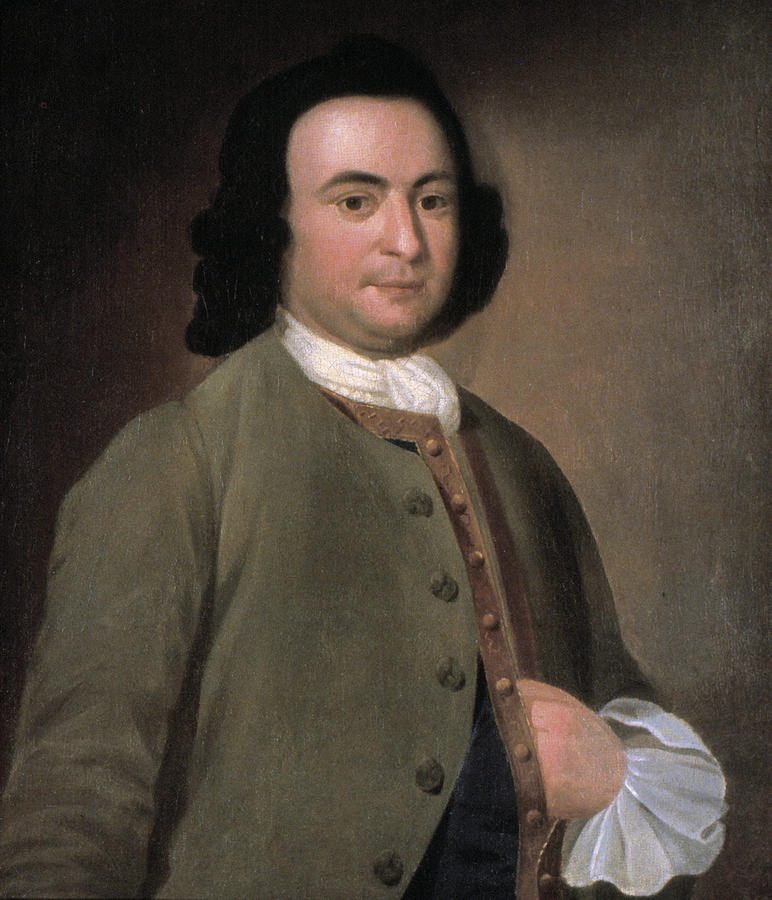
In the same weeks, in Williamsburg, George Mason drafted the Virginia Declaration of Rights. The Fifth Virginia Convention adopted it unanimously on June 12, 1776, after amending the committee's draft.16 Its first article is the most compact statement of the natural-rights case any of the colonies produced:
"That all men are by nature equally free and independent, and have certain inherent rights, of which, when they enter into a state of society, they cannot, by any compact, deprive or divest their posterity; namely, the enjoyment of life and liberty, with the means of acquiring and possessing property, and pursuing and obtaining happiness and safety."
Virginia Declaration of Rights, Article I, June 12, 1776.17
Compare it with Adams and with Locke. Mason keeps all three of Locke's rights and adds happiness and safety. He also says these rights cannot be given up "by any compact." A generation could not sign away its children's liberty. The next article calls magistrates "trustees and servants" of the people "at all times amenable to them," which is Locke's trust in a few words.17 Lesson 9 returns to this document and to what the other states did with it.
What the Seven Share
| Writer | Date | Where the rights come from | Signature line |
|---|---|---|---|
| James Otis | 1764 | "the law of God and nature," ahead of the charters | "free born, as indeed all men are, white or black" |
| John Adams | 1765 | "derived from our Maker," and earned by the fathers | "Let us dare to read, think, speak and write" |
| John Dickinson | 1767 to 1768 | Freedom depends on security of property and on consent | "we cannot be happy without being free" |
| Samuel Adams | 1772 | Self-preservation, "the first law of nature" | "a right to life; Secondly, to liberty; Thirdly, to property" |
| Alexander Hamilton | 1775 | "by the hand of the divinity itself" | "written, as with a sun beam" |
| Thomas Jefferson | 1774, 1776 | "The God who gave us life gave us liberty" | "endowed by their Creator with certain unalienable rights" |
| George Mason | 1776 | "by nature equally free and independent" | rights that no compact can "deprive or divest" a posterity |
The sources differ. Otis leans on common law and nature, Dickinson on property and consent, Adams on the Creator and on his fathers' sacrifice, Hamilton on the divinity, Mason on nature. But every one of them places the source of rights above the reach of any legislature, and every one of them treats the matter as settled truth and not as a position open to a vote.
That is where ordered liberty comes in. These men did not teach that rights have no limits or that every claim is a right. Rights came from a Creator, and Adams and Dickinson drew the plain consequence: those who hold them must know them, teach them and defend them. The founders took natural rights to be a trust passed down. A people that fails to learn what it holds will lose it, and it will not be the fault of the king.
The Contradiction That Would Not Go Away
An honest reading of these texts cannot skip the problem the texts themselves raised. Otis wrote that all men are free born, "white or black," in 1764. Jefferson's Summary View called abolition "the great object of desire" in 1774, and he held people in slavery all his life. Mason's first article says all men are by nature equally free and independent, and Virginia's slavery outlasted the Revolution by generations.
It would be a mistake to read the contradiction as proof that the principle was a lie. Later opponents of slavery would turn these same words against the system their authors failed to end. Frederick Douglass's Fourth of July speech of 1852, which module 52 covers, takes this line. The principle was true and the founders were inconsistent. Both things are on the record, and the record is better for admitting both.
Timeline
- 1764 Otis publishes The Rights of the British Colonies Asserted and Proved in Boston.
- 1765 John Adams writes A Dissertation on the Canon and the Feudal Law.
- 1767 Dickinson's first Farmer letter appears (November 30 to December 3).
- 1772 The Boston Committee of Correspondence issues The Rights of the Colonists (November 20).
- 1774 Jefferson writes the Summary View for the Virginia delegates.
- 1775 Hamilton publishes The Farmer Refuted (February 23).
- 1776 Virginia adopts Mason's Declaration of Rights (June 12). Congress adopts the Declaration (July 4).
Learn more
- Hamilton, The Farmer Refuted: The sun beam sentence in context, with Hamilton's argument that rights older than charters bind kings.
- Samuel Adams, The Rights of the Colonists: A short and complete list of what the colonists claimed in 1772.
- Dickinson, Letters from a Farmer: Twelve readable letters, and Letter XII for the chain of truths.
- John Adams, A Dissertation on the Canon and Feudal Law: Adams at thirty, on knowledge as the guard of liberty.
- Jefferson, A Summary View: Before the Declaration, Jefferson's first full statement of the case.
- Virginia Declaration of Rights: Mason's sixteen articles, two weeks before the Declaration.
Notes
- "The Farmer Refuted," Wikipedia: Hamilton's second published work, a reply to Samuel Seabury, who wrote as "A. W. Farmer" (a Westchester farmer) in defense of Parliament and against the Continental Congress. Read it online. ↩
- Alexander Hamilton, The Farmer Refuted, February 23, 1775, in The Papers of Alexander Hamilton, vol. 1, pp. 86 to 89, 121 to 122, 135 to 136, as reprinted in The Founders' Constitution, vol. 1, ch. 3, doc. 5. Read it online. ↩
- James Otis, The Rights of the British Colonies Asserted and Proved (Boston, 1764), excerpt reproduced by the Bill of Rights Institute, on the rights of "Every British subject born on the continent of America." Read it online. ↩
- Otis, Rights of the British Colonies (Boston, 1764), pp. 43 to 44 in the Internet Archive copy: "The Colonists are by the law of nature free born, as indeed all men are, white or black." The scan prints the long s; the quotation is given in modern letters. A searchable transcription is in Evans Early American Imprint Collection. The passage goes on to ask, "Does it follow that it is right to enslave a man because he is black?" Read it online. ↩
- John Dickinson, Letters from a Farmer in Pennsylvania, to the Inhabitants of the British Colonies, Letter XII (1768). The first letter appeared in the Pennsylvania Chronicle of November 30 to December 3, 1767, and there were twelve in all, per the introduction to the Ford edition. Read it online. ↩
- John Locke, Second Treatise of Government (1689), chapter 7, section 87, on a man's power "to preserve his property, that is, his life, liberty and estate." Read it online. ↩
- John Adams, A Dissertation on the Canon and the Feudal Law (1765), as published by Teaching American History. Read it online. ↩
- Samuel Adams, The Rights of the Colonists: The Report of the Committee of Correspondence to the Boston Town Meeting, November 20, 1772, part I, "Natural Rights of the Colonists as Men." Read it online. ↩
- Samuel Adams, The Rights of the Colonists, part II, "The Rights of the Colonists as Christians," and part III, "The Rights of the Colonists as Subjects." The Toleration Act passage excepts "Papists." Read it online. ↩
- Samuel Adams, The Rights of the Colonists, part I, on the impossibility of alienating the gift of liberty ("the power of man to alienate this gift and voluntarily become a slave"). Read it online. ↩
- "A Summary View of the Rights of British America," Wikipedia: written in 1774 for the Virginia delegates to the First Continental Congress; Congress adopted a more moderate course, and Jefferson's friends printed the tract as a pamphlet. Read it online. ↩
- Thomas Jefferson, A Summary View of the Rights of British America (1774), Avalon Project text. The full title reads "Set Forth in Some Resolutions Intended for the Inspection of the Present Delegates of the People of Virginia, Now in Convention." Read it online. ↩
- Jefferson's "original Rough draught" of the Declaration of Independence, in Julian Boyd's reconstruction, The Papers of Thomas Jefferson, vol. 1 (Princeton, 1950), pp. 243 to 247, at the Library of Congress. Read it online. ↩
- Encyclopedia Virginia, "Thomas Jefferson's original Rough draught of the Declaration of Independence (June 1776)": a committee revised the draft before submitting it to Congress on June 28, 1776, and Congress approved the official declaration on July 4, 1776. Read it online. ↩
- Declaration of Independence (1776), second paragraph. Read it online. ↩
- "Virginia Declaration of Rights," Wikipedia: George Mason principal author; adopted unanimously by the Fifth Virginia Convention at Williamsburg on June 12, 1776; Mason drafted about May 20 to 26, 1776, and the convention amended his committee draft. Read it online. ↩
- Virginia Declaration of Rights (1776), Article I and Article II. Read it online. ↩
Terms in this lesson
- Natural rights
- Rights a person holds because of what he is, a creature made by God with reason and conscience, and not because a king or legislature granted them.
- Inalienable (unalienable)
- Not capable of being given away or taken away. Samuel Adams argued that no one can lawfully sell himself into slavery.
- Rights of Englishmen
- The liberties the colonists claimed under Magna Carta, the common law and their charters.
- Compact
- An agreement among the people that creates a government and sets its limits.
- Summary View
- Jefferson's 1774 pamphlet addressed to the king, which argued that Parliament had no right to govern the colonies.
- Inherent
- Belonging to a person by nature and from birth, as the word is used in Jefferson's rough draft and in Mason's first article.
Sources
- Hamilton, The Farmer Refuted, 23 February 1775 (The Founders' Constitution) checked 2026-10
- Otis, The Rights of the British Colonies Asserted and Proved, Boston, 1764 (Internet Archive) checked 2026-10
- Otis, Rights of the British Colonies, excerpt (Bill of Rights Institute) checked 2026-10
- Dickinson, Letters from a Farmer in Pennsylvania (Project Gutenberg #47111) checked 2026-10
- Samuel Adams, The Rights of the Colonists, 1772 (constitution.org) checked 2026-10
- John Adams, A Dissertation on the Canon and Feudal Law, 1765 (Teaching American History) checked 2026-10
- Jefferson, A Summary View of the Rights of British America (Avalon Project) checked 2026-10
- Jefferson's original rough draught of the Declaration (Library of Congress) checked 2026-10
- Declaration of Independence (Avalon Project) checked 2026-10
- Virginia Declaration of Rights (Avalon Project) checked 2026-10
- Virginia Declaration of Rights (Wikipedia) checked 2026-10
- The Farmer Refuted (Wikipedia) checked 2026-10