Lesson 10 of 10 · about 23 minutes
The Critics, and an Ordered-Liberty View
You'll be able to
- State Russell Kirk's 1988 case against libertarians and Tibor Machan's reply in their own words
- Explain the progressive critique on public goods, civil rights enforcement and inequality, and the libertarian responses
- Describe the populist and economic-nationalist objection on trade and immigration, from Perot's NAFTA warning to the end of FreedomWorks
- Explain Isaiah Berlin's distinction between negative and positive liberty
- Compare the site author's ordered-liberty framework with libertarian thought: where they agree on limited government and conscience and where they differ on duty, order and institutions
On April 19, 1988, Russell Kirk stood at a lectern at the Heritage Foundation in Washington to give the second of four lectures on what he called the varieties of the conservative impulse. He posed the questions himself, asking why genuine conservatives feel an aversion to close association with libertarians and why an alliance between the two is inconceivable except for very temporary purposes. "I give you a blunt answer to those questions," he said. "The libertarians are rejected because they are metaphysically mad." Then, in case anyone missed it: "Lunacy repels, and political lunacy especially."1 A month later, on May 23, the philosopher Tibor Machan of Auburn University took the same stage to answer him, and closed by saying that "libertarianism thus deserves respect even from adversaries."2
That exchange is the oldest and sharpest family quarrel on the American right, and it is only one of three lines of attack on libertarian ideas. The others come from the left, which says a free market without a strong state leaves the weak unprotected, and from a populist center and right, which says open trade and open borders have cost American workers their jobs and their towns. Ross Perot, the subject of the first half of this module, made that last case on national television in 1992. This lesson gives each critic's best argument in his own words, then the libertarian reply. It ends with the framework this site's author uses, which shares a good deal with libertarians and differs from them in ways that matter.
The conservative case against
Kirk and the order that freedom needs
Kirk's lecture was blunt, but his argument was more than an insult. He set out a list of differences between conservatives and libertarians. The first concerned what each side treats as ultimate. In his telling, the real line runs between those who believe in a transcendent moral order and those who admit no transcendent sanctions for conduct, and he placed libertarians on the second side.1 From that followed his complaint about order. "But the libertarians give primacy to an abstract Liberty," he said. Conservatives, knowing that "liberty inheres in some sensible object," hold that freedom exists only within an ordered framework, the Constitution being the American example.1
He objected to the libertarian picture of society too. In that picture, he said, "the nexus of society is self-interest, closely joined to cash payment." And he rejected the libertarian view of government: "Fifth, the libertarian asserts that the state is the great oppressor." Against it he set the older view that "the state is natural and necessary for the fulfillment of human nature," and he added that "a primary function of government is restraint," meaning the restraint of human passions.1 His summary of the conservative attitude was a single word. "The conservative regards the libertarian as impious."1 His last line was a prayer: "Let us devoutly pray that America's libertarians may confine themselves to political torts and misdemeanors."1
Kirk had been at this for years. In a 1981 essay in Modern Age he borrowed a phrase from T. S. Eliot and called libertarians "chirping sectaries," describing the movement as an ideological clique forever splitting into smaller and odder sects.3
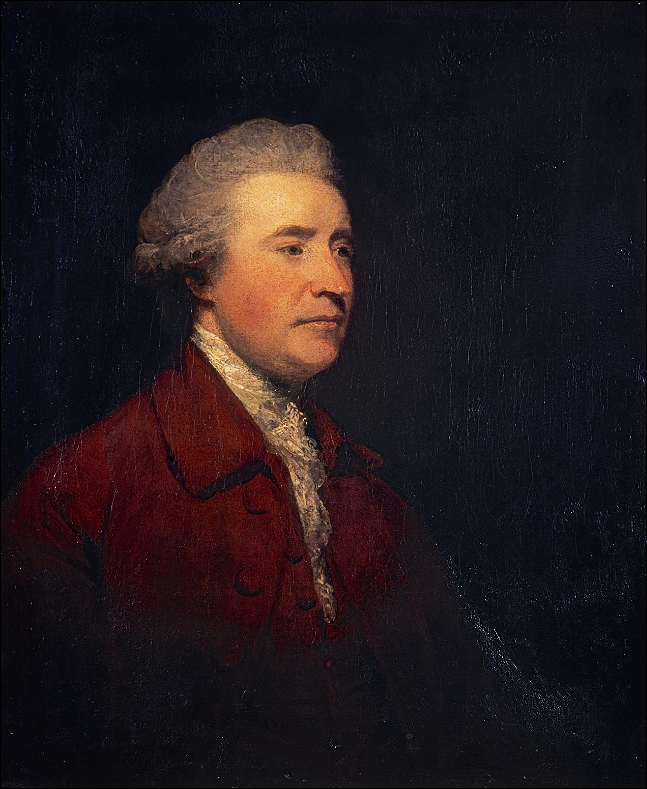
The libertarian answer: Machan and Meyer
Machan answered Kirk on human nature first. Conservatives, he argued, distrust the individual. "Ayn Rand had confidence in the human individual, while conservatives lacked this confidence, indeed demeaned it." Against the doctrine that people are born corrupt he put a plainer claim: "Human beings are born guiltless, yes, and they can become good or bad or something in between." Liberty, for Machan, rests on the fact that "we are all the kind of beings for whom action is a matter of choice."2 He did not pretend freedom was costless. A free society, he conceded, means "much that is evil will have to remain protected from suppression."2
That concession is the libertarian answer in one line, and it had been given its fullest form a generation earlier by Frank Meyer. Meyer, an editor at William F. Buckley Jr.'s National Review from the 1950s, tried to fuse the traditionalist and the libertarian into one conservative movement. His 1962 book In Defense of Freedom defined freedom as the absence of state coercion, limited the state to three jobs (police, military and a legal system) and argued that virtue cannot be coerced, because a coerced act is not virtuous. Kirk rejected the synthesis.3 Buckley credited Meyer's fusion as the best working definition of the movement, and the Sharon Statement adopted by Young Americans for Freedom in 1960 is usually read as a fusionist document.3 Friedrich Hayek, from the other direction, refused the conservative label altogether in his 1960 postscript "Why I Am Not a Conservative," which Lesson 4 of Economic Thinkers covers.
National defense
The second conservative charge is about war. Conservatives who back a strong military abroad say that non-intervention leaves allies exposed and invites aggressors. The quarrel came to a head over Ukraine. On May 12, 2022, when Rand Paul objected to fast passage of the $40 billion aid package, Senate Republican leader Mitch McConnell called on "both sides" to "help us pass this urgent funding bill today." Majority Leader Chuck Schumer, a Democrat, said, "It's clear from the junior senator from Kentucky's remarks, he doesn't want to aid Ukraine."4
Paul's answer was the libertarian answer on defense: the government's duty runs to its own citizens, and debt is a security threat too. "No matter how sympathetic the cause, my oath of office is to the national security of the United States of America," he said. "We cannot save Ukraine by dooming the U.S. economy."4 His father had made the constitutional version of the case for decades, voting for the 2001 authorization against those who attacked the country and against the 2002 Iraq authorization, on the view that Congress decides when the nation goes to war.56 Lesson 9 lays out those votes.
The progressive case against
Progressives start from a different place. For them the danger is less a state that does too much than a market that leaves people at the mercy of private power, bad luck and their neighbors' prejudice. Three of their arguments press hardest on libertarians.
Public goods and the safety net
Economists call some goods public because people cannot easily be kept from enjoying them and one person's use does not use them up. National defense is the textbook case. Clean air and basic research are others. A market will tend to supply too little of them, because each person hopes someone else will pay. Most libertarians accept defense and courts as public functions. The quarrel is over how far the logic runs, especially into the safety net.
The libertarian hope is that families, churches, mutual-aid societies and private charity would carry much of the load if government stepped back. The writer Mike Konczal attacked that hope in a 2014 essay he titled "The Voluntarism Fantasy." He argued that the United States has always had a mixed public and private system and that private institutions failed when they were needed most. Before the New Deal, the fraternal societies that libertarians admire did little for the old: "As late as 1930, old-age benefits represented just 2.3 percent of social benefits given out by fraternal organizations." And charity shrinks when the economy does. "Overall giving fell 7 percent in 2008, with another 6.2 percent drop in 2009."7 His conclusion was that the public role should grow.
The libertarian reply comes in two forms. The first concedes a floor and argues about its design. Milton Friedman, as Lesson 5 of Economic Systems shows, accepted government action to put "a floor under the standard of life of every person in the community" and proposed a negative income tax to replace a tangle of programs.8 The second argues that public programs crowd out the private ones: the mutual-aid societies Konczal found inadequate were displaced, not just outgrown, once government took over their work. Which reading of the history is right is still argued among historians, and the honest answer is that both effects are probably real.
Civil rights enforcement
The hardest test for libertarian principle in American history is the Civil Rights Act of 1964. Title II barred discrimination in hotels, restaurants and other public accommodations, including privately owned ones. A strict libertarian reading of property rights says an owner may serve whom he pleases, however wrong his choice. On December 14, 1964, the Supreme Court upheld Title II in Heart of Atlanta Motel v. United States. Justice Tom C. Clark's opinion held that the Act, as applied to a motel serving interstate travelers, "is within the power granted it by the Commerce Clause of the Constitution," because racial discrimination by such businesses burdened interstate travel.9
The progressive argument here is historical and simple. Jim Crow was enforced by law and also by private owners, private employers and private mobs, and the law that ended it had to reach private conduct. A principle that would have left the lunch counters segregated failed the people at the counter.
Rand Paul ran into this argument in his first Senate campaign. In April 2010 he told the Louisville Courier-Journal editorial board, "I think it's a bad business decision to exclude anybody from your restaurant," while saying he believed in private ownership. On May 20, 2010, on The Rachel Maddow Show, he suggested he would have changed the section covering private businesses. Two days later, on CNN, he said there was "a need for federal intervention" and that he would have voted for the law. In April 2013, at Howard University, he said, "I've never been against the Civil Rights Act, ever."10 Lesson 8 tells that episode in detail. Libertarians who defend the general principle usually answer that the worst of Jim Crow was state law, which forced segregation even on owners who would have served everyone, and that the Fourteenth Amendment gave Congress every right to strike it down. The progressive reply is that this answer covers the courthouse and the bus and leaves the private motel untouched, which is exactly where Heart of Atlanta arose.
Inequality
The third argument is about luck. Nobody earns the family or the town he is born into, and a market rewards talents that are largely inherited. If outcomes are shaped that much by chance, the progressive asks, what makes them deserved? Friedman, as Lesson 5 of Economic Systems explains, faced the argument head-on with his four Robinson Crusoes and answered that luck does not give anyone the right to force others to share. Robert Nozick made the philosopher's version of that answer in Anarchy, State, and Utopia in 1974, as Lesson 5 of this module describes: any pattern of fair shares will be upset by free exchange unless government keeps stepping in to restore it. Progressives answer that the rules of property, inheritance and contract are themselves set by government, so the state is already shaping outcomes and the only question is how.
The populist case against
The third critique is the newest in force and the oldest in roots. It does not object to libertarians as godless or heartless. It objects to them as allies of the people who shipped the factories overseas.
Perot and the sucking sound
On October 19, 1992, in the last presidential debate, Ross Perot turned to the North American Free Trade Agreement. "You implement that NAFTA, the Mexican trade agreement," he said, and "you're going to hear a giant sucking sound of jobs being pulled out of this country." He added, "We've got to proceed very carefully on that."11 Four days earlier, in the second debate, he had warned of "a job-sucking sound going south."12 Lesson 4 weighs his prediction against what happened. The argument underneath it is that free trade helps capital and consumers and puts the cost on workers in particular places, and that a nation owes those workers more than a cheaper television.
The same critique applies to immigration. If the labor supply grows fast, the populist argues, wages at the bottom suffer, and the people asked to absorb the change are the ones with the least say. Libertarians themselves split here. Ron Paul's 2007 campaign said "No amnesty" and "End birthright citizenship."13 Many libertarian writers favor freer movement of labor, and Rand Paul told the U.S. Hispanic Chamber of Commerce in 2013, "If you wish to work, if you wish to live and work in America, then we will find a place for you," while still voting against the Senate bill, as Lesson 9 shows.14
The turn in the movement
By the 2020s the populist critique had won much of the Republican base. When FreedomWorks, the Tea Party group that once gave both Pauls high marks, shut down in 2024, its president, Adam Brandon, explained the problem in a sentence. Much of the old base had aged, he said, "and so the new activists that have come in ... tend to be much more populist." Semafor's account added that the group lost relevance after Donald Trump's 2016 primary victory, because the Tea Party's remnants backed a candidate whose economic nationalism ran against FreedomWorks' philosophy.15
The libertarian answer on trade
The libertarian answer on trade has two parts. The economic part says tariffs are taxes paid by the importing country's own buyers, and that protection saves visible jobs in one industry while destroying less visible ones elsewhere. The constitutional part, which both Pauls press, says the power to tax imports belongs to Congress. Ron Paul's own definition was spare: "Let us face it, free trade means trade without interference from governmental or quasi-governmental agencies."16 By that measure he opposed both protection and the World Trade Organization, which he called "nothing other than a vehicle for managed trade."16 Rand Paul, voting in October 2025 to end the emergency behind 50 percent tariffs on Brazil, said, "I, for one, still believe in the principle of no taxation without representation."17 The populist answers that the principle is fine and the workers are still out of work.
| Critic | Strongest charge | Libertarian answer |
|---|---|---|
| Traditional conservative (Kirk, 1988) | Liberty is abstract without a moral order; the state is natural and restrains passion | Virtue must be chosen to be virtue (Meyer); people are capable of choosing good (Machan) |
| Defense hawk (McConnell, 2022) | Non-intervention leaves allies exposed; aid is urgent | The oath runs to U.S. security; debt is a threat; Congress decides war |
| Progressive: safety net (Konczal, 2014) | Charity failed before the New Deal and shrinks in recessions | A simple floor (Friedman's negative income tax); public programs crowd out private aid |
| Progressive: civil rights | Ending Jim Crow required reaching private businesses (Heart of Atlanta, 1964) | Jim Crow was chiefly state law; Rand Paul: "I've never been against the Civil Rights Act, ever" |
| Progressive: inequality | Market outcomes rest on unearned luck | Luck gives no right to coerce (Friedman); free exchange upsets any fixed pattern (Nozick) |
| Populist (Perot, 1992) | Free trade sends jobs abroad; workers bear the cost | Tariffs are taxes on Americans; only Congress may lay them |
Berlin's two liberties
Before the last section, one tool. In 1958 the philosopher Isaiah Berlin gave his inaugural lecture as Chichele Professor of Social and Political Theory at Oxford. He called it "Two Concepts of Liberty."18 Negative liberty, in the Stanford Encyclopedia's summary of Berlin, is "freedom from," "the absence of constraints on the agent imposed by other people." Positive liberty is "freedom to," which can mean "the ability (not just the opportunity) to pursue and achieve willed goals," or self-rule as against dependence on others.18 Berlin did not condemn positive liberty as such. What alarmed him was what it could become. Hardy describes his worry as a "more sinister transformation" of the idea, in which an authority claims to know a person's true self and coerces him in its name. He called the claim to free people by subjecting them to a larger group a "monstrous impersonation."18
Most libertarians stand on the negative side of Berlin's line. Hayek's definition, "freedom is the absence of coercion," is a standard example, though the Stanford Encyclopedia's entry on the two concepts notes that Nozick, Rothbard and others built moral content into their definitions too.19 Their progressive critics, who speak of freedom from want and real opportunity, lean toward the positive side. The framework below starts from Berlin's line and then adds something neither side of it covers.
An ordered-liberty view
What follows is the framework of this site's author, Jeff A. Pierson, which he calls ordered liberty. It is one writer's position, stated so readers can see where it comes from and weigh it for themselves. It is not offered as the conclusion of the lessons above, and it is not a libertarian position, though it shares ground with one. It also redefines a term with a history. The phrase "ordered liberty" entered American case law in Palko v. Connecticut in 1937, and Pierson writes that he uses it "in its original sense," before any court needed a phrase for it.20 Module 52, Ordered Liberty, sets out the framework at length.
The covenant
Pierson starts with Berlin's two liberties and renames them in plain words. "Philosophers call this negative liberty; the plainer name is liberty as protection," he writes, and of the other, "Philosophers call this positive liberty; the plainer name is liberty as provision." He draws the political consequence: "A government of protection restrains power; its whole vocabulary is prohibition. A government of provision requires power."20 And he credits Berlin with the distinction and with the warning about where positive liberty can lead.20
So far a libertarian would nod along. The departure comes next. For Pierson, the founders chose the first kind of liberty and also knew it could not stand alone. He defines ordered liberty as "the moral structure of a free people: freedom exercised within just law, sustained by conscience, and bound by the Constitution," and he puts the balance in two sentences:
"The individual is restrained by conscience, the citizen by law, and the government by both. Liberty without order becomes license; order without liberty becomes tyranny."
Jeff A. Pierson, essay on the two views of liberty.20
He describes this order as a covenant with three relationships: the individual with himself, neighbor with neighbor, and citizen with government. In the third, "Citizens give voluntary obedience to just law, obedience rooted in conscience rather than fear," and government in return must protect rights it did not create, keep public order, enforce law impartially and restrain its own power.20 This is where he places the libertarian's freedom from interference. Negative liberty, he writes, "is the government's clause of this covenant: the duty of restraint," which he ties to the First Amendment's command that Congress "shall make no law." "It is real, and it is binding. But it is one clause, not the whole document." His shorter line: "Read only the government's clause and you mistake a covenant for a muzzle."20
Where it agrees with libertarians
The overlap is large, and it is honest to say so. Both hold that rights come before the state and do not depend on its grant. Both distrust concentrated power, the administrative state and open-ended war. Both prize conscience. Pierson's list of the duties that anchor liberty opens its duty of conscience with Jefferson's words from Notes on the State of Virginia, words a libertarian could carve over his door: "But our rulers can have authority over such natural rights only as we have submitted to them. The rights of conscience we never submitted, we could not submit." Jefferson went on, "The legitimate powers of government extend to such acts only as are injurious to others."2122
Both are suspicious of forced redistribution. Pierson's duty of charity reads, "Natural law does not command forced redistribution; it calls for voluntary generosity rooted in love."22 Both put the burden on government to justify itself. Pierson's framework of Civic Anti-Authoritarianism makes the point in a phrase: "Under CAA, the citizen becomes the moral auditor of government."22 And both reject the single left-right line as the measure of politics, the subject of Module 72, The Liberty Political Matrix, and of its lesson on why one line fails.
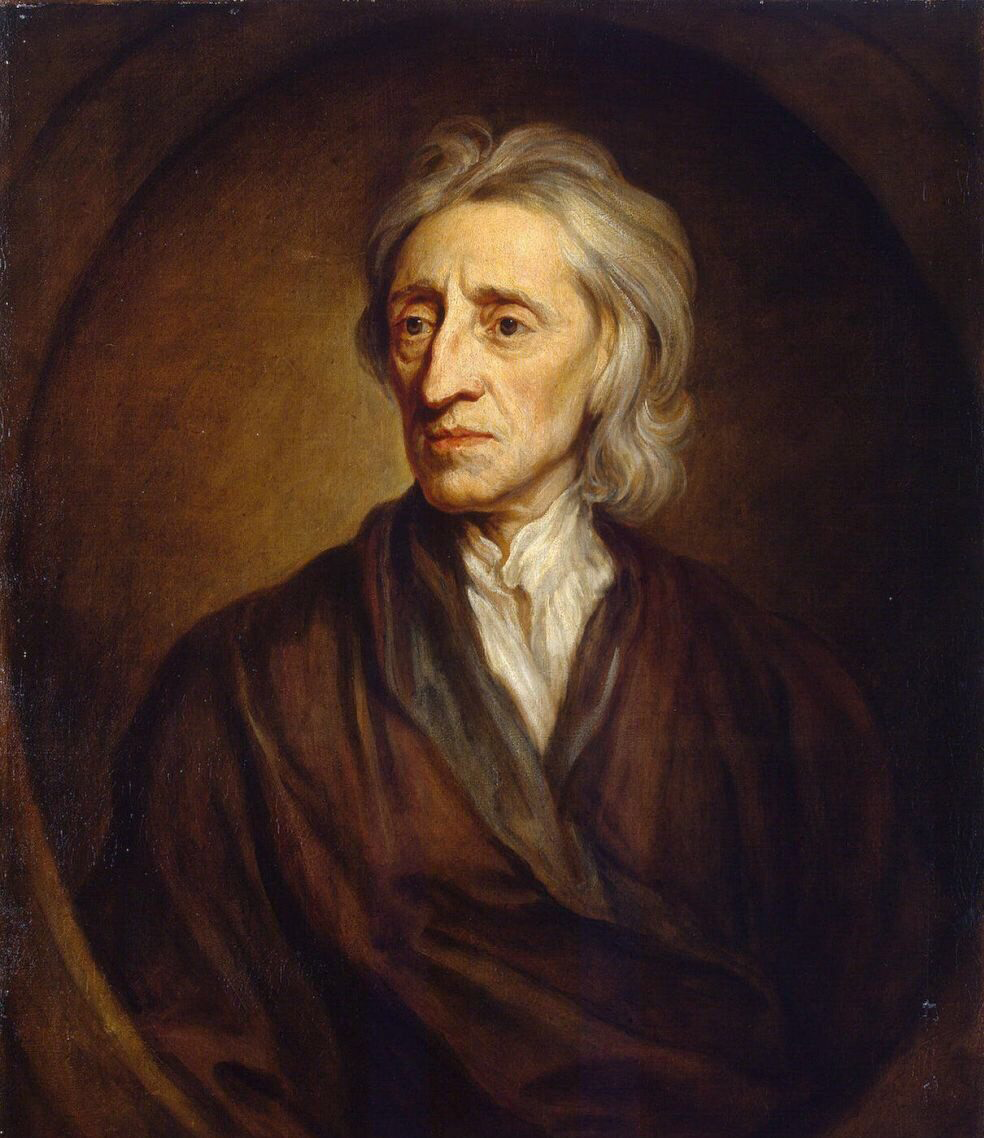
Where it differs: duty
The first difference is duty. For Pierson, rights and duties arrive together, and a right claimed without its duty decays. He anticipates the libertarian objection and states it fairly in his own point-and-counterpoint: "Some libertarians insist that emphasizing duty turns rights into burdens. They argue that rights must be absolute, while duties give government an excuse to impose obligations."22 His reply:
"Duties are not chains on liberty; they are its foundation. Rights without duties collapse into hollow claims, easily twisted into excuses for selfishness or oppression. A man who insists on liberty to cheat his neighbor or break his word destroys liberty for everyone else."
Jeff A. Pierson, The Structure of Ordered Liberty: A Framework for Conscience, Authority, and Resistance (2025), Point-Counterpoint.22
Many of the duties in that framework are owed to self and neighbor rather than to the state, which is why the libertarian fear that duty hands government an excuse does not quite land on it. The duties he lists are prudence, conscience, justice, fidelity, stewardship, defense, charity, scrutiny and dissent.22 Scrutiny and dissent are duties aimed at government.
Where it differs: order and moral neutrality
The second difference is about neutrality. Many libertarians hope for a state that takes no side among ways of life and only keeps the peace. Pierson thinks no such neutral state exists. "Every politics rests on a moral vision," he writes, and he names the two rival creeds plainly: "Progressives preach tolerance as creed. Libertarians preach autonomy as creed."22 Here he stands closer to Kirk than to Machan. A free people, on his account, depends on a virtue that law cannot produce, the point he takes from Burke and John Adams in the same essay, and the decay of that virtue invites control: "When citizens abandon their duties, liberty decays into license, and license generates the public demand for control."20
But he does not land where Kirk did either. Kirk called the state "natural and necessary." Pierson grants government affirmative duties, among them public order and impartial enforcement, and in the same breath binds it to restraint, and he judges citizen and official by the same rule. Ordered liberty, he writes, "judges the mob and the magistrate by one standard."20
Where it differs: institutions
The third difference is the place of institutions between the person and the state. A libertarian account tends to see two parties, the individual and the government, with voluntary associations as private contracts between individuals. Pierson's covenant gives family, church, neighborhood and local government their own standing and their own work. "Problems belong to the level closest to the people who own them," he writes of federalism.20 His objection to the provision state is that it takes over those institutions' duties and lets them wither: "Families that don't have to provide, don't. Churches that don't have to care for the poor, won't."20 A libertarian makes a similar complaint, and Konczal's critics make it against him. The difference is that Pierson treats the work of those institutions as a duty owed, where a libertarian treats it as a choice freely made.
Legitimate government and the Concord Principle
The last difference concerns legitimacy and resistance, and it divides the framework from both the anarcho-capitalist wing of libertarian thought and the militia fringe. Pierson's framework supports legitimate government and holds it to account. His Concord Principle of Resistance, named for the fight at Concord bridge in April 1775, is a test for the rare case where resistance to government may be justified. Lawful means come first and nearly always suffice: "Legal action through lawsuits, petitions, exposure, and peaceful defiance is always the first and preferred mode of resistance."23 Force enters only as self-defense, and only as defensive resistance against unlawful force, never as a first strike, when five standards are all met: innocence (the resister is not the aggressor), imminence, proportionality, avoidance (lawful and peaceful remedies have been tried or denied) and reasonableness.22 In his words, the principle "is a shield of last resort, wielded reluctantly, and only when justice leaves no other path."23
He draws the line against anarchism himself: "Anarchist and militia movements often reject lawful order outright, operating from reaction and ideology rather than from civic restraint or legal coherence."23 Where an anarcho-capitalist like Murray Rothbard, discussed in Lesson 5, regarded the state itself as illegitimate, the ordered-liberty view treats lawful government as a good to be kept honest and defended, and treats resistance as a last act of fidelity to the constitutional order.
The ordered-liberty framework is the site author's own. It overlaps with libertarian thought on limited government, natural rights, conscience and suspicion of concentrated power. It differs on duty, on whether the state can be morally neutral, on the standing of family, church and local community, and on legitimate government, which it supports and holds accountable instead of treating as an enemy. Readers who disagree with it will find the libertarian, conservative, progressive and populist cases stated in their own words above.
The figures in this module would each answer the framework in their own way. Perot would ask what it does for a laid-off machinist. Ron Paul would ask which clause of the Constitution authorizes the duties it gives government. Kirk would recognize the moral order and ask why it needs so many rules. Pierson's answer to all of them is in the covenant itself: three relationships, each with duties, each held to the same standard. Whether that answer holds is for the reader to judge.
Learn more
- Russell Kirk, A Dispassionate Assessment of Libertarians: The strongest traditionalist attack, in Kirk's own voice.
- Tibor Machan, A Passionate Defense of Libertarianism: The reply, given on the same stage a month later.
- Mike Konczal, The Voluntarism Fantasy: The best short progressive case against relying on private charity.
- Heart of Atlanta Motel v. United States: The decision upholding the public accommodations law.
- October 19, 1992 debate transcript: Perot's NAFTA warning in context.
- Stanford Encyclopedia of Philosophy, Isaiah Berlin: A clear guide to the two concepts of liberty and Berlin's worries.
- Stanford Encyclopedia of Philosophy, Positive and Negative Liberty: Where libertarians and their critics fall on Berlin's line.
- Jefferson, Notes on the State of Virginia: Query XVII on the rights of conscience.
- Module 52: Ordered Liberty: The site author's framework in full.
Notes
- Russell Kirk, "A Dispassionate Assessment of Libertarians," lecture delivered April 19, 1988, second of four lectures on "Varieties of the Conservative Impulse," The Heritage Foundation, published May 28, 1988. Read it online. ↩
- Tibor R. Machan, "A Passionate Defense of Libertarianism," lecture delivered May 23, 1988, The Heritage Foundation, published August 1, 1988. Read it online. ↩
- "Fusionism," on Frank Meyer, National Review, In Defense of Freedom (1962), the Sharon Statement (1960) and Russell Kirk's objections, including his phrase "chirping sectaries" (from Kirk, "Libertarians: The Chirping Sectaries," Modern Age, 1981). Read it online. ↩
- "Rand Paul Stalls Senate Passage of $40 Billion in Ukraine Aid," CBS News, May 13, 2022, quoting McConnell, Schumer and Paul. Read it online. ↩
- Office of the Clerk, U.S. House of Representatives, Roll Call 342, 107th Congress, 1st Session, H.J.Res. 64, September 14, 2001: 420 yea, 1 nay; Paul (TX) yea. Read it online. ↩
- Office of the Clerk, Roll Call 455, 107th Congress, 2nd Session, H.J.Res. 114, To Authorize the Use of United States Armed Forces Against Iraq, October 10, 2002: 296 yea, 133 nay; Paul (TX) nay. Read it online. ↩
- Mike Konczal, "The Voluntarism Fantasy," Democracy: A Journal of Ideas, No. 32 (Spring 2014). Read it online. ↩
- Milton Friedman, Capitalism and Freedom, 40th Anniversary Edition (Chicago: University of Chicago Press, 2002), ch. 12, "The Alleviation of Poverty." See also Economic Systems, Lesson 5. Publisher page (current edition). ↩
- Heart of Atlanta Motel, Inc. v. United States, 379 U.S. 241 (1964), decided December 14, 1964, opinion of Justice Clark. Read it online. ↩
- "Political positions of Rand Paul," section on the Civil Rights Act of 1964, summarizing his April 2010 Courier-Journal interview, the May 20, 2010 Maddow interview, the May 22, 2010 CNN interview and the April 2013 Howard University speech. Read it online. ↩
- Commission on Presidential Debates, transcript of the third Clinton-Bush-Perot presidential debate, October 19, 1992. Read it online. ↩
- Commission on Presidential Debates, transcript of the second Clinton-Bush-Perot presidential debate, first half, October 15, 1992. Read it online. ↩
- "From 'Amnesty!' to Assimilation: Two Pauls' Immigration Stances," NBC News, March 2013, quoting Ron Paul's 2007 advertising. Read it online. ↩
- Liz Halloran, "Rand Paul Reaffirms Support for Path to Citizenship," NPR, March 19, 2013. Read it online. ↩
- "FreedomWorks' Collapse Marks the End of the Tea Party Era," Semafor, May 8, 2024, quoting Adam Brandon. Read it online. ↩
- Ron Paul, remarks on withdrawal from the World Trade Organization, Congressional Record, House, March 1, 2000, p. H612, as archived by the University of North Carolina lobbying project. Read it online. ↩
- "U.S. Senate in Bipartisan Vote Rejects Trump Tariffs on Brazil as Coffee Prices Spike," Kentucky Lantern, October 28, 2025. Read it online. ↩
- Henry Hardy, "Isaiah Berlin," Stanford Encyclopedia of Philosophy, first published October 26, 2004, substantive revision February 12, 2022, on "Two Concepts of Liberty" (1958) and its later version in Berlin, Four Essays on Liberty (Oxford University Press, 1969). Read it online. ↩
- Ian Carter and Ilkin Huseynli, "Positive and Negative Liberty," Stanford Encyclopedia of Philosophy, first published February 27, 2003, substantive revision June 28, 2026. Read it online. ↩
- Jeff A. Pierson, essay on the two views of liberty, subtitled "How the founders built liberty as a system, and how modern operatives sell its replacement" (undated author's manuscript), sections "The two views," "The system the founders built," "The covenant," "The replacement on offer" and "The pattern." The essay cites Isaiah Berlin, "Two Concepts of Liberty," in Four Essays on Liberty (1969), and Palko v. Connecticut, 302 U.S. 319 (1937). The framework is set out at length in Module 52. ↩
- Thomas Jefferson, Notes on the State of Virginia, Query XVII, "Religion," Avalon Project, Yale Law School. Read it online. ↩
- Jeff A. Pierson, The Structure of Ordered Liberty: A Framework for Conscience, Authority, and Resistance (2025; author's manuscript), Part II, "The Duties That Anchor Liberty"; Part III, "Civic Anti-Authoritarianism"; Part IV, "The Concord Principle of Resistance"; and "Point-Counterpoint: Facing Criticisms." See Module 52. ↩
- Jeff A. Pierson, The Concord Principle of Resistance (2025; author's manuscript), introductory sections and "Beyond Protest and Philosophy." The document states that it is a philosophical and civic framework and not a call to violence or a justification for unlawful conduct. ↩
Check yourself
1. In his April 19, 1988 Heritage Foundation lecture, what did Russell Kirk say libertarians give primacy to?
Kirk said, 'But the libertarians give primacy to an abstract Liberty,' and argued that conservatives know freedom can be found only within an order. He also said libertarians are rejected 'because they are metaphysically mad.' Tibor Machan answered him at Heritage on May 23, 1988.
2. Which Supreme Court case upheld Title II of the Civil Rights Act of 1964, the public accommodations section, under the Commerce Clause?
On December 14, 1964, in an opinion by Justice Tom C. Clark, the Court held that Title II, as applied to a motel serving interstate travelers, was 'within the power granted it by the Commerce Clause of the Constitution.'
3. According to Mike Konczal's 2014 essay 'The Voluntarism Fantasy,' what happened to overall charitable giving in the Great Recession?
Konczal wrote that 'Overall giving fell 7 percent in 2008, with another 6.2 percent drop in 2009,' as part of his case that private charity cannot carry the load in a downturn.
4. Who drew the classic distinction between negative and positive liberty, and in what form?
Berlin gave 'Two Concepts of Liberty' as his inaugural lecture as Chichele Professor of Social and Political Theory at Oxford in 1958. The Stanford Encyclopedia of Philosophy summarizes negative liberty as 'freedom from' and positive liberty as 'freedom to.'
5. In the site author's ordered-liberty framework, where does negative liberty, the freedom of being left alone, fit?
Pierson writes that negative liberty 'is the government's clause of this covenant: the duty of restraint,' and that 'it is one clause, not the whole document.' Citizens and neighbors carry duties of their own.
6. Under the Concord Principle of Resistance, when may force be used against government?
Pierson's framework allows violent resistance only as defensive resistance to unlawful aggression, after lawful means are exhausted or denied, and only when all five standards are met. It calls lawsuits, petitions, exposure and peaceful defiance 'the first and preferred mode of resistance.'
Terms in this lesson
- Fusionism
- The mid-century effort, associated with Frank Meyer and National Review, to join traditionalist conservatives and free-market libertarians in one movement, holding that virtue must be freely chosen and that the state's job is limited.
- Public good
- In economics, a good that people cannot easily be excluded from and that one person's use does not use up, such as national defense, which markets may undersupply because people can benefit without paying.
- Economic nationalism
- The view that trade and immigration policy should be set to protect domestic industry and workers first, even at some cost in prices or efficiency.
- Negative liberty
- Isaiah Berlin's term for freedom from interference: the absence of constraints imposed by other people.
- Positive liberty
- Berlin's term for freedom to: the ability to pursue one's goals, or self-mastery. Berlin warned that the idea could be turned into coercion in the name of a person's 'true' self.
- Ordered liberty
- In the site author's framework, freedom exercised within just law, sustained by conscience and bound by the Constitution, in which citizens, neighbors and government all carry duties.
- Concord Principle of Resistance
- The site author's test for when resistance to government is justified: lawful and peaceful means first, and force only defensively, as a last resort against unlawful force, when five standards are met.
Sources
- Russell Kirk, A Dispassionate Assessment of Libertarians (Heritage Foundation, 1988) checked 2026-10
- Tibor R. Machan, A Passionate Defense of Libertarianism (Heritage Foundation, 1988) checked 2026-10
- Fusionism, Wikipedia checked 2026-10
- Mike Konczal, The Voluntarism Fantasy (Democracy, Spring 2014) checked 2026-10
- Heart of Atlanta Motel, Inc. v. United States, 379 U.S. 241 (1964) checked 2026-10
- Commission on Presidential Debates, October 19, 1992 debate transcript checked 2026-10
- Henry Hardy, Isaiah Berlin, Stanford Encyclopedia of Philosophy checked 2026-10
- Ian Carter and Ilkin Huseynli, Positive and Negative Liberty, Stanford Encyclopedia of Philosophy checked 2026-10
- Thomas Jefferson, Notes on the State of Virginia, Query XVII (Avalon Project) checked 2026-10
- Semafor, FreedomWorks' Collapse Marks the End of the Tea Party Era (2024) checked 2026-10