Lesson 9 of 10 · about 22 minutes
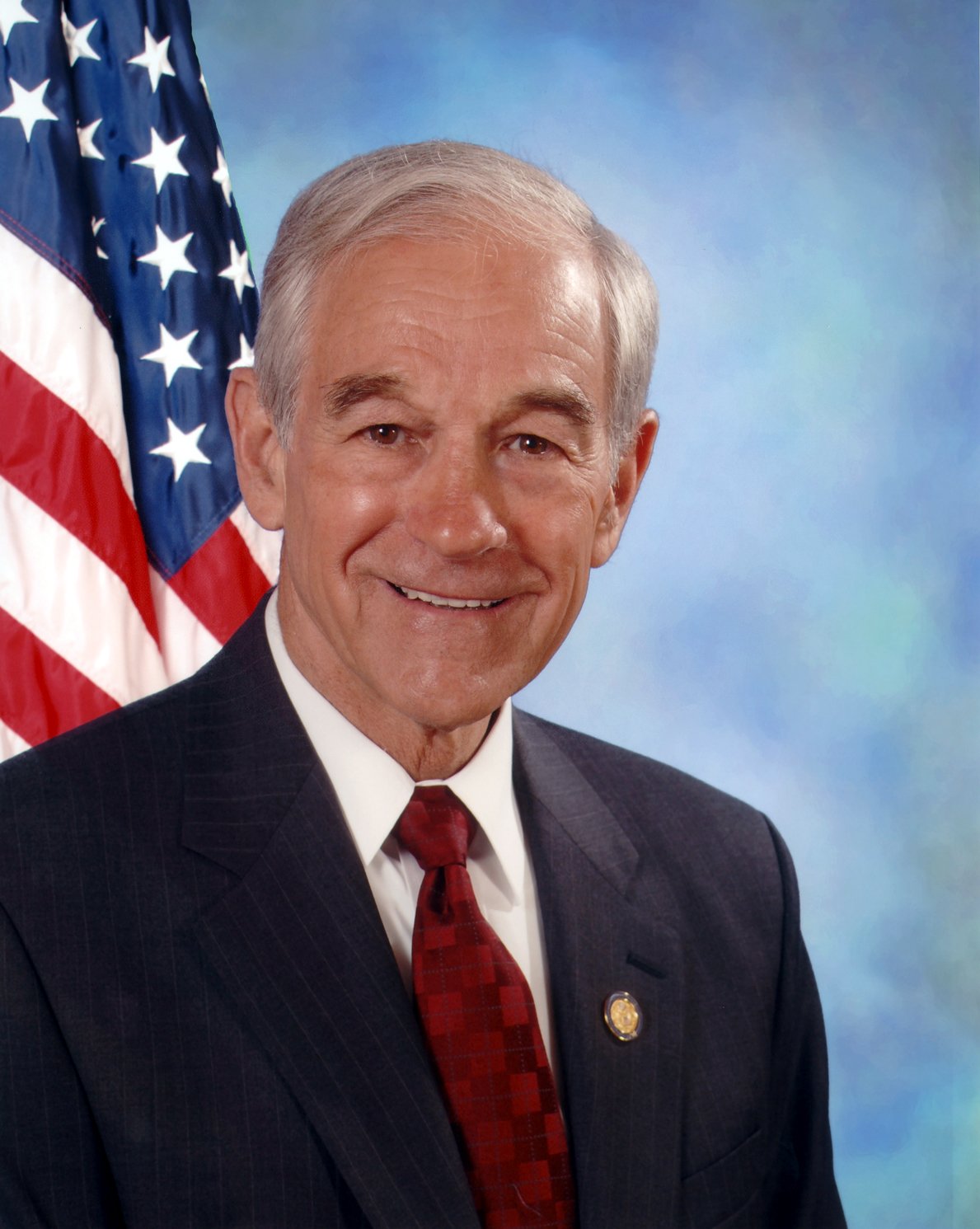
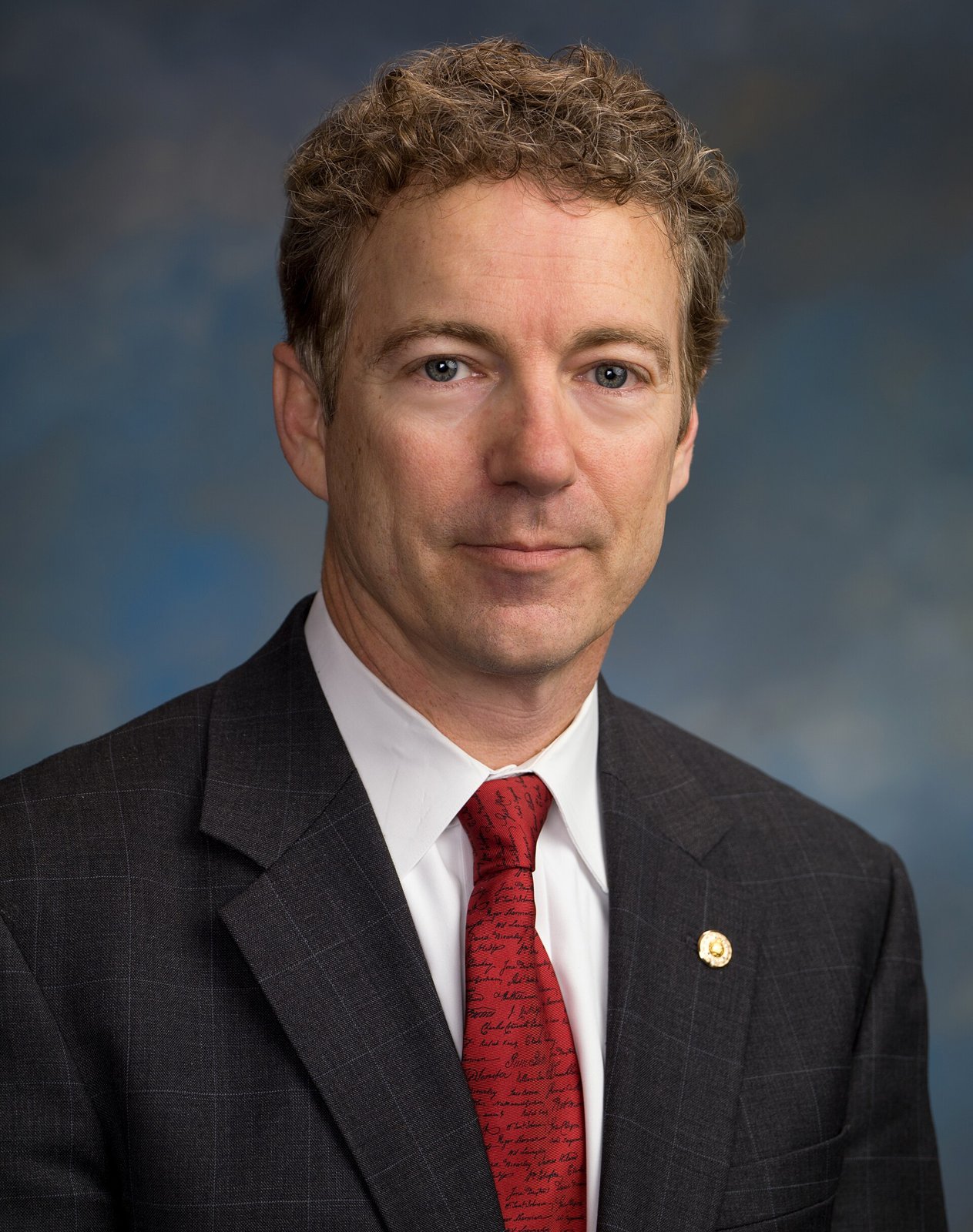
Comparing the Pauls: Father and Son
You'll be able to
- Compare the records of Ron Paul and Rand Paul on the Federal Reserve, war powers, foreign aid, immigration, abortion, drugs and trade, using roll-call votes
- Read a congressional scorecard critically: who publishes it, which votes it counts, and what period it covers
- Explain why the same senator can score in the 90s with one group and near 10 percent with another
- Describe the difference between Ron Paul's outsider strategy and Rand Paul's coalition strategy inside the Republican Party
- State in each man's own words where the son departed from the father
On July 25, 2012, a few months before he left Congress for good, Ron Paul watched the House pass the bill he had spent decades pushing. H.R. 459, the Federal Reserve Transparency Act of 2011, would have ordered the Comptroller General to audit the Board of Governors and the regional Federal Reserve banks. The tally was 327 to 98.1 The Senate never voted on it. Three and a half years later his son tried again. On January 12, 2016, Senator Rand Paul's version, S. 2232, drew 53 votes in the Senate against 44, which sounds like a win and was not, because the motion needed 60 to end debate.2
Same cause, same family name, different chamber, different century of tactics. That pair of votes is a fair place to start a comparison, because the two men agree on far more than they disagree, and the places where they part tell you a good deal about how a set of ideas changes when it moves from a lone congressman's protest vote to a senator's working coalition. Lessons 7 and 8 told each man's story. This lesson lays the records side by side.
How to read a scorecard
Before the issues, a word on the numbers people throw around. A scorecard is a rating that an interest group builds. The group picks a set of votes, decides which side of each it favors, and reports the share of those votes on which a member sided with it. The method decides the score. The National Taxpayers Union, for instance, counted 123 Senate roll calls for 2025 and weighted each by its fiscal impact, so a vote on a trillion-dollar bill counts for more than a vote on a small one, and it counts "only actual votes," leaving out absences.3 The ACLU's scorecard for the 115th Congress gave one point for each vote matching its position, divided by the votes a member actually cast, and it included some procedural votes such as cloture and motions to proceed.4
So three questions come before any number. Who published it? Which votes did it count? Over what years? A lifetime score of 95 and a one-year score of 69 can both be true of the same senator, as you will see below. And a score from 2012 tells you about 2012.
Ron Paul left the House in January 2013, so most of his scores come from an older era of scorecards, and several groups now in the business did not exist or did not rate members when he served. Where a group's page for him could not be found and fetched, this lesson gives no number for him. The same rule applies to his son.
The scorecards, group by group
The groups below run from the free-market right through civil liberties to organized labor and environmental advocacy. Each is named, and each number has a note pointing to the page it came from.
Groups of the free-market right
Heritage Action for America, the lobbying arm associated with the Heritage Foundation, began scoring with the 112th Congress (2011 and 2012). Its page for Ron Paul shows a score of 75 percent for that Congress, which is also his lifetime figure because it is the only Congress Heritage Action rated him in.5 In January 2013 Louisville Public Media reported that Rand Paul had scored 96 percent on the same scorecard, ranking fourth, and that Senate Republican Leader Mitch McConnell's 76 percent was one point higher than Ron Paul's.5 As of October 2026, with the 119th Congress still in session, Heritage Action's page for Rand Paul shows a session score of 76 percent and a lifetime score of 88 percent.5 The 2026 scorecard weighted votes on the One Big Beautiful Bill Act and the rescissions package, among others, as the Daily Signal described it.5
Club for Growth, through its foundation, scores votes on taxes, spending and regulation. Rand Paul earned a perfect 100 percent on its 2012 scorecard, one of three senators to do so.6 Its 2021 awards page lists him at 100 percent for 2020 with a 96 percent lifetime score.6 Its 2025 scorecard, released in June 2026, lists him at 69 percent for the year, ranked 42nd in the Senate, with a 95 percent lifetime score.6 For Ron Paul no Club for Growth number could be fetched. What survives is the Club's 2007 white paper on his presidential candidacy, summarized at the time by W. James Antle III in The American Spectator: it called his tax record "excellent," praised his opposition to big-ticket spending, and faulted him for making the "perfect the enemy of the good" by voting against spending bills that cut too little. On trade it said he was "living in a fantasy world" for backing free trade in theory while opposing actual trade agreements.6 Hold on to that criticism. It explains a pattern in both men's records.
National Taxpayers Union has rated Congress for decades, which makes it the best single comparison across the two careers. When Ron Paul retired, NTU wrote on November 16, 2012 that he had "compiled a stellar lifetime score of 91%" and "earned Taxpayers' Friend status 20 times."7 In a December 2011 comparison of Republican presidential contenders, NTU gave his career average as 90.75, against a chamber average of 39.35 over the same years.7 For Rand Paul, NTU's ratings for 2024, the second session of the 118th Congress, show 96 percent and an A, which carries the Taxpayers' Friend Award for scores of 87 or more.7 For 2025 he was one of six senators to win the award, at 83 percent.3
FreedomWorks, the Tea Party-era group, gave Ron Paul 83 percent on the scorecard reported in September 2012 and Rand Paul 98 percent for 2013, third in the Senate behind Ted Cruz and Mike Lee.8 FreedomWorks no longer issues scores. Semafor reported on May 8, 2024 that it was shutting down, and its president, Adam Brandon, said much of its base had aged and that newer activists "tend to be much more populist."8 That remark matters to this module, because the populist turn is part of the story Lesson 10 takes up.
Americans for Prosperity publishes a national scorecard, but its current numbers appear only through a ZIP-code lookup that could not be read for this lesson, so no current AFP score is given here.9 A February 2013 RedState column reported that Rand Paul scored 91 on AFP's Senate scorecard for the 112th Congress and lost points for voting against two measures AFP favored, the House-passed H.R. 1 and the Ryan budget.9 No AFP score for Ron Paul could be found.
The Cato Institute is often named as a source of fiscal grades, and its Fiscal Policy Report Card on America's Governors is well known. But it grades governors. The 2024 edition, by Chris Edwards, gave its top marks to Kim Reynolds of Iowa and graded governors on their tax and spending records since 2022.10 Neither Paul has been a governor, so there is no Cato grade for either.
Groups of the left and of civil liberties
The American Civil Liberties Union scored the 115th Congress from January 3, 2017 to May 18, 2018, with 22 Senate votes. Rand Paul scored 45 percent.4 The votes scored for him included Senate resolutions overturning Obama-era rules, the 2017 health-care votes and the January 2018 votes to reauthorize Section 702 of the Foreign Intelligence Surveillance Act. That mix tells the story. A senator who fights surveillance will match the ACLU on FISA, and a senator who votes to repeal regulations and the Affordable Care Act will not match it on those. The ACLU's scorecard for the 119th Congress, announced on February 26, 2026, gives individual results through a lookup tool, and no current number for Rand Paul could be read from it.11
The AFL-CIO rates members on labor votes. Its page for Ron Paul shows a lifetime score of 10 percent and 25 percent for 2012.12 Its page for Rand Paul shows a lifetime score of 13 percent and, for 2025, 56 percent, against a 4 percent average for Senate Republicans.12 The jump in 2025 is the most surprising number in this lesson, and the page itself explains it. The federation scored nine 2025 Senate votes and marked Paul on its side on five: his no on the One Big Beautiful Bill Act on July 1, his yes on ending the emergency behind the Canada tariffs on April 2, his vote on the February 21 budget resolution, a December 11 health-care vote and a February letter about National Labor Relations Board member Gwynn Wilcox. Five of nine is 56 percent. He did not become a labor senator. His fights with his own party over spending and tariffs happened to land him on labor's side of those particular votes.
The League of Conservation Voters gives Rand Paul a lifetime score of 9 percent and 13 percent for 2023.13 No LCV score for Ron Paul could be confirmed for this lesson.
| Group (slant) | Ron Paul | Rand Paul |
|---|---|---|
| Heritage Action (conservative) | 75% (112th Congress, 2011-12) | 88% lifetime; 76% for the 119th Congress as of Oct. 2026 |
| Club for Growth Foundation (free-market) | No score found | 95% lifetime; 69% for 2025; 100% for 2012 |
| National Taxpayers Union (fiscal) | 91% lifetime; 20 Taxpayers' Friend awards | 96% for 2024; 83% for 2025 |
| FreedomWorks (Tea Party; closed 2024) | 83% (reported Sept. 2012) | 98% for 2013 |
| Americans for Prosperity (free-market) | No score found | 91 for the 112th Congress (as reported) |
| Cato Institute (libertarian) | Grades governors only; no score for either | |
| ACLU (civil liberties) | No score found | 45% (115th Congress, to May 2018) |
| AFL-CIO (labor) | 10% lifetime; 25% for 2012 | 13% lifetime; 56% for 2025 |
| League of Conservation Voters (environmental) | No score found | 9% lifetime; 13% for 2023 |
Two lessons come out of the numbers. First, both men score very high with groups that care about taxes and spending and very low with groups that want government to do more, which is what anyone would predict. Second, both men lose points on the right, and for the same reason the Club for Growth gave in 2007. They vote no on bills their allies call good enough. Ron Paul voted against spending bills that cut too little. Rand Paul voted against the 2025 reconciliation bill, explaining on July 11, 2025 that "next year under the rosiest of scenarios is the bill adds $270 billion to the debt," even while he counted the tax cuts "on the good side of the ledger."14 The bill passed the Senate on July 1, 2025 only when Vice President Vance broke a 50 to 50 tie. Paul, Thom Tillis and Susan Collins were the three Republicans voting no, and the bill raised the debt ceiling by $5 trillion.14 A purist's no costs points with every group that scores the final vote.
Money and the Federal Reserve
On the Fed the son is the father's heir, with almost no daylight between them. Ron Paul introduced H.R. 459 on January 26, 2011 with 55 cosponsors. Its official title called for "a full audit of the Board of Governors of the Federal Reserve System and the Federal reserve banks by the Comptroller General of the United States before the end of 2012."1 It passed the House under a suspension of the rules, which takes two thirds, by 327 to 98.1 Ron Paul wanted far more than an audit. He wanted to end the Federal Reserve and return to commodity money, and Lesson 7 covers that case. The audit was the piece that could pass.
Rand Paul carried the audit into the Senate. The Council for Citizens Against Government Waste noted that S. 2232 was "sponsored by Senator Rand Paul (R-Ky.)," and the Daily Signal reported that it failed seven votes short of 60.2 The difference here is tactical. The father led with abolition and settled for an audit. The son leads with the audit and talks less about abolition. Neither has seen the audit become law.
War, surveillance and executive power
This is the ground both men are best known for, and the records line up closely, with one difference of style that became a difference of substance.
The father's votes
Ron Paul did not oppose every use of force. On September 14, 2001, three days after the attacks, he voted for H.J.Res. 64, which authorized force against those responsible. The House passed it 420 to 1, with Barbara Lee of California the lone no.15 Six weeks later he was one of three Republicans to vote against the USA PATRIOT Act, H.R. 3162, which passed 357 to 66 on October 24, 2001.15 On October 10, 2002 he was one of six Republicans to vote against H.J.Res. 114, the authorization for the Iraq war, which passed 296 to 133.15 His view was that Congress should declare war when war is needed and should not hand the decision to the President in open-ended authorizations.
The son's votes and the filibuster
Rand Paul made the same argument into a public event. On March 6, 2013 he took the Senate floor to hold up the confirmation of John Brennan as director of the CIA and spoke for 12 hours and 52 minutes, yielding just before 1 a.m. on March 7.16 He wanted a plain answer to whether the administration claimed power to kill Americans on American soil without trial. The next day Attorney General Eric Holder wrote him a short letter. It quoted his question, "Does the President have the authority to use a weaponized drone to kill an American not engaged in combat on American soil?" and gave the answer: "The answer to that question is no."16
On surveillance the son matched the father's Patriot Act vote fourteen years later. When the Senate passed the USA FREEDOM Act, H.R. 2048, by 67 to 32 on June 2, 2015, Rand Paul voted no.17 The bill ended the government's bulk collection of phone records but renewed other expiring authorities, and Paul's position was that it did not go far enough. Lesson 8 tells that story.
The father opposed the Iraq war from the House. The son, as a senator, has used the War Powers Resolution against presidents of both parties. On June 27, 2025, after American strikes on Iran, the Senate voted 47 to 53 on Senator Tim Kaine's resolution to limit further hostilities, and Rand Paul was the only Republican to vote for it.18 He also turned the war-powers argument toward trade, as the tariff section below shows.
Foreign aid, Ukraine and Israel
Here the father was simple and the son has been careful, and the gap is real.
Ron Paul opposed all foreign aid and said so in the plainest words available. At a Republican presidential debate in October 2011 he was asked whether his cuts would reach Israel. "I would cut all foreign aid. I would treat everybody equally," he answered, and he argued that the aid "makes Israel dependent on us" and that Israel should have its sovereignty back.19 His votes matched his words even on resolutions without money attached. On January 9, 2009, the House passed H.Res. 34, recognizing Israel's right to defend itself against attacks from Gaza, by 390 to 5, with 22 voting present. Paul was one of the five nays.20
Rand Paul began in the same place. His 2011 budget would have ended foreign aid to every country, Israel included, and in 2011 he said, "I'm not singling out Israel. I support Israel. I want to be known as a friend of Israel, but not with money you don't have." He also asked, "Should we be giving free money or welfare to a wealthy nation? I don't think so."21 By August 2014, as he prepared to run for president, he told Yahoo News, "I haven't really proposed that in the past," and "We've never had a legislative proposal to do that," and he pointed to a recent vote for more money for Israel's Iron Dome missile defense. JTA's Ron Kampeas, reporting the exchange, set his 2014 statements against his 2011 budget and remarks.21 His defenders say a budget that cuts all aid equally was never a proposal aimed at Israel. Those on the other side answer that he walked the position back when it became costly. Readers can compare the two quotations and decide.
On Ukraine the son has acted on the father's principle. In May 2022 he held up the $40 billion aid package, asking that it create a special inspector general to watch the spending, and named John Sopko, the former Afghanistan reconstruction watchdog, as the model: "We've already got the best solution, and that is a special inspector who has a track record."22 On February 13, 2024, when the Senate passed the $95.34 billion national security supplemental (H.R. 815, carrying about $61 billion for Ukraine, $14 billion for Israel and $4.83 billion for allies in the Indo-Pacific) by 70 to 29, Rand Paul voted no.23 That vote put him against aid to Israel in a package, while he has supported particular Israel measures, such as the Iron Dome money he cited in 2014. The father voted no on aid as a matter of rule. The son votes no on packages and yes on some pieces.
Immigration
On immigration the son moved the furthest, at least in his words. In his 2007 presidential advertising Ron Paul said "No amnesty" and "End birthright citizenship," and at a 2007 New Hampshire debate he said, "We subsidize illegal immigration. We reward it by easy citizenship, either birthright or amnesty." His 2011 book Liberty Defined was softer, saying most illegal immigrants come "for survival reasons."25
Rand Paul spoke to the U.S. Hispanic Chamber of Commerce in Washington on March 19, 2013. "Let's start that conversation by acknowledging we aren't going to deport 12 million illegal immigrants," he said, and, "If you wish to work, if you wish to live and work in America, then we will find a place for you." He told the chamber that "Republicans have pushed them away with harsh rhetoric over immigration."25 He also wanted enough time for people to be "assimilating, knowing about America before they become citizens."25
Then came the vote. Paul offered a "Trust but Verify" amendment to the Senate bill that would have required Congress to vote to certify that the border was secure, with a double fence on the Mexican border and a 95 percent apprehension rate. The Senate rejected it 61 to 37 in June 2013.26 A week earlier he had told the Louisville Courier-Journal, "If they passed my amendment, that would get my vote," and added that "the bill's not there yet."26 On June 27, 2013 the Senate passed S. 744 by 68 to 32, and Rand Paul voted no.27 So the son's tone shifted toward legal status, and his vote stayed where his father's would have been. His explanation was the 1986 law, which in his reading promised border security and delivered amnesty without it.26
Abortion and drugs
Both men are physicians, and both are pro-life. The difference lies in where they put the decision.
Ron Paul, an obstetrician, wanted the federal courts out of it. His Sanctity of Life Act, which he introduced in 2005, twice in 2007, in 2009 and in 2011, would have defined human life as beginning at conception and removed abortion cases from federal jurisdiction, leaving the states to protect the unborn.28 In a floor statement introducing it he said the bill "provides that the federal courts of the United States, up to and including the Supreme Court," "do not have jurisdiction to hear abortion-related cases," and that the federal courts have "no legitimate authority to tell states and local communities" what restrictions they may adopt.28
Rand Paul, an ophthalmologist, has offered the Life at Conception Act, which in his words "legislatively declares what most Americans believe," that "human life begins at the moment of conception, and therefore, is entitled to legal protection from that point forward." His office described it as extending the Fourteenth Amendment's equal protection to the unborn.29 That is a national rule under the Fourteenth Amendment, where his father's bill rested on states' authority and stripping federal court jurisdiction. Both would end legal abortion in large parts of the country. They reach it by different constitutional roads.
On drugs the father went further. On June 23, 2011, Ron Paul joined Barney Frank, the Massachusetts Democrat, as a cosponsor of H.R. 2306, the Ending Federal Marijuana Prohibition Act of 2011, which would have limited federal marijuana law and left the question largely to the states.30 In a debate during his last campaign he defended the right of states to legalize even heroin and told the audience, "I bet nobody would put their hand up," meaning that no one there would start using it just because it became legal.31 Rand Paul has taken a narrower line. On March 10, 2015 he joined Democrats Cory Booker and Kirsten Gillibrand to introduce the CARERS Act, which would have stopped federal prosecution of medical marijuana users and providers acting under state law, moved marijuana from Schedule I to Schedule II and let banks serve legal marijuana businesses.32 Asked about full legalization, he said, "I really haven't taken a stand on ... the actual legalization," while opposing federal rules that stop states from doing it.31
Trade and tariffs
Both men call themselves free traders, and both have voted against trade agreements, which is the record the Club for Growth called a "fantasy world" in 2007. Ron Paul explained himself on March 1, 2000, when he urged the House to leave the World Trade Organization. "Let us face it, free trade means trade without interference from governmental or quasi-governmental agencies," he said, and "the World Trade Organization is nothing other than a vehicle for managed trade." He tied the point to sovereignty: "No Nation can maintain its sovereignty if it surrenders its authority to an international collective."33 True to that view he voted no on the Central America Free Trade Agreement, H.R. 3045, which passed 217 to 215 a little after midnight on July 28, 2005.34
Rand Paul's trade fight has been with tariffs, and with a President of his own party. On April 2, 2025, he joined Susan Collins, Lisa Murkowski and Mitch McConnell as the four Republicans voting for Tim Kaine's resolution to end the emergency behind tariffs on Canada, which passed 51 to 48. In debate he mocked the claim that the tariffs targeted fentanyl: "Do you think the drug dealers are going to pay a tariff on fentanyl?"35 On October 28, 2025, he was one of five Republicans, with McConnell, Murkowski, Collins and Thom Tillis, voting for a resolution that passed 52 to 48 to end the emergency behind 50 percent tariffs on Brazilian imports. On the floor he said the emergency was "contrived," called the tariffs "unconstitutional import taxes" and said, "I, for one, still believe in the principle of no taxation without representation."35
Notice how the son framed it. He did not argue economics first. He argued that Article I gives Congress the power to lay duties and that a President declaring emergencies to tax imports is taking a power that belongs to the legislature. It is the drone filibuster's argument moved to trade, and his father's sovereignty argument moved from Geneva to the White House.
Party strategy: outsider and coalition
The deepest difference between the two is less a vote than a choice of method. Ron Paul spent most of his career as an outsider who belonged to the Republican Party and seldom behaved as if he did. He ran for president in 1988 as the Libertarian Party's nominee, as Lesson 6 recounts.31 In 2012, after a strong primary run, he declined to speak at the Republican convention on terms that required the Romney campaign to vet his remarks and required him to back Romney fully. "It wouldn't be my speech," he said. "I don't fully endorse him for president," and doing so "would undo everything I've done in the last 30 years."36
Rand Paul made the opposite choice. On June 7, 2012, the same day his father's campaign in effect conceded, he endorsed Mitt Romney, and Romney said he was "honored."36 He allied with Mitch McConnell, endorsed him, and won McConnell's endorsement for his own 2016 race, as NPR's Domenico Montanaro wrote in April 2015, describing the son as trying to bring his father's ideas into the mainstream of the party.31 He has held committee power too. As of October 2026 he chairs the Senate Homeland Security and Governmental Affairs Committee, with Gary Peters of Michigan as ranking member.24
Each method has a price, and each man's admirers say so. Ron Paul's supporters say his refusal to bargain built a movement that outlived his campaigns: the young people who filled his rallies, the Campaign for Liberty, and a Senate seat held by his son. His critics, including the Club for Growth, say he passed little and made the perfect the enemy of the good. Rand Paul's supporters say a senator inside the conference can win a Holder letter, force a war-powers vote and tie up an aid package until his demands get a hearing. His critics on the purist side say he endorsed people his father would not and softened words on Israel and immigration to fit a presidential run. Both men would say the Constitution is the test. They disagree about how much of it a man must win at once.
| Issue | Ron Paul (House) | Rand Paul (Senate) | Distance |
|---|---|---|---|
| Federal Reserve | End it; H.R. 459 audit passed House 327-98 (2012) | S. 2232 audit failed cloture 53-44 (2016) | Same goal; son leads with the audit |
| War and force | Yes on 2001 authorization; no on Iraq (2002) | Only Republican yes on Iran war-powers resolution (June 2025) | Close |
| Surveillance | No on Patriot Act (2001) | 12-hour 52-minute drone filibuster (2013); no on USA FREEDOM Act (2015) | Close |
| Foreign aid and Israel | Cut all foreign aid; no on H.Res. 34 (2009) | Proposed ending all aid (2011); later backed Iron Dome money; no on 2024 supplemental | Moderate |
| Immigration | "No amnesty," end birthright citizenship (2007) | "We will find a place for you" (2013); no on S. 744 | Wide in words, close in votes |
| Abortion | Pro-life; strip federal court jurisdiction, leave to states | Pro-life; Life at Conception Act under the 14th Amendment | Same end, different road |
| Drugs | Cosponsored end of federal marijuana ban (2011) | CARERS Act for medical marijuana (2015) | Son narrower |
| Trade and tariffs | Leave the WTO; no on CAFTA (2005) | Votes to end emergency tariffs on Canada and Brazil (2025) | Close |
| Party | 1988 Libertarian nominee; would not fully endorse Romney (2012) | Endorsed Romney (2012); allied with McConnell | Wide |
What each says about the other
Neither man has spent much time criticizing the other in public, and reporters have tried hard to make them. When Rand Paul announced his presidential campaign in April 2015, NPR's Montanaro recalled his 2010 victory-night line, "I have a message from the Tea Party," and wrote that the son is "more subtle" than a father who "spoke his mind, regardless of the politics."31 In June 2013 the Daily Beast headlined a profile "I'm Not My Dad," describing the son's effort to set aside some of his father's more extreme views as he looked toward 2016.37
The record suggests a simpler summary than the headlines. On the Fed, war, surveillance and trade, the son votes as the father did and argues more often from the Constitution's text about which branch holds a power. On Israel, immigration and drug legalization, the son talks differently and in some cases votes differently. And on party, he chose the inside game his father refused. Scorecards from left and right agree that both men are among the most consistent votes in Congress against spending and federal power. They disagree, predictably, about whether that is a virtue. Lesson 10 hears the critics.
Learn more
- House roll call 513 (2012): Every member's vote on Ron Paul's audit-the-Fed bill.
- Senate vote on S. 2232 (2016): How each senator voted on Rand Paul's audit bill.
- Heritage Action scorecard for Rand Paul: The conservative group's session and lifetime figures, with the votes it counts.
- Club for Growth 2025 scorecard: The full Senate list and the votes scored, including the 2025 reconciliation bill.
- National Taxpayers Union, 2025 ratings: A clear account of how a weighted fiscal score is built.
- ACLU scorecard, 115th Congress: A civil-liberties scorecard that splits libertarian-leaning members down the middle.
- AFL-CIO page for Rand Paul: Labor's view, including the unusual 2025 score.
- Like Father, Like Son? Not Exactly (NPR): A short, fair contrast written as Rand Paul entered the 2016 race.
- Did Rand Paul Propose Cutting Aid to Israel? (JTA): The 2011 and 2014 statements side by side.
Notes
- Office of the Clerk, U.S. House of Representatives, Roll Call 513, 112th Congress, 2nd Session, H.R. 459, on motion to suspend the rules and pass, as amended, July 25, 2012: 327 yea, 98 nay, 6 not voting. Read it online. U.S. Government Publishing Office, bill metadata, H.R. 459 (IH), 112th Congress, Federal Reserve Transparency Act of 2011, sponsor Rep. Ron Paul, introduced January 26, 2011. Read it online. ↩
- U.S. Senate, Roll Call Vote 114th Congress, 2nd Session, Vote Number 2, motion to invoke cloture on the motion to proceed to S. 2232, Federal Reserve Transparency Act of 2015, January 12, 2016: 53 yeas, 44 nays, 3/5 required; cloture rejected. Read it online. See also Daily Signal, "Find Out If Your Senators Voted to Audit the Fed," January 12, 2016, on the bill falling seven votes short. Read it online. Rachel Cole, "Auditing the Federal Reserve: Foiled Again!" Council for Citizens Against Government Waste, January 15, 2016. Read it online. ↩
- National Taxpayers Union, "53 U.S. Senators, Representatives Earn an 'A' Rating in Latest NTU Rates Congress Report," May 13, 2026, covering the first session of the 119th Congress (2025): 123 Senate and 97 House roll calls, weighting method, and Rand Paul's 83 percent among six Senate Taxpayers' Friend winners. Read it online. ↩
- American Civil Liberties Union, "Congressional Civil Liberties Record in the Trump Era," scorecard for the 115th Congress, votes from January 3, 2017 to May 18, 2018, including scoring method and Senate roll calls; Rand Paul (R-KY) 45 percent. Read it online. ↩
- Heritage Action for America, Scorecard 112, Rep. Ron Paul (R-TX-14): session score 75 percent, lifetime score 75 percent. Read it online. "Sen. Rand Paul Ranks No. 4 on Conservative Think Tank's Scorecard," Louisville Public Media, January 31, 2013. Read it online. Heritage Action for America, Scorecard, Sen. Rand Paul (R-KY), 119th Congress: session score 76 percent, lifetime score 88 percent, as displayed in October 2026. Read it online. "Exclusive: Heritage Action Scorecard Reveals Which Lawmakers Are Fighting for Conservative Values," The Daily Signal, March 31, 2026, on the weighted votes in the scorecard. Read it online. ↩
- Club for Growth, "Club for Growth Releases 2012 Scorecard," listing Rand Paul among three senators with 100 percent. Read it online. Club for Growth, "2021 Club for Growth Defenders of Economic Freedom," Senate list showing Rand Paul at 100 percent (column labeled 2020 score) and 96 percent lifetime, with the 90 percent award threshold. Read it online. Club for Growth Foundation, 2025 Congressional Scorecard (June 2026), Senate table: Rand Paul 69 percent, rank 42, lifetime 95 percent. Read it online. W. James Antle III, "The Club for Growth on Ron Paul," The American Spectator, October 30, 2007, summarizing and quoting the Club for Growth's 2007 white paper. Read it online. ↩
- National Taxpayers Union, "Taxpayers Should Thank Retiring Representative, Fiscal Hawk Ron Paul," November 16, 2012. Read it online. Douglas Kellogg, "Republican Presidential Primary Contenders' Ratings on Taxpayer Issues," National Taxpayers Union, December 21, 2011. Read it online. National Taxpayers Union, Rates Congress, 118th Congress, Second Session, 2024, Taxpayers' Friend list and Senate key (87 or more earns an A). Read it online. ↩
- "FreedomWorks Grades the Congress," Alabama Political Reporter, September 18, 2012, reporting Ron Paul's 83 percent. Read it online. "FreedomWorks Ranks D.C. Lawmakers," FITSNews, December 30, 2013, reporting Rand Paul's 98 percent for 2013. Read it online. "FreedomWorks' Collapse Marks the End of the Tea Party Era," Semafor, May 8, 2024, quoting Adam Brandon. Read it online. ↩
- Americans for Prosperity, National Scorecard (lookup by ZIP code). Read it online. Daniel Horowitz, "The Problem With the AFP Scorecard," RedState, February 22, 2013. Read it online. ↩
- Chris Edwards, "Fiscal Report Card on America's Governors 2024," Cato Institute, October 15, 2024. Read it online. ↩
- ACLU, "Congressional Scorecard Details Pro- and Anti-Civil Liberties Votes in Congress Since 2025," press release, February 26, 2026. Read it online. ↩
- AFL-CIO Legislative Scorecard, Rep. Ron Paul: lifetime 10 percent; 2012, 25 percent. Read it online. AFL-CIO Legislative Scorecard, Sen. Rand Paul: lifetime 13 percent; 2025, 56 percent, with the nine 2025 votes scored and each marked right or wrong (checked October 2026). Read it online. ↩
- League of Conservation Voters, National Environmental Scorecard, Senator Rand Paul (R): lifetime 9 percent; 2023, 13 percent. Read it online. ↩
- "U.S. Sen. Rand Paul Discusses His Vote Against 'Big, Beautiful Bill,'" WCHS-TV, July 11, 2025. Read it online. "Senate Passes Trump's 'Big, Beautiful Bill' After 11th-Hour Panic," Axios, July 1, 2025, naming Paul, Tillis and Collins as the Republican no votes and the $5 trillion debt-ceiling increase. Read it online. ↩
- Office of the Clerk, Roll Call 342, 107th Congress, 1st Session, H.J.Res. 64, September 14, 2001: 420 yea, 1 nay. Read it online. Office of the Clerk, Roll Call 398, 107th Congress, 1st Session, H.R. 3162, October 24, 2001: 357 yea, 66 nay; Republican nays, 3. Read it online. Office of the Clerk, Roll Call 455, 107th Congress, 2nd Session, H.J.Res. 114, To Authorize the Use of United States Armed Forces Against Iraq, October 10, 2002: 296 yea, 133 nay; Republican nays, 6. Read it online. ↩
- "Paul Ends Filibuster After Nearly 13 Hours," Salon, March 7, 2013. Read it online. Letter of Attorney General Eric Holder to Senator Rand Paul, March 7, 2013, as reproduced in "Attorney General Eric Holder Responds to Rand Paul's Question on Domestic Use of Drones Against US Citizens," The Volokh Conspiracy, March 7, 2013. Read it online. ↩
- U.S. Senate, Roll Call Vote 114th Congress, 1st Session, Vote Number 201, H.R. 2048, USA FREEDOM Act of 2015, on passage, June 2, 2015: 67 yeas, 32 nays; Paul (R-KY) nay. Read it online. ↩
- "Fetterman Defies Democrats on Iran War Powers," The Intercept, June 28, 2025, reporting the 47-53 vote of June 27, 2025 and Rand Paul as the only Republican in support. Read it online. ↩
- Tiffany Gabbay, "Ron Paul Would Cut All Foreign Aid, Even to Israel," The Blaze, October 18, 2011. Read it online. ↩
- Office of the Clerk, Roll Call 10, 111th Congress, 1st Session, H.Res. 34, January 9, 2009: 390 yea, 5 nay, 22 present; Paul (R-TX) nay. Read it online. ↩
- Ron Kampeas, "Did Rand Paul Propose Cutting Aid to Israel?" JTA, August 6, 2014, quoting Paul in 2011 and in his August 2014 Yahoo News interview. Read it online. ↩
- "After Delay, Senate Poised to Send $40 Billion in Ukraine Aid to Biden," NBC News, May 2022. Read it online. ↩
- U.S. Senate, Roll Call Vote 118th Congress, 2nd Session, Vote Number 48, H.R. 815 as amended, on passage, February 13, 2024: 70 yeas, 29 nays; Paul (R-KY) nay. Read it online. Chiang Chin-yeh and James Lo, "U.S. Senate Passes US$95 Billion Ukraine, Israel, Taiwan Aid Bill," Central News Agency, February 13, 2024, via GlobalSecurity.org, giving the amounts by region. Read it online. ↩
- U.S. Senate Committee on Homeland Security and Governmental Affairs, Members page, listing Chairman Rand Paul and Ranking Member Gary Peters (checked October 2026). Read it online. ↩
- "From 'Amnesty!' to Assimilation: Two Pauls' Immigration Stances," NBC News, March 2013, quoting Ron Paul's 2007 advertising and debate remarks and his 2011 book, and Rand Paul's 2013 remarks. Read it online. Liz Halloran, "Rand Paul Reaffirms Support for Path to Citizenship," NPR, March 19, 2013. Read it online. ↩
- "Senate Rejects Rand Paul's Border Security Amendment to Immigration Bill," WKMS, June 19, 2013. Read it online. James R. Carroll, Louisville Courier-Journal, June 12, 2013, as archived by the Cato Institute. Read it online. ↩
- U.S. Senate, Roll Call Vote 113th Congress, 1st Session, Vote Number 168, S. 744, Border Security, Economic Opportunity, and Immigration Modernization Act, on passage, June 27, 2013: 68 yeas, 32 nays; Paul (R-KY) nay. Read it online. ↩
- "Sanctity of Life Act," on Ron Paul's introductions (H.R. 776, 2005; H.R. 1094 and H.R. 2597, 2007; H.R. 2533, 2009; H.R. 1096, 2011) and the bill's provisions. Read it online. Ron Paul, "Introducing the Sanctity of Life Act," House floor statement, as archived by Vote Smart (undated on the archive page). Read it online. ↩
- Office of Senator Rand Paul, "Sen. Rand Paul Introduces Life at Conception Act," press release issued ahead of the annual March for Life, about January 2016 (the archived page carries no date). Read it online. ↩
- U.S. Government Publishing Office, bill metadata, H.R. 2306 (IH), 112th Congress, Ending Federal Marijuana Prohibition Act of 2011, sponsor Barney Frank, cosponsors including Ron Paul, introduced June 23, 2011. Read it online. ↩
- Domenico Montanaro, "Like Father, Like Son? Not Exactly, When It Comes to Rand and Ron Paul," NPR, April 8, 2015. Read it online. ↩
- "Three Senators Pitch a Bill That Would Let States Legalize Medical Marijuana," Reason, March 10, 2015, describing the CARERS Act. Read it online. ↩
- Ron Paul, remarks on withdrawal from the World Trade Organization, Congressional Record, House, March 1, 2000, p. H612, as archived by the University of North Carolina lobbying project. Read it online. ↩
- Office of the Clerk, Roll Call 443, 109th Congress, 1st Session, H.R. 3045, Dominican Republic-Central America-United States Free Trade Agreement Implementation Act, July 28, 2005: 217 aye, 215 no; Paul (TX) no. Read it online. ↩
- "Four Republicans Help Democrats Pass Measure to End Canadian Tariffs," Roll Call, April 2, 2025. Read it online. "U.S. Senate in Bipartisan Vote Rejects Trump Tariffs on Brazil as Coffee Prices Spike," Kentucky Lantern, October 28, 2025. Read it online. ↩
- "Ron Paul: I Don't Fully Endorse Romney for President," CBS News, August 26, 2012. Read it online. "Rand Paul Endorses Mitt Romney," Roll Call, June 7, 2012. Read it online. ↩
- David Catanese, "Rand Paul: I'm Not My Dad," The Daily Beast, June 29, 2013. Read it online. ↩
Check yourself
1. On July 25, 2012, the House voted on Ron Paul's Federal Reserve Transparency Act (H.R. 459). What happened?
The Clerk of the House records roll call 513 of July 25, 2012: H.R. 459 passed 327 yea to 98 nay. The Senate never voted on it. When Rand Paul's version (S. 2232) reached the Senate in January 2016, cloture failed 53 to 44 under a 60-vote rule.
2. How did Ron Paul vote on the October 2002 resolution authorizing force against Iraq and on the 2001 USA PATRIOT Act?
The House Clerk lists Paul as a Nay on H.J.Res. 114 (roll call 455, October 10, 2002), one of six Republican nays, and as a Nay on H.R. 3162 (roll call 398, October 24, 2001), one of three Republican nays. He had voted Yea on the September 14, 2001 authorization against those responsible for the attacks.
3. Which statement about Rand Paul's 2025 Club for Growth score is accurate?
The Club for Growth Foundation's 2025 Congressional Scorecard lists Paul at 69 percent for the year, ranked 42nd, with a 95 percent lifetime score. The 2025 votes included the One Big Beautiful Bill Act, which he voted against.
4. Why does this lesson give no Cato Institute score for either Paul?
Cato's report card, written by Chris Edwards, grades governors on their tax and spending records. Neither Paul has served as a governor, so there is no Cato grade to report.
5. In March 2013, speaking to the U.S. Hispanic Chamber of Commerce, what did Rand Paul say about the roughly 12 million people in the country illegally?
NPR reported the remark on March 19, 2013. It contrasted with his father's 2007 advertising, which said 'No amnesty' and 'End birthright citizenship.' Rand Paul still voted against the Senate's S. 744 on June 27, 2013, after his 'Trust but Verify' border amendment failed.
6. What did Ron Paul say in August 2012 when asked why he would not speak at the Republican National Convention on the Romney campaign's terms?
CBS News reported on August 26, 2012 that the offer required a vetted speech and a full endorsement, and Paul said, 'It wouldn't be my speech,' and 'I don't fully endorse him for president.' Rand Paul had endorsed Romney on June 7, 2012.
Terms in this lesson
- Scorecard
- A rating an advocacy group publishes after choosing a set of votes, deciding which side it favors on each, and computing what share of the time a member voted its way.
- Lifetime score
- A scorecard rating that averages a member's record over every year the group has scored him, as distinct from a single year or session.
- Roll call vote
- A recorded vote in which each member's yea or nay is entered by name in the official record kept by the Clerk of the House or the Secretary of the Senate.
- Cloture
- The Senate procedure for ending debate, which usually takes 60 votes. A bill can win a majority and still fail on cloture.
- Audit the Fed
- The common name for bills, led first by Ron Paul and later by Rand Paul, to have the Government Accountability Office audit the Federal Reserve without the limits now in law.
- War powers resolution
- A joint resolution under the War Powers Resolution of 1973 directing the President to remove U.S. forces from hostilities that Congress has not authorized.
- National emergency tariff
- A tariff imposed by the President under a declared national emergency instead of by an act of Congress. Congress may vote to end the emergency by joint resolution.
Sources
- Clerk of the House, Roll Call 513 (July 25, 2012), H.R. 459 checked 2026-10
- U.S. Senate, Roll Call Vote 114th Congress, 2nd Session, Vote 2 (S. 2232) checked 2026-10
- Clerk of the House, Roll Call 455 (October 10, 2002), H.J.Res. 114 checked 2026-10
- U.S. Senate, Roll Call Vote 113th Congress, 1st Session, Vote 168 (S. 744) checked 2026-10
- Heritage Action for America, Scorecard: Sen. Rand Paul checked 2026-10
- Club for Growth Foundation, 2025 Congressional Scorecard checked 2026-10
- National Taxpayers Union, 2025 Rates Congress release (May 13, 2026) checked 2026-10
- ACLU, Congressional Scorecard, 115th Congress checked 2026-10
- AFL-CIO Legislative Scorecard: Sen. Rand Paul checked 2026-10
- League of Conservation Voters Scorecard: Sen. Rand Paul checked 2026-10
- Domenico Montanaro, Like Father, Like Son? Not Exactly (NPR, April 8, 2015) checked 2026-10
- Ron Kampeas, Did Rand Paul Propose Cutting Aid to Israel? (JTA, August 6, 2014) checked 2026-10