Lesson 8 of 8 · about 17 minutes
Elmore County and the Rest of the Magic Valley
You'll be able to
- List the energy projects in Elmore County with case numbers and status as of October 2026
- Describe Idaho Power's two proposed gas plants, their sizes, dates and the PUC case that decides them
- Explain what an AFUDC accounting order does and compute a simple example
- Identify the other Magic Valley wind, solar and data center proposals and their status
Elmore County has become one of the busiest energy dockets in southern Idaho without much attention from the rest of the state. It has Idaho Power's biggest proposed new plant, a new substation and lines, two solar permits, a combined wind, solar and storage application, an old pumped storage proposal, and the edge of a data center on federal land. The Magic Valley proper has its own list. This lesson takes them in turn.
Elmore County, as of October 2026
| Project | What | Case | Status |
|---|---|---|---|
| Peregrine Power Plant | Idaho Power gas plant, 430 MW, an H-class simple-cycle combustion turbine on Simco Road between Mountain Home and Boise, with a 10-acre substation | PUC IPC-E-26-04; county CUP-2025-32, VAR-2026-05 and VAR-2026-06 | County findings and orders on the April 30, 2026 P&Z consent agenda; PUC case open, no final order as of Sept. 25, 2026; target June 1, 2030 |
| Mayfield Substation and transmission lines | Idaho Power facilities | CUP-2025-25 | On the April 30, 2026 consent agenda |
| Soles Rest Solar | Up to 149 MWac on about 981 leased acres | CUP-2025-29 | Staff recommended approval; workshop July 23, 2026 |
| Crimson Orchard Solar and storage (Clenera) | 100 MWac solar plus 100 MWac battery on Simplot land | CUP-2024-18 | P&Z hearing March 13, 2025 |
| Desert Ridge Winds | Utility-scale wind, solar and storage in eastern Elmore County | CUP-2024-01 | Public workshop April 30, 2026; no hearing date found; size not found in county records reviewed |
| Rhea Data rights-of-way | Transmission and wiring for a data center on BLM land in southern Ada County | BLM Four Rivers Field Office | Pre-planning; notice of intent planned before end of 2026 |
| Cat Creek Energy | Pumped storage between a planned 1,900-acre Cat Creek Reservoir and Anderson Ranch Reservoir, about 480 acres of solar, up to 39 wind turbines up to 510 feet tall | FERC licensing | In June 2022 FERC required a more in-depth licensing process; current status not confirmed for this course |
The Idaho Department of Lands also sought wind or solar lease proposals on more than 6,000 acres of state endowment land in Elmore County in 2020. Whether a lease resulted is something to ask the department.
The gas plants: Peregrine and South Hills
On March 11, 2026, Idaho Power asked the PUC for certificates to build two gas plants, case IPC-E-26-04. South Hills in Twin Falls County would provide up to 222 MW from twelve reciprocating engines, starting June 1, 2029, on a 20-acre parcel near the Milner hydro project. Peregrine in Elmore County would provide 430 MW from a simple-cycle combustion turbine, starting June 1, 2030. The company says they are the cheapest, least risky way to cover capacity deficits starting in 2029, and especially useful at winter peaks when solar and batteries do less.
The case is proceeding by modified procedure, meaning written comments instead of a hearing. Public comments were due July 31, 2026, and Idaho Power's reply August 14. Intervenors are the Idaho Irrigation Pumpers Association, which also petitioned for intervenor funding on August 28; Micron; and the Northwest Energy Coalition with Renewable Northwest. Idaho Power did not ask for binding ratemaking treatment; it says it will make a future filing for cost recovery, so no rate change is decided in this case.
For context, Idaho Power reported that hydropower supplied nearly 37 percent of its 2025 energy and natural gas 22.6 percent, with solar at 9.1 percent. Two of the four Jim Bridger units in Wyoming were converted from coal to gas in early 2024, the North Valmy plant in Nevada is converting too, and the 2025 IRP plans 611 MW of coal-to-gas conversions in all.
The accounting order nobody reads
The same case asks the PUC to confirm that Idaho Power may accrue Allowance for Funds Used During Construction on both plants, starting with initial procurement. AFUDC is the financing cost of money tied up in a plant before it runs. It gets added to the plant's value, and if the plant is later found prudent, customers pay it back over the plant's life along with a return.
Example: how AFUDC adds up (invented numbers)
An invented utility builds a $200 million plant over two years, spending $100 million in each year, at an assumed AFUDC rate of 7 percent. Assume each year's spending happens mid-year and ignore compounding within a year.
- Year 1 spending, year 1: $100,000,000 x 0.07 x 0.5 = $3,500,000.
- Year 1 spending, year 2: $100,000,000 x 0.07 = $7,000,000.
- Year 2 spending, year 2: $100,000,000 x 0.07 x 0.5 = $3,500,000.
- Total AFUDC: $3,500,000 + $7,000,000 + $3,500,000 = $14,000,000, or 7 percent on top of the $200 million.
Starting the accrual earlier, at procurement rather than at groundbreaking, adds months of it. Every month of delay adds more. That is why the start date and the AFUDC rate are worth a question when the cost case comes.
The rest of the Magic Valley
| Project | Where | Size | Status |
|---|---|---|---|
| South Hills Power Plant | Twin Falls County | 222 MW gas | PUC IPC-E-26-04 open; target June 1, 2029 |
| Taurus Wind (Arevia Power) | BLM land, Gooding, Lincoln and a neighboring county | 500 MW on about 49,194 acres | BLM forum Jan. 28, 2025; no later decision found |
| Snake River Energy Solar (Arevia Power) | Same area | 400 MW on about 4,609 acres, with 550 MW of shared storage | Same |
| Salmon Falls Wind (Magic Valley Energy) | BLM land, Twin Falls County | About 800 MW | Announced March 2022; a tracker lists its Rogerson queue request as suspended |
| Snake River Energy Data Center (Copia) | BLM land north of Twin Falls | Not stated | Beginning environmental review, per September 2026 reporting |
| SWIP-N | Midpoint Substation to Nevada | 500 kV, 285 miles | Under construction; service expected 2028 |
The pattern across both tables: federal land carries the biggest proposals, and their fate depends on federal policy. Private land carries the projects that are actually moving, through county permits and the PUC. Gas is advancing fastest because the utility is the applicant and the regulator has a capacity deficit in front of it.
The arguments on the gas plants
Idaho Power and its supporters argue the plants are the least-cost, least-risk answer to a documented deficit, and that gas covers winter peaks that solar and batteries cannot. Conservation intervenors argue for more storage, demand response and efficiency first, and for scrutiny of fuel price risk and emissions. Irrigators, who pay heavy demand charges, are watching how much of the cost lands on them. Jeff Pierson's view, laid out across Feeding the Beast, is that the growth driving the deficit comes largely from large new loads, and that existing customers should not pay to build for them. IPC-E-26-04 does not settle that question. The large-load cost case, IPC-E-26-07, and the 2026 law requiring new loads of 50 MW or more to pay full cost of service, Idaho Code 61-335, are where it gets decided.
Common mix-ups
- Claim: The gas plants are already approved. What the evidence shows: As of the PUC docket's September 25, 2026 update, no final order had issued in IPC-E-26-04.
- Claim: The PUC approved a rate increase for the plants. What the evidence shows: Idaho Power did not seek ratemaking treatment in this case. Cost recovery would come in a later filing.
- Claim: Elmore County has no wind proposals. What the evidence shows: Desert Ridge Winds, CUP-2024-01, a wind, solar and storage project in eastern Elmore County, was before the P&Z commission in 2026.
Reporting angle
- Watch IPC-E-26-04 for the final order and for the commission's ruling on the irrigators' intervenor funding petition.
- Request the Elmore County files for CUP-2025-32, VAR-2026-05, VAR-2026-06 and CUP-2025-25 under Idaho Code 74-102, including the findings, conditions and any air or noise studies.
- Ask Elmore County for the Desert Ridge Winds application: acreage, turbine count and height, and land ownership.
- Ask Idaho DEQ for the air permit applications for Peregrine and South Hills.
- Ask the Idaho Department of Lands what came of its 2020 call for wind and solar leases on Elmore County endowment land.
- Elmore County P&Z meets October 22, 2026 at American Legion Post 26, 515 E 2nd S, Mountain Home.
Research angle
- PUC case IPC-E-26-04: application, testimony, staff and intervenor comments on both gas plants.
- Notice of Modified Procedure, Order No. 37048: deadlines and the AFUDC request.
- Elmore County Land Use and Building Department: staff reports and hearing notices.
- Elmore County P&Z agenda, April 30, 2026: the Peregrine, Mayfield, Desert Ridge and Soles Rest items.
- BLM on Taurus Wind and Snake River Energy Solar: acreage and capacity.
- Gas into Power: how gas plants, engines and turbines turn fuel into electricity, and heat rates.
Pictures, Numbers and Infographics
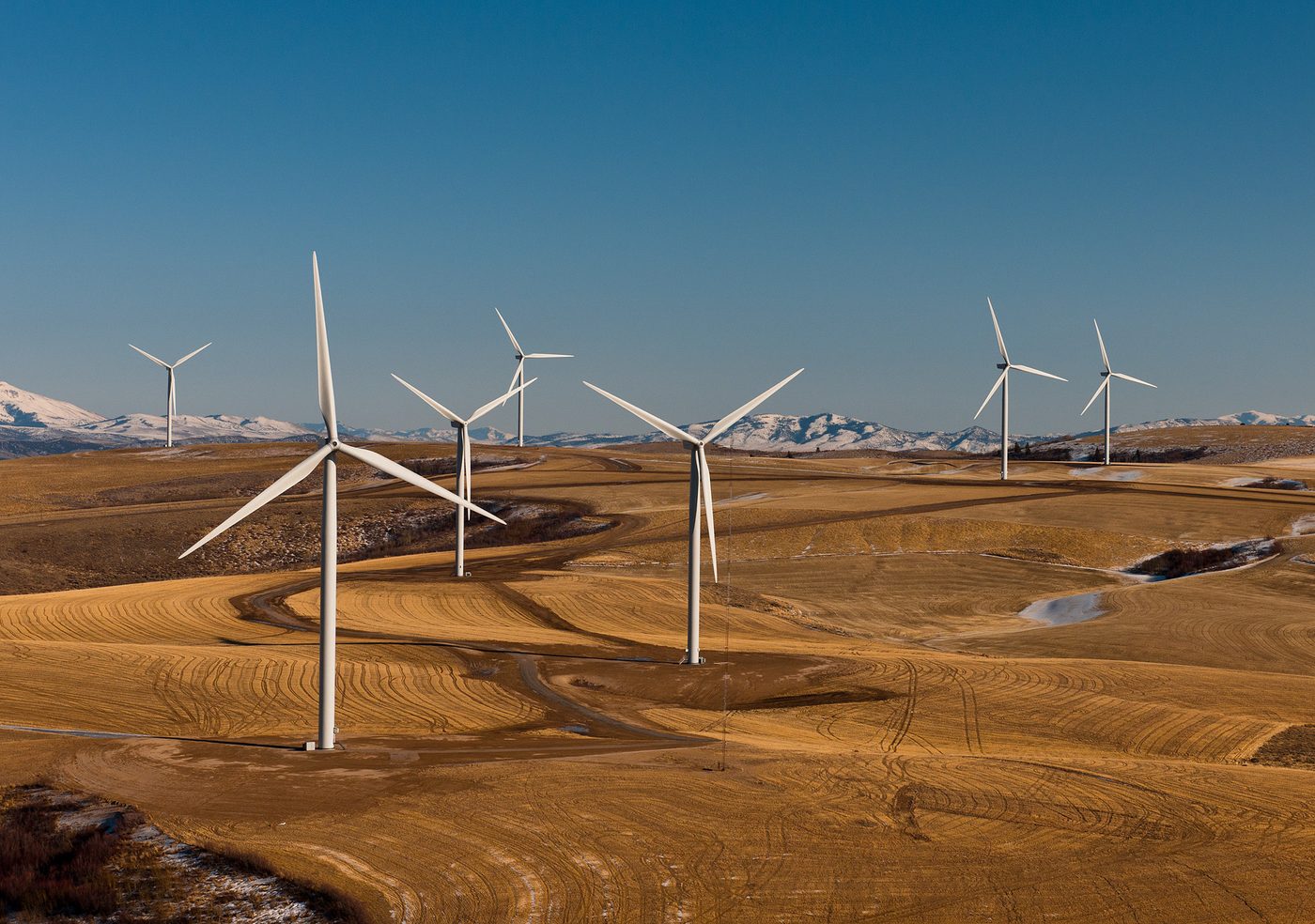
The official numbers behind southern Idaho's build-out come from three places: the federal decision on Lava Ridge, Idaho Power's filings at the PUC, and the county staff reports on private-land projects. Put side by side, they show how much is planned, how much land it takes and what a county collects.
By the numbers
- Up to 231 turbines on 57,447 acres: what the December 2024 Lava Ridge Record of Decision authorized on BLM land, with ground disturbance on public land estimated at 3,926 acres. Federal Register, 89 FR 99904, December 11, 2024
- 1,000 MW: Lava Ridge's size as Interior described it on August 6, 2025, when it announced it was reversing the approval. U.S. Department of the Interior, 2025
- 222 MW and 430 MW: the South Hills gas plant in Twin Falls County (planned to start June 1, 2029) and the Peregrine plant in Elmore County (June 1, 2030) in Idaho Power's certificate request. Idaho PUC news release, April 7, 2026
- About 1,700 MW: the growth in electricity demand Idaho Power expects over the next 20 years, with metered customers rising from nearly 648,000 in December 2024 to 867,000 by 2045. Idaho PUC news release, February 18, 2026
- Nearly 37 percent: hydropower's share of the energy Idaho Power used to serve customers in 2025. Natural gas was second at 22.6 percent, and solar rose to 9.1 percent. These are the utility's own figures. Idaho Power, Customer Connection, April 2026
- 3.5 percent and 3 percent: Idaho's tax on gross solar energy earnings and on gross wind energy earnings, collected in place of property tax on the generating equipment. Idaho Code 63-3502B
- 149 MW on about 981 acres: the Soles Rest Solar proposal in western Elmore County, built from 317,912 bifacial modules. Elmore County staff report, CUP-2025-29, 2026
- $9,485,019: the Soles Rest applicant's estimate of the total cost to decommission the project. Elmore County staff report, CUP-2025-29, 2026
Check yourself
1. What is the Peregrine Power Plant?
Idaho Power asked the PUC in IPC-E-26-04 for a certificate for Peregrine, a 430 MW gas plant in Elmore County with commercial operation planned June 1, 2030.
2. What did Idaho Power ask the PUC to confirm in the accounting order part of IPC-E-26-04?
The notice of modified procedure says Idaho Power asked to accrue AFUDC for both plants starting with initial procurement.
3. An invented utility spends $100 million in year 1 of construction and $100 million in year 2, at an AFUDC rate of 7 percent, ignoring compounding within the year and assuming spending happens mid-year. About how much AFUDC accrues on the year 1 spending by the end of year 2?
Half a year in year 1: $100M x 0.07 x 0.5 = $3.5M. A full year in year 2: $100M x 0.07 = $7M. Total about $10.5M on the first $100M.
4. Which Elmore County land-use case number covers Idaho Power's Peregrine gas plant?
The April 30, 2026 Elmore County P&Z agenda lists CUP-2025-32, Idaho Power, Peregrine Natural Gas Plant, with related variances VAR-2026-05 and VAR-2026-06.
5. What is the status of Arevia Power's 500 MW Taurus Wind proposal on BLM land in the Magic Valley, as far as this course could find?
The BLM forum was January 28, 2025 with comments due February 7. The presidential memorandum of January 20, 2025 halted new wind rights-of-way pending review.
6. What share of Idaho Power's 2025 energy came from hydropower, according to the company?
Idaho Power's April 2026 customer newsletter put hydro at nearly 37 percent of 2025 energy and natural gas at 22.6 percent, the second-largest source.
Terms in this lesson
- AFUDC
- Allowance for Funds Used During Construction: the financing cost a utility adds to a plant's value while it is being built, later recovered in rates if approved.
- Modified procedure
- An Idaho PUC process that decides a case on written comments without a live hearing.
- Pumped storage
- Storing energy by pumping water uphill to a reservoir and releasing it through turbines when power is needed.
- Variance
- Permission to depart from a specific zoning standard, such as height, for one property.
- Intervenor funding
- Money the Idaho PUC can award to customer groups that take part in a case and contribute to the result, paid by the utility.
Sources
- Idaho PUC, Case IPC-E-26-04 summary (updated Sept. 25, 2026) checked 2026-10
- Idaho PUC news release on IPC-E-26-04 (April 7, 2026) checked 2026-10
- Idaho PUC, IPC-E-26-04 Notice of Modified Procedure, Order No. 37048 (May 27, 2026) checked 2026-10
- Idaho Statesman, Idaho Power wants to build two natural gas power plants (May 7, 2026) checked 2026-10
- Idaho PUC, IPC-E-26-04 Notice of Application, Order No. 36994 (April 6, 2026) checked 2026-10
- Idaho Power, South Hills Power Plant project page checked 2026-10
- Idaho Power, Peregrine Energy Center project page checked 2026-10
- Idaho Power, Customer Connection newsletter (April 2026), 2025 energy mix checked 2026-10
- Idaho Power, natural gas resources (Jim Bridger conversion) checked 2026-10
- Elmore County Planning and Zoning agenda, April 30, 2026 checked 2026-10
- Elmore County Land Use and Building Department checked 2026-10
- Elmore County Planning and Zoning agenda, Sept. 24, 2026 checked 2026-10
- Idaho News 6/KIVI, Massive water, wind and solar project in Idaho advances (June 7, 2022) checked 2026-10
- BLM, public forum on proposed Taurus Wind and Snake River Energy Solar projects (Jan. 2025) checked 2026-10
- East Idaho News, data center with power plant planned for public land (Sept. 21, 2026) checked 2026-10