Lesson 9 of 9 · about 18 minutes
Spent fuel, on-site storage and Idaho's limits
You'll be able to
- Describe how spent fuel handling differs for LEU pellets, TRISO, metallic and salt fuels
- Summarize the 2022 PNAS study on SMR waste and the limits of that study
- Estimate yearly spent fuel from a small reactor
- Explain the 1995 Idaho settlement agreement's caps and 2035 deadline, the 2020 ATR agreement, and the open question for new INL reactors
Every reactor in this course will make spent fuel, and the United States still has nowhere permanent to put it. The spent fuel and nuclear waste lesson covers the national picture: how pools and dry casks work, the Yucca Mountain stalemate, interim storage and reprocessing. This lesson asks what is different about spent fuel from small and advanced reactors, and what Idaho's agreements mean for the reactors being built at INL.
Different fuels, different leftovers
| Fuel | Reactors | What comes out | Storage notes |
|---|---|---|---|
| LEU oxide pellets in rods | NuScale, BWRX-300, SMR-300 | Assemblies like today's fleet produces | Pool cooling, then dry casks; the industry knows this path well |
| TRISO pebbles or compacts | Xe-100, Kairos, Kaleidos, Pele | Spent pebbles: a small amount of fuel inside a lot of graphite | Very durable particles, but large volume per unit of energy |
| Metallic fuel | Natrium, Aurora | Metal alloy pins | If sodium-bonded, as EBR-II's was, needs treatment before disposal |
| Fuel salt | Terrestrial IMSR, Natura MSR-1 | Used salt containing fission products | Needs processing into a solid waste form; little commercial experience |
| Microreactor cores | Kaleidos, eVinci and others | Whole fueled cores, in some business models the whole reactor | Vendors plan to ship units back; where they go next is not settled |
Idaho has direct experience with the metallic case. EBR-II's driver fuel had liquid sodium inside each pin to carry heat, and sodium reacts with water and air. DOE has been treating that fuel at INL for years, and under the 2019 supplemental agreement with Idaho it must turn EBR-II driver fuel into HALEU at a minimum rate and finish by December 31, 2028. That is the same material feeding first cores like Aurora's (lesson 5).
The Stanford-led waste study
In May 2022, Lindsay Krall, Allison Macfarlane and Rodney Ewing published a study in the Proceedings of the National Academy of Sciences looking at waste from three SMR designs: from Toshiba, NuScale and Terrestrial Energy. Their findings, as summarized by Stanford:
- Most SMR designs would increase the volume of waste needing management and disposal by factors of 2 to 30 for the reactors studied.
- SMRs would produce at least nine times more neutron-activated steel than conventional plants.
- Spent fuel would be greater in volume per unit of energy and more chemically complex.
- After 10,000 years, the plutonium in SMR spent fuel would be at least 50 percent more radiotoxic per unit of energy than in conventional spent fuel.
The main physical reason: small cores leak more neutrons out of the core, so they use fuel less efficiently, and those escaping neutrons activate surrounding steel. The study has limits the authors acknowledged. None of the reactors was operating, and proprietary design details made the analysis harder. Industry analysts have long argued that advanced designs will produce fewer radioactive byproducts, especially fast reactors that burn more of their fuel and designs paired with recycling. Where the evidence points: the study is the most detailed independent analysis available, and its core physics argument about neutron leakage is sound. Exact waste figures for any design will only be known when it runs.
On-site storage
With no repository, spent fuel from any new SMR would stay at the plant. For light-water designs that means a pool for several years, then welded steel canisters in concrete or steel overpacks on a pad, cooled by air flowing around them with no pumps or power. The NRC says dry casks have been used at U.S. plants for more than 30 years with an excellent safety record. A new site adds one more pad to the more than 70 sites in 35 states where commercial spent fuel already sits, per DOE.
Example: a small reactor's yearly spent fuel
The Nuclear Power course works out about 2.7 grams of spent fuel per MWh for today's fleet. Apply it to an invented 300 MWe light-water SMR at the Meridian Gap site:
- Output: 300 × 8,760 × 0.91 ≈ 2,391,000 MWh a year.
- Spent fuel: 2,391,000 × 2.7 g ≈ 6,456,000 g, or about 6.5 metric tons a year.
- Over a 60-year design life: 6.5 × 60 ≈ 390 metric tons, all stored on site unless a repository or interim site opens.
If the Krall study is right that volume per unit of energy runs 2 or more times higher for some SMRs, the pad and cask count would scale up accordingly, even if the mass of uranium did not. Plan the site for the volume, not just the tonnage.
Idaho's 1995 settlement agreement
The waste lesson explains how Idaho got its agreement. The terms that matter for new reactors, from INL's and DOE's summaries:
- A cap. DOE may send 55 metric tons (about 121,000 pounds) of spent fuel into the Idaho site between 1995 and 2035. Research quantities of commercial fuel count against that total under a 2011 agreement.
- Commercial power plant fuel is excluded, except for waivers the state has granted for small research quantities: 25 rods received in 2023, and a 2025 waiver for a high-burnup fuel cask and limited university research reactor fuel.
- A deadline. All spent fuel must be removed from Idaho by 2035.
- Teeth. If DOE misses a deadline, Idaho can suspend shipments into the state. In 2014, after DOE missed a 2012 waste treatment deadline, the state refused research fuel shipments, and they did not resume until after the 2019 supplemental agreement.
The Advanced Test Reactor showed how the 2035 deadline collides with reactors that keep running. In February 2020, Governor Brad Little and Attorney General Lawrence Wasden announced an agreement letting ATR keep operating: after January 1, 2035, its spent fuel (apart from test specimens) must leave Idaho within a year of going into dry storage.
The open question for new INL reactors
Aurora, Aalo-X, MARVEL, Pele and the DOME tests will all make spent fuel in Idaho, and some may run past 2035. The public INL and DOE settlement summaries reviewed for this lesson do not say how that fuel is treated: whether it counts against the 55-ton cap, falls under the 2035 removal requirement, or needs its own agreement like ATR's. Some of it is generated from material already in Idaho (Aurora's EBR-II-derived HALEU), which complicates the cap question, since the cap governs shipments into the state. The ATR precedent suggests the state and DOE will need written terms. That makes it one of the best questions an Idaho reporter or official can ask right now.
Supporters of the INL projects say spent fuel volumes from test reactors are small, the fuel is well characterized and DOE has managed fuel on the site for more than 70 years. Idaho's position, held by governors of both parties since Cecil Andrus and Phil Batt, is that research is welcome and a de facto repository is not. Both can be true, but only if the paperwork says so.
Common mix-ups
- Claim: SMRs make less waste because they are smaller. What the evidence shows: They make less in total per plant, but the Krall study found more volume per unit of energy for the designs it examined.
- Claim: TRISO fuel solves the waste problem. What the evidence shows: TRISO particles are very durable, which helps disposal, but the graphite around them makes the waste bulky, and it still needs a repository.
- Claim: Spent fuel from INL's new reactors can stay in Idaho. What the evidence shows: The 1995 agreement requires spent fuel to leave by 2035, and ATR needed a separate 2020 agreement to keep running. How new reactors fit has not been publicly spelled out.
Reporting angle
- Ask each INL developer and DOE Idaho: where will this reactor's spent fuel go, in what form, and under what written terms with the state?
- Put the question to the Idaho Attorney General's office and the governor's office: does any new agreement or waiver cover fuel from Aurora, Aalo-X, MARVEL, Pele or DOME tests? Idaho's Public Records Act (Idaho Code Title 74, Chapter 1) covers correspondence about it.
- For a commercial SMR anywhere, ask how many casks the site expects over its life, where the pad goes and who pays if fuel is never removed.
- For microreactor vendors who plan to take units back, ask where the returned units go and under what license.
- Follow DOE's annual settlement agreement reporting and Idaho DEQ's INL Oversight Program reports.
Research angle
- INL settlement agreement explainer and FAQ.
- DOE: Explaining Idaho's unique settlement agreement.
- Stanford summary of the Krall, Macfarlane and Ewing PNAS study; the paper itself is in PNAS (2022).
- NRC spent fuel storage FAQs and its list of licensed ISFSIs.
- Idaho DEQ INL Oversight Program.
- Idaho Code Title 74, Chapter 1 for public records requests to state agencies.
Pictures, Numbers and Infographics
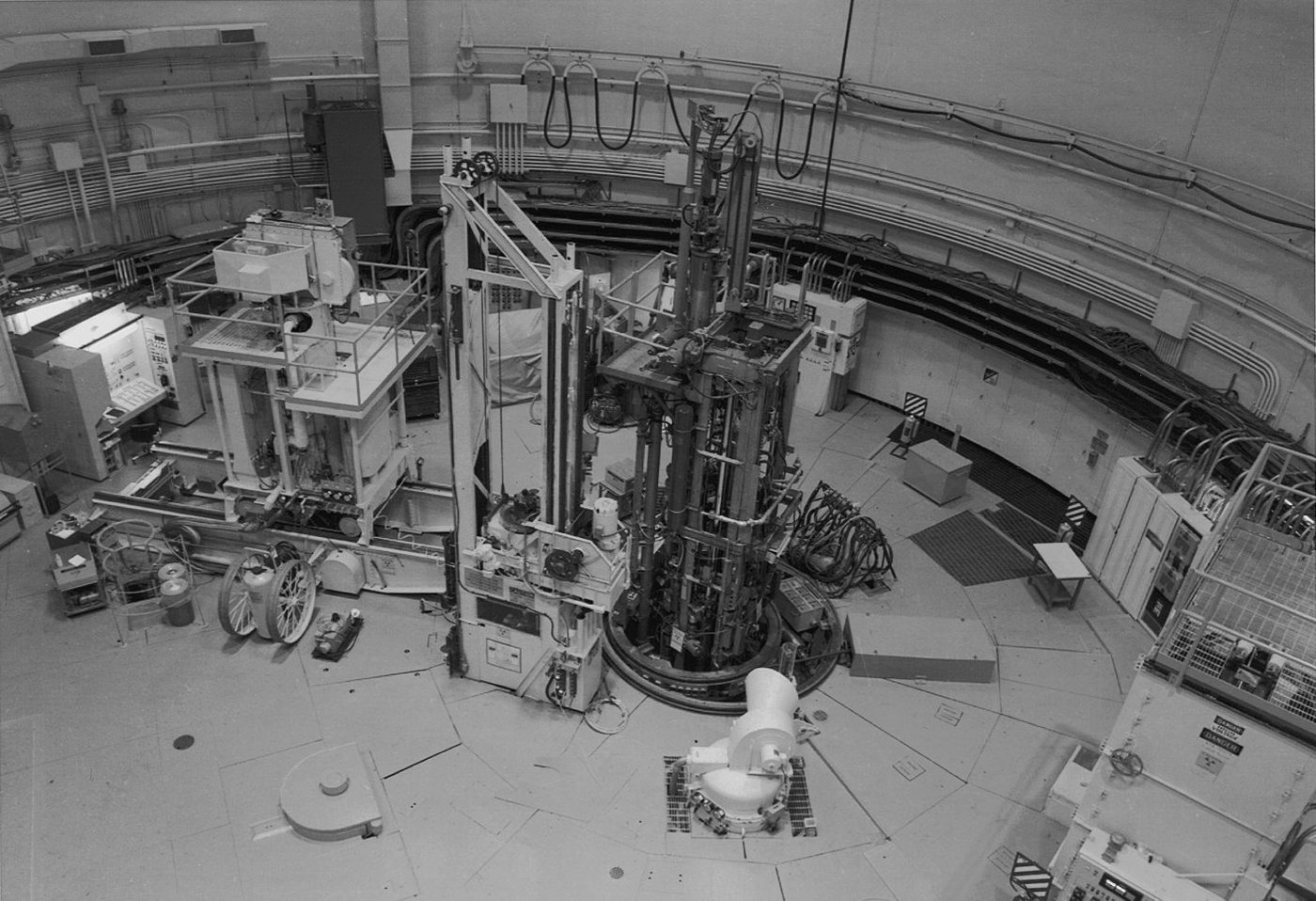
The existing reactor fleet sets the yardstick every small reactor pitch is measured against: how many plants run, how hard they run and how much water they use. The fuel numbers show why most new designs depend on a supply chain that does not exist at scale yet.
By the numbers
- 94 reactors at 54 plants in 28 states: the U.S. operating commercial nuclear fleet as of March 2026. EIA, U.S. nuclear industry, 2026
- 91 percent: the average annual capacity factor of U.S. nuclear plants in 2025, higher than any other type of power plant. EIA, U.S. nuclear industry, 2026
- 5 to less than 20 percent: the U-235 enrichment that defines HALEU, the fuel most U.S. advanced reactor designs need. Today's fleet runs on fuel enriched up to 5 percent. DOE Office of Nuclear Energy, 2024
- Up to 10 metric tons: the HALEU Idaho National Laboratory is working to make available by recovering and downblending uranium from used research reactor fuel. DOE Office of Nuclear Energy, 2024
- 50 metric tons a year: DOE's estimate of domestic HALEU demand by 2035, with more needed each year after. DOE Office of Nuclear Energy, 2024
- 672 gallons per MWh: median water consumed by a nuclear plant with a cooling tower. It withdraws a median 1,101 gallons per MWh. Macknick and others, NREL, 2011
- 44,350 gallons per MWh: median water withdrawn by a once-through nuclear plant, which consumes only 269 because most of the water goes back to the river or lake, warmer. Macknick and others, NREL, 2011
- 6.8 percent: the national average annual output penalty for switching a nuclear plant from wet to dry cooling, against 1.7 percent for gas combined cycle. Macknick and others, NREL, 2011
Check yourself
1. The 2022 PNAS study led by Lindsay Krall found most SMR designs it examined would increase the volume of waste needing management by what factor?
The study, with Rodney Ewing and Allison Macfarlane, reported factors of 2 to 30 for the designs in its case studies.
2. Under Idaho's 1995 settlement agreement, how much spent fuel may DOE send into the Idaho site between 1995 and 2035?
INL's summary gives a cap of 55 metric tons, about 121,000 pounds, and research quantities of commercial fuel count against it.
3. What did the February 2020 agreement on the Advanced Test Reactor add?
The agreement let ATR keep running past 2035 while keeping the principle that spent fuel leaves the state.
4. Why is EBR-II's used metallic fuel treated before disposal?
Sodium-bonded fuel reacts with water and air, so DOE treats it; the 2019 agreement turns EBR-II driver fuel into HALEU by 2028.
5. A 300 MWe light-water SMR at a 91 percent capacity factor, using about 2.7 grams of spent fuel per MWh, produces roughly how much spent fuel a year?
300 × 8,760 × 0.91 ≈ 2.39 million MWh; × 2.7 g ≈ 6.5 million grams, or 6.5 metric tons.
6. As of October 2026, where can commercial spent fuel from a new U.S. SMR go for permanent disposal?
The U.S. has no operating repository for commercial spent fuel. Storage at the plant is the default.
Terms in this lesson
- ISFSI
- Independent spent fuel storage installation, the NRC term for a licensed dry cask storage pad.
- Neutron-activated material
- Reactor parts, mostly steel, made radioactive by neutron exposure, which become waste at decommissioning.
- Sodium-bonded fuel
- Metallic fuel with liquid sodium inside each pin to carry heat from fuel to cladding, which complicates disposal.
- Radiotoxicity
- A measure of how harmful a quantity of radioactive material would be if taken into the body.
- Settlement agreement
- Idaho's 1995 court-enforced agreement with DOE and the Navy that caps incoming spent fuel and requires its removal by 2035.
Sources
- Stanford News: Small modular reactors produce high levels of nuclear waste (May 2022, on Krall, Macfarlane and Ewing in PNAS) checked 2026-10
- INL: Research quantities of commercial nuclear fuel (1995 agreement, 2019 supplement, 2025 waiver) checked 2026-10
- Post Register: Little, Wasden say settlement agreement changes will let ATR operate (Feb. 2020) checked 2026-10
- DOE: Explaining Idaho's Unique Settlement Agreement checked 2026-10
- NRC: Spent fuel storage FAQs checked 2026-10
- DOE Office of Nuclear Energy: 5 Fast Facts about Spent Nuclear Fuel checked 2026-10
- EIA: U.S. nuclear industry (91 percent capacity factor in 2025) checked 2026-10
- NRC: High-level waste disposal checked 2026-10