Lesson 9 of 9 · about 18 minutes
The Other Side's Best Arguments, and Getting Code Adopted
You'll be able to
- State each major argument against local energy limits in its strongest form
- Answer each with evidence and law rather than slogans
- Estimate production tax revenue from a solar project under Idaho Code 63-3502B
- Describe the hearing and notice path for a zoning text amendment and what belongs in the record
A county board that adopts strong energy limits will hear every argument below, usually from people it knows: a neighbor with a lease offer, the school superintendent watching the budget, a legislator, a developer's lawyer with a takings letter. Advocates who can state those arguments at full strength, and answer them, win more votes than advocates who wave them off. Here they are.
The arguments and the answers
| Argument against limits | Its strongest evidence | The best answer |
|---|---|---|
| It's my land. A farmer should be able to lease to a solar developer. | In Bannock County, a grain farmer projected solar lease income per acre at four to five times his wheat income; another landowner holds a five-year contract, signed in 2021, with a developer interested in 840 of his acres, with payments that would rise if the ban were lifted. The commission chair there says the ban denies residents "the opportunity to exercise their property rights." | Every zoning rule limits owners; farm zones already bar factories and subdivisions. The research shows the money splits: farmland near solar gains value, nearby homes lose it. Protecting non-participating neighbors is a property rights position too. And small on-site systems stay allowed. |
| Rural counties need the tax base. | Projects in Power and Bingham counties generated $909,000 and $639,000 in tax revenue in 2024, per the Bannock reporting. Idaho taxes solar at 3.5% of gross earnings. | Run the numbers (below). Revenue is real but modest next to the irrigated farm economy it displaces, and it does not cover the cost borne by neighbors whose homes lose value or by farms that lose leased ground. |
| Push too hard and the state will take siting away. | Michigan did exactly that in 2023, moving large projects to its utility commission unless localities adopt ordinances no stricter than state standards. | Idaho's direction has been the other way: the Legislature restricted solar and wind on enrolled agricultural land in 2025 and, in HCR 32, called local land use authority paramount in transmission siting. Ohio's 2021 law gave counties power to bar large wind and solar from restricted areas. Defensible, evidence-based standards are the best protection against preemption, because they are harder to paint as obstruction. |
| Denial is a taking. | 67-8003 lets an owner demand a takings analysis; the action is voidable if the county fails to prepare one. | Denying one use while farming continues is not a total wipeout. Under the Penn Central factors, investment-backed expectations carry little weight for a use the code never allowed. Prepare the analysis on time using the Attorney General's checklist. |
| Your standards are vague and designed to say no. | Jeff's draft makes "any projected diminishment" of any parcel's value, and harm to any part of "general welfare" for any neighbor, independent grounds for denial without balancing. | This one has force. Fix it before adoption (next section). |
Example: what Highline would pay in production tax
Assume Highline's original 300 MW plan, a 25 percent capacity factor and a contract price of $40 per MWh. Both are assumptions for illustration.
- Annual output: 300 MW x 8,760 hours x 0.25 = 657,000 MWh.
- Gross earnings: 657,000 x $40 = $26,280,000.
- Solar energy tax at 3.5%: $26,280,000 x 0.035 = $919,800 a year.
That is in the range of the 2024 revenue reported for existing projects in Power County. Now set it against the land: 1,800 acres of mostly irrigated ground taken out of crops, and the soil restoration and property value costs in lessons 6 and 7. Revenue per acre: $919,800 / 1,800 = $511. A board can weigh that number honestly. It should also ask where the revenue goes; subsection 6 of 63-3502B says solar tax revenue reduces the property tax levied to fund budgets rather than counting toward budget growth limits, so read the statute with the county treasurer before promising new services.
Fixing the weak spots before the hearing
Idaho Code 67-6535 requires every approval or denial to be in writing with a reasoned statement of the criteria, the contested facts relied on and the rationale. Section 67-6511 requires overlay standards to be clear and objective. A standard nobody can predict is a gift to an appellant.
Jeff's draft has provisions that need work. The property value rule says any projected diminishment of any non-participating parcel is enough to deny. But the best research finds average effects of about 1.5 percent within half a mile (Berkeley Lab, 2023) to about 4.8 percent within 3 miles (PNAS, 2025), varying by region and fading over roughly a decade. No appraiser can project that parcel by parcel with confidence, so the rule becomes a ban whose trigger is an argument between experts. The general welfare "no balancing" rule has the same problem.
Stronger substitutes keep the protection and lose the vagueness:
- Translate property value concern into setbacks from non-participating homes, which the research supports (effects concentrate close in).
- Require a property value protection agreement for homes within a set distance: a baseline appraisal and payment of any shortfall at sale for a period of years, funded by the developer.
- If the county's real intent is no commercial export generation in the farm zone, write that in the use table. A prohibition stated plainly is easier to defend than a test built to fail.
And handle the survey carefully. The survey in Jeff's package had 65 respondents in March 2026. In it, 93.7 percent opposed large-scale energy in agricultural zones and 90.8 percent wanted county-wide notice. It was not a random sample. Jeff's own position paper draws the right line: the survey supports process reforms like wider notice, and the substantive restrictions rest on documented harm, because rights are not subject to majority vote, the leasing landowner's included. Say it that way at the podium.
Getting it adopted
A zoning text amendment, such as a new energy facilities chapter, follows the notice and hearing procedures of 67-6509, as 67-6511(2)(b) directs. A plan amendment follows 67-6509 directly. The path:
- Draft the plan amendment and the ordinance together, so they match. Bring a complete draft; boards edit drafts more readily than they write from scratch.
- Build the record before the first hearing: soil maps, the NRCS guidance, property value studies, fire district letters, the county's acreage numbers, examples from other counties.
- Planning commission hearing with notice published at least 15 days ahead and notice to service-providing political subdivisions. The commission recommends.
- Board hearing after the commission's recommendation, with the same notice. A material change after the commission hearing needs new notice.
- Adoption of the plan amendment by resolution and the ordinance by ordinance, with written findings tying each standard to evidence.
The hearings lesson and the testimony lesson cover how to testify so it counts.
Notice: more is lawful, and costs money
For individual permits, 67-6512(b) sets mailed notice to owners within 300 feet as a floor and lets the commission add any area "substantially impacted." When 200 or more owners are entitled to notice, a county may use alternative procedures such as a display ad. Jeff's package goes much further: county-wide mailed notice, or 25 miles, whichever is greater, at least 21 days before every Tier 2 and Tier 3 hearing.
Example: pricing county-wide notice in Owlcreek
Owlcreek has 14,000 parcels on the tax roll (invented). Printing and first-class postage at $0.95 per letter (assumed).
- One hearing: 14,000 x $0.95 = $13,300.
- Tier 3 requires two hearings: $26,600.
- A continued hearing with re-notice adds another $13,300, for $39,900.
Charge it to the applicant as a fee, set in the fee schedule. And remember that every notice rule a county adopts is one it can break: a missed mailing list or a short count of days gives a losing party a procedural argument. Write the rule so the county can meet it every time, perhaps county-wide notice by mail for Tier 3 and by publication, website and posting for Tier 2.
Common mix-ups
- Claim: Local bans are rare. What the evidence shows: Figures cited in the September 2026 Bannock reporting put nearly one in four U.S. counties under a clean energy ban, moratorium or impediment in 2025, up from 15 percent in 2023.
- Claim: A takings demand means the county must approve. What the evidence shows: It means the county must prepare a timely analysis. Denying one use while others remain is rarely a taking.
- Claim: Strong survey numbers are enough to justify restrictions. What the evidence shows: Courts review the record for evidence tied to standards. Use surveys for public support and process; use studies and data for the standards.
Reporting angle
- Request every takings analysis request and response filed with the county clerk under 67-8003; they are public and part of the record.
- Ask the county treasurer for production tax revenue received from energy facilities, by year, and how it was distributed.
- Track bills on siting, decommissioning and county authority on the Idaho Legislature session page each session, and ask your legislators where they stand on state siting.
- When a lease-holding landowner testifies, note whether the lease is recorded and for how many acres; it bears on credibility both ways.
- Compare the adopted ordinance's written findings to the record: is each standard tied to a piece of evidence?
Research angle
- Production tax: Idaho Code 63-3502B.
- Takings: 67-8003 and the Attorney General's guidelines and checklist.
- Other states' choices: Michigan PA 233 and Ohio S.B. 52.
- Decision and notice rules: 67-6535, 67-6509 and 67-6512.
- How the data center fight weighs hosting decisions: the checklist and hosting decision lesson.
Pictures, Numbers and Infographics
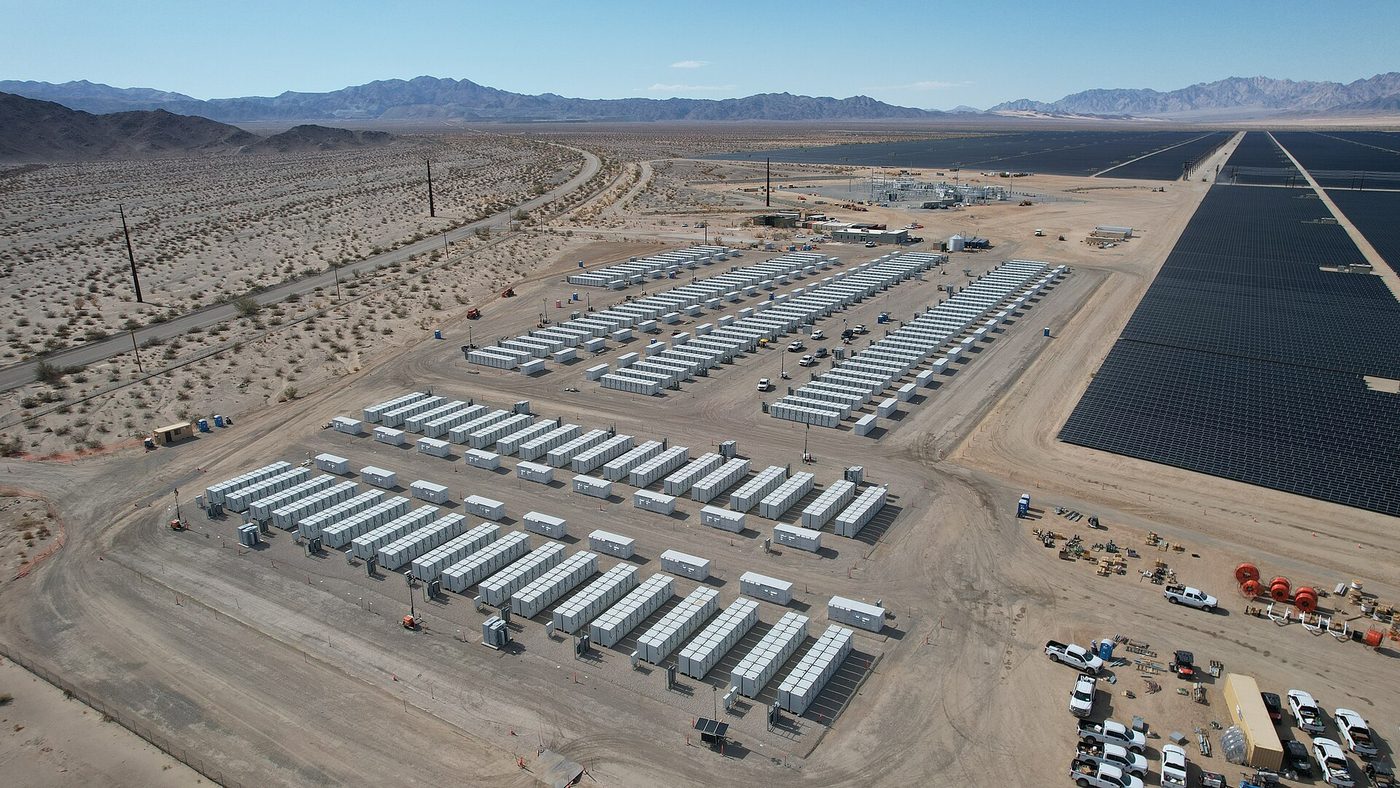
Local limits on wind and solar siting have spread to nearly every state, and the machines they regulate keep getting taller. Idaho's farm ground, which many county rules aim to protect, shrank slightly between the last two farm censuses.

By the numbers
- 888: state laws and local ordinances restricting where renewable energy facilities can go, in 48 states by the end of 2025. Of those, 865 were local. The count is higher than the prior edition partly because of better data collection. Sabin Center for Climate Change Law, Columbia Law School, 2026
- 416, 294 and 123: of those restrictions, the number aimed only at wind, only at solar, and at both. Sabin Center, 2026
- 567: renewable energy projects in 48 states that faced significant local opposition. About 40 percent of them have been canceled, though the authors note not solely because of opposition. Sabin Center, 2026
- 103.4 meters (about 339 feet): average hub height of new land-based U.S. wind turbines in 2023, up 83 percent since 1998 to 1999. Average rotor diameter was over 133.8 meters (about 438 feet). U.S. Department of Energy, from the Land-Based Wind Market Report, 2024
- 3.4 MW: average capacity of a new U.S. wind turbine in 2023, up 375 percent since 1998 to 1999. U.S. Department of Energy, 2024
- 11,547,963 acres: land in farms in Idaho in 2022, down 1 percent since 2017. The number of farms fell 8 percent, to 22,877, while average size rose 8 percent to 505 acres. USDA, 2022 Census of Agriculture, Idaho state profile
Check yourself
1. Under Idaho Code 63-3502B, what tax does a solar producer pay in lieu of property tax on exempt property?
Subsection 2 sets 3.5 percent of gross solar energy earnings; wind and geothermal pay 3 percent. Subsection 5 makes these taxes in lieu of other taxes on property exempted under 63-602JJ.
2. A landowner asks for a regulatory taking analysis after a county denies a solar permit. Under 67-8003, by when must it be provided?
The analysis must be prepared within 28 days of the final decision and provided no later than 42 days after the request. If a requested analysis is not prepared, the action is voidable.
3. What did Michigan's Public Act 233 of 2023 do?
Effective November 29, 2024, PA 233 lets developers go to the Michigan PSC when a locality lacks a compatible renewable energy ordinance; ordinances stricter than state standards are not compatible.
4. What does Idaho Code 67-6535 require of a decision on a permit?
The approval or denial must be in writing with a reasoned statement of criteria and standards, contested facts relied on, and rationale based on the plan, ordinance, statutes, constitutional principles and the record.
5. Why is a standard that 'any projected diminishment of any parcel's value is independently sufficient for denial' vulnerable?
Average effects of roughly 1.5 to 5 percent near some projects, varying by region and time, are hard to project parcel by parcel. A standard nobody can predictably meet invites a challenge under 67-6535's express-standards rule.
6. Jeff's own position paper says what about the community survey in his package?
The paper says the results are offered for the legitimacy of process reforms and that the substantive restrictions rest on documented harm, since rights are not subject to majority balancing.
Terms in this lesson
- Preemption
- When a higher level of government takes over a subject so lower levels cannot regulate it, or can regulate only within set limits.
- Regulatory taking
- A regulation that goes so far in restricting property that the Constitution requires compensation.
- Production tax (Idaho)
- The tax on gross earnings that Idaho wind, solar and geothermal producers pay in place of property tax on exempt property.
- Text amendment
- A change to the words of the zoning ordinance, as opposed to a change to the zoning map.
- Record
- Everything submitted and considered in a land use decision, which is what a court reviews.
Sources
- Idaho Code 63-3502B, Levy of tax on wind, solar and geothermal energy production checked 2026-10
- Idaho Code 67-8003, Protection of private property (regulatory taking analysis) checked 2026-10
- Idaho Office of the Attorney General, Idaho Regulatory Takings Act Guidelines (January 2023) checked 2026-10
- Idaho Code 67-6535, Approval or denial to be based upon express standards and in writing checked 2026-10
- Idaho Code 67-6511, Zoning ordinance (text amendment procedure, overlays) checked 2026-10
- Idaho Code 67-6509, Recommendation and adoption, amendment, and repeal of the plan checked 2026-10
- Idaho Code 67-6512, Special use permits (notice radius, 200-owner rule) checked 2026-10
- Grist / The Daily Yonder, A rural Idaho county banned renewables. It's having second thoughts (Sept. 2026) checked 2026-10
- Michigan Townships Association, Renewable energy siting and permitting (PA 233 summary) checked 2026-10
- Inside Climate News, A new Michigan law countering local opposition to renewable energy is triggering more of the same (April 9, 2025) checked 2026-10
- Ohio State University Farm Office, Ohio legislature passes solar and wind project siting and approval bill (S.B. 52, 2021) checked 2026-10
- Cardinal News, Virginia Tech-led study explores large solar plants' impact on property values (July 2, 2025) checked 2026-10