Lesson 9 of 9 · about 22 minutes
Case Study: Following Project Falcon from Rumor to Hearing
You'll be able to
- Follow a data center proposal step by step, from the first rumor to the rezone hearing
- Know which records to request in what order and from which agency
- Check developer numbers for power, water, jobs and taxes with your own math
- Know which process dates let residents on every side take part, and what to check after approval
Everything in this lesson is invented except the laws, rules and reference numbers, which are real and cited. Ochre County is a rural county of 31,000 people. Its seat is the town of Marrow Flat. The county is served by an investor-owned utility, Tamsin Valley Power Co., with a system peak of 3,200 MW. Water comes from wells drawing on the Tamsin aquifer. The county has never hosted a data center.
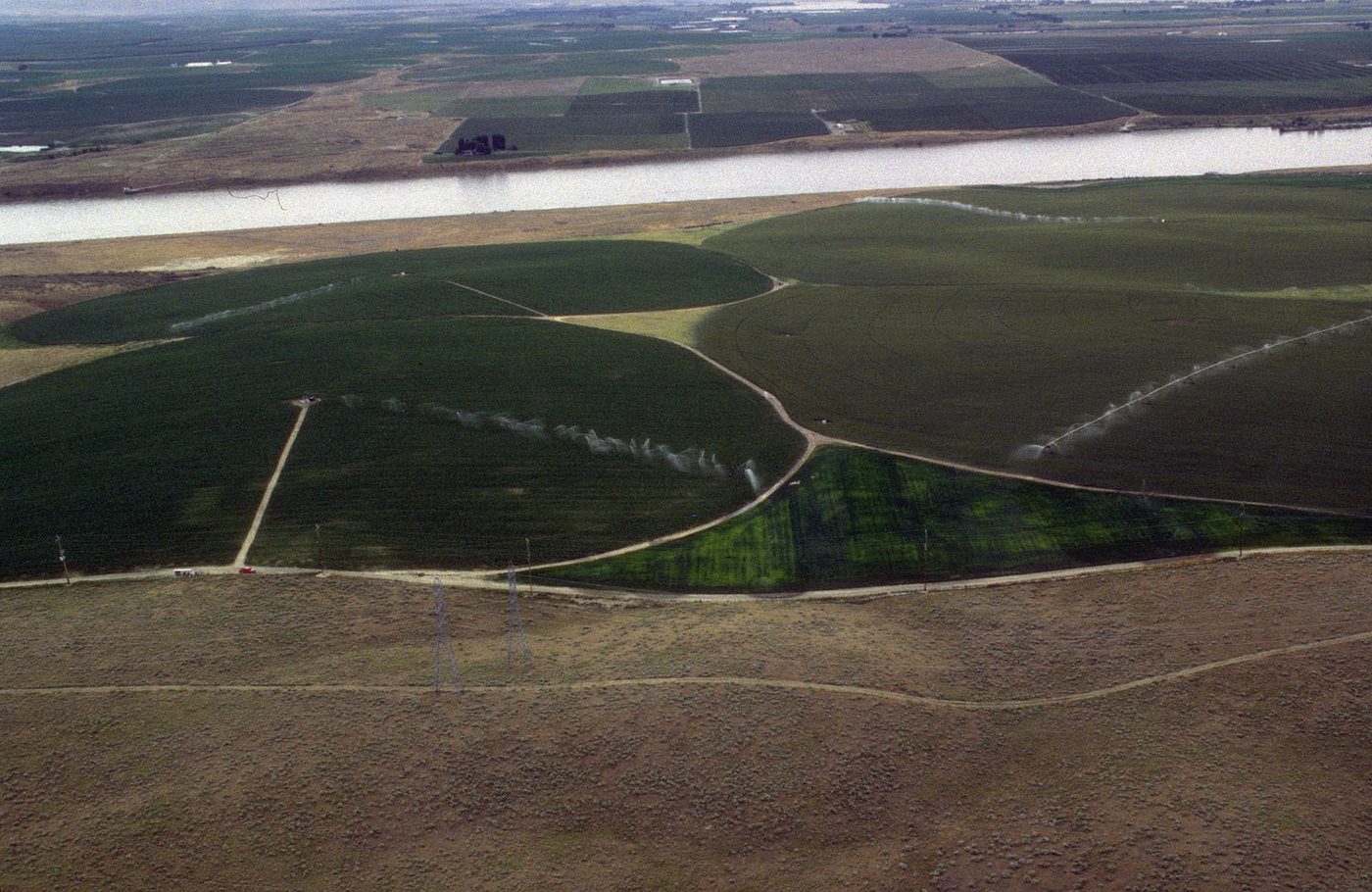
In March, a farm supply clerk tells you that "some outfit called Project Falcon" bought the old Varga ranch, 640 acres east of Marrow Flat. That is all you have.
Step 1: Confirm it exists (days 1 to 3)
- Pull recent deeds for the Varga parcels at the county recorder. The buyer is Copperline Land 7 LLC. Price: $9.6 million, or $15,000 an acre, about triple recent farmland sales nearby. Note the law firm on the deed.
- Search the secretary of state for Copperline Land 7 LLC. Registered agent: a corporate service company. Organizer: an attorney at the same law firm. Search the agent and the attorney; you find Copperline Land 3, 5 and 6 LLC, all formed the same week, all in other states.
- Check the utility commission's new-case list and the state DEQ's permit applications for "Copperline," "Falcon" and the parcel number. Nothing yet. Set up a weekly check of both.
- Check the county planning and zoning department for pre-application meetings. There is one on the calendar, labeled "Industrial inquiry, Varga parcels."
Step 2: File records requests (day 3)
Idaho Code 74-103 gives agencies three working days to respond to a resident, extendable to 10. Send requests now so the clocks run while you keep digging. The Idaho FOIA / Public Records Letter Generator builds request letters that cite the statute. Keep a records log: each request, the agency, the date sent, the legal deadline and the status.
| Agency | Request |
|---|---|
| Ochre County commissioners and economic development office | NDAs; emails and texts with "Falcon," "Copperline" or the law firm since last July; calendars; draft agreements |
| County planning and zoning | Pre-application notes, submitted plans, staff correspondence |
| Marrow Flat city utilities | Will-serve requests or letters for water and sewer; capacity studies |
| County road department | Any haul route or road use discussions |
| State commerce and tax agencies | Incentive inquiries or applications by Copperline or affiliates |
Expect some denials citing trade secret exemptions. Ask each agency to name the statute and to release everything else with redactions.
Step 3: Read the first documents (weeks 2 to 4)
The county releases a confidentiality agreement signed last fall by the economic development director. It also releases emails showing two commissioners toured an existing campus in another state, paid for by the developer. The minutes show two executive sessions labeled "trade and commerce." Check them against Idaho Code 74-206: the motion must cite the subsection, here (1)(e), and pass by two-thirds roll call. Both did. No final action was recorded. That is lawful, and anyone raising the sessions in public should say so. The tour, and who paid for it, is the part worth asking about.
The city releases a will-serve request from Copperline asking for 1.2 million gallons a day of water at peak and 400,000 average. Now you have numbers.
Step 4: Check the developer's numbers (week 4)
At the pre-application meeting, the developer's engineer says Falcon will reach 480 MW over four phases, cooled partly by evaporation, and create "2,500 jobs." Run the math yourself and show it.
Example: the Falcon worksheet
Power. 480 MW / 3,200 MW utility peak = 15 percent of today's peak. Annual energy at an 80 percent load factor: 480 x 8,760 x 0.80 = 3,363,840 MWh. Homes-equivalent at EIA's 10,791 kWh per home: 3,363,840,000 / 10,791 = about 311,700 homes. Ochre County has about 12,000 households.
Water. 400,000 gallons a day average. EPA says a family uses more than 300 gallons a day at home: 400,000 / 300 = about 1,330 families. Peak 1.2 million gallons. Ask the city its current peak-day production and well capacity. Suppose it is 3.5 million: Falcon's peak request is 34 percent of it.
Implied WUE check. 400,000 gallons x 365 = 146 million gallons a year = about 553 million liters. Divide by 3,363,840,000 kWh: about 0.16 L/kWh. That is very low for partial evaporative cooling at full buildout. Either the water figure is phase one only, or the power figure is a far-future number. Ask which.
Jobs. The engineer's 2,500 is construction headcount at peak across overlapping phases. Ask for permanent staff. Copperline's later state incentive inquiry lists 40, above Idaho's 30-job threshold in Idaho Code 63-3622VV.
Taxes. The developer projects $1.6 billion of investment in the county. Idaho Code 63-4502 exempts net taxable value above $400 million for a qualifying $1 billion investment. At Ochre County's 1.0 percent levy, taxable value capped at $400 million yields $4 million a year; uncapped $1.6 billion would yield $16 million. Revenue forgone if the exemption applies: $12 million a year. Ask the assessor which exemptions the company has signaled.
Generators. If backup covers 480 MW with 3 MW units plus one spare per five: 160 + 32 = 192 engines. Under 40 CFR 60.4211(f), each may run up to 100 hours a year for testing. That is a ceiling of 19,200 engine-hours. Ask for the planned testing schedule.
Share that worksheet, assumptions and all, when you testify or post about the project. People on every side can then argue from the same numbers. Change one assumption, such as the load factor or the peak water request, and the answers move; say which ones you used.
Step 5: Watch the utility and air tracks (months 2 to 6)
- Tamsin Valley Power files an application for a special contract with "Customer A," later identified as Copperline Land 7 LLC. Read the public version. Look for minimum demand percentage, contract term, exit fee, collateral, and who pays for the new 230 kV substation. Note what is redacted.
- Read staff comments when filed. Staff may quantify risk to other customers if Falcon builds only one phase.
- Note intervenors: the irrigators' association, an industrial customers group, a conservation group. Each files testimony. Use Idaho's real large-load case, IPC-E-26-07, as a model of how such a docket reads.
- Copperline applies to DEQ for a permit to construct covering the generators. Request the full application with modeling. Find the comment period and put the date on your calendar.
Step 6: The hearing (month 6)
Planning and zoning schedules a rezone hearing. Idaho Code 74-204 requires five calendar days' notice and a 48-hour agenda for regular meetings; land-use hearings carry their own notice rules too. Read the staff report the day it posts. List every proposed condition: setbacks, noise limits, lighting, water reporting. Compare to what the developer offered and to what neighbors asked for. At the hearing, record who testifies and what documents they cite.
Step 7: Keep the facts straight in public
Checklist
- What was decided or filed, with a number people can picture
- Who is behind it, and how you know (deed, LLC filings, utility docket)
- Power, water, jobs and taxes, each with the math and assumptions
- The strongest case for and against, with the documents each side relies on
- What is still unknown, stated plainly
- What happens next: dates for the DEQ comment deadline, the P and Z hearing, the commission's schedule
- Links to every public document
- A quick correction if a number changes
Check factual claims with Source Checker before you lean on them, and keep the docket and permit pages in your weekly check. Projects change after approval. Phase two may be bigger than phase one, or never come.
Reporting angle
- Follow up after opening: actual jobs (state recapture records), actual water (city billing), actual generator hours (DEQ reports).
- Ask the utility a year later whether Falcon's load arrived as forecast, and how that affected the next rate case.
- Check whether the sister LLCs in other states built anything. That shows how often this developer finishes what it starts.
Research angle
- Idaho Code 74-103: Public records response times.
- Idaho Code 74-204: Open meeting notice rules.
- Idaho Code 74-206: Executive session rules.
- Idaho Code 63-3622VV: The data center sales tax exemption.
- Idaho Code 63-4502: New Capital Investments Incentive Act.
- 40 CFR 60.4211: Federal rule on emergency generator engines.
- Idaho PUC case IPC-E-26-07: Large-load docket summary with filings.
Common mix-ups
- Claim: If it is legal, there is nothing to ask about. What the evidence shows: Lawful executive sessions and lawful incentives can still deserve public attention. Ask what was decided, by whom, and what it costs.
- Claim: The developer's numbers are the facts. What the evidence shows: Developer numbers are claims. Test them against filings and your own math, as the Falcon WUE check did.
Pictures, Numbers and Infographics
Northern Virginia is the largest data center market in the world, and the Virginia legislature's Joint Legislative Audit and Review Commission (JLARC) published a detailed public accounting of what the industry brings a state and what it costs. Most figures here come from that 2024 study. Use them as a checklist of questions for any proposal near you.
By the numbers
- 4.4%: data centers' share of total U.S. electricity in 2023, projected at about 6.7% to 12% by 2028. U.S. Department of Energy and Lawrence Berkeley National Laboratory, 2024
- 13%: Northern Virginia's share of all reported data center operating capacity in the world, and 25% of capacity in the Americas. JLARC, Data Centers in Virginia, 2024
- $928 million: tax savings data center companies got in fiscal year 2023 from Virginia's sales and use tax exemption on equipment. About 90% of the industry uses it. JLARC, 2024
- About 50: full-time workers at a typical 250,000-square-foot data center, about half of them contractors, compared with about 1,500 on site at the height of construction. JLARC, 2024
- $14 to $37 a month: estimated increase, in constant dollars, in generation and transmission costs for a typical Dominion Energy residential customer by 2040. JLARC, 2024
- Less than 4%: data center diesel generators' share of regional nitrogen oxide emissions in Northern Virginia. JLARC, 2024
- One-third: share of Virginia data centers located near residential areas. JLARC, 2024
- Less than 1% to 31%: data center revenue as a share of total local revenue in the five Virginia localities with mature data center markets. JLARC, 2024
Check yourself
1. You hear a rumor about 'Project Falcon.' What is usually the fastest first step to confirm a real project exists?
Land purchases, new LLCs and technical filings are hard to hide and often appear before any public announcement.
2. Falcon says it will be '480 MW at full buildout.' The county utility's peak is 3,200 MW. What share of current peak is that?
480 / 3,200 = 0.15, so 15 percent of the current peak.
3. Which document would most directly tell you whether other customers are protected from Falcon's grid costs?
Minimum demand charges, contract length, exit fees and collateral live in the commission filing, and staff comments assess the risk.
4. The commissioners met in executive session twice about Falcon. What should you check in the minutes?
Idaho Code 74-206 requires a two-thirds roll call vote citing the subsection, and bars final action in executive session.
5. Falcon's release claims '2,500 jobs.' Its incentive application lists 40 permanent positions. How should you describe the jobs at a meeting or online?
Label each number by type and source. Construction headcount and permanent jobs are different units.
6. Under Idaho Code 74-204, how much notice does a regular public meeting, such as Ochre County's, require?
Idaho Code 74-204 requires five calendar days' notice and a 48-hour agenda for regular meetings. Land-use hearings carry their own notice rules too.
Terms in this lesson
- Records log
- A running list of each record requested, the agency, the date sent, the legal deadline and the status.
- Will-serve letter
- A letter from a water, sewer or power provider stating it can and will serve a proposed development, often with quantities.
- Intervenor
- A person or group granted formal party status in a utility commission case, allowed to file testimony and question witnesses.
- Fence-line modeling
- Air dispersion modeling that estimates pollutant concentrations at a facility's property boundary.
Sources
- Idaho Code 74-103 (public records response times) checked 2026-10
- Idaho Code 74-204 (open meeting notice) checked 2026-10
- Idaho Code 74-206 (executive sessions) checked 2026-10
- Idaho Code 63-3622VV (data center sales tax exemption) checked 2026-10
- Idaho Code 63-4502 (New Capital Investments Incentive Act) checked 2026-10
- eCFR, 40 CFR 60.4211 (emergency stationary engines) checked 2026-10
- EIA FAQ, How much electricity does an American home use? checked 2026-10
- EPA WaterSense, How We Use Water checked 2026-10
- Idaho PUC, Case IPC-E-26-07 summary (example of a large-load docket) checked 2026-10
- JLARC, Data Centers in Virginia (2024) checked 2026-10