Lesson 10 of 10 · about 13 minutes
Hitting Publish Without Hitting a Lawsuit
You'll be able to
- Check every fact in the article against a source before publishing
- Ask the people you write about for comment, fairly and with time to respond
- Explain the basics of defamation: falsity, fact versus opinion, public figures and actual malice
- Publish a clear correction when you get something wrong
- Run the final checklist on a finished article
Your finger is hovering over the publish button. Dale is chanting "PUB-LISH, PUB-LISH." Marge reaches over and gently takes your hand off the mouse.
"One more step," she says. "The one that keeps you writing for the next 20 years." The law part below is general education, with each case named so you can read it yourself.
Step 1: The accuracy check
Open the article next to your source log. A fact gets a check mark only when you can point to where it came from.
- Names and titles, against notes or an official website.
- Numbers. Redo the lesson 6 math. Yes, again.
- Dates. "Tuesday, Oct. 6" had better be a Tuesday.
- Quotes, word for word against the recording.
- Links and brackets. Click every link. Search for "[" one last time.
Then run two final checks: Source Checker on the sources you rely on, and Article Values Graph on the article as a whole. They're a second pair of eyes that doesn't get tired at 11 p.m. Marge gets tired at 2 p.m.
Step 2: Ask the other side
If your article criticizes a person, business or agency, contact them before you publish. The Society of Professional Journalists' Code of Ethics asks journalists to seek out subjects of coverage so they can respond. It also catches mistakes, because the subject knows things you don't, including, sometimes, that you've got the wrong guy.
- Be specific. "I'm reporting that the 2025 study estimated repairs at $2.1 million, and the city now says it needs $4.2 million. Can you explain the difference?"
- Give them real time. A day or two is reasonable. Three hours on a Friday evening fools nobody.
- Use email and phone, and log when you reached out.
- Put their response in the story, high enough to be seen. No answer? Say so: "Okafor did not respond to emails and a phone message Wednesday and Thursday."
Opinion writers: same rule whenever your column accuses someone of something specific.
Step 3: Defamation in plain words
Defamation is a false statement of fact, published to others, that damages someone's reputation. Written defamation is usually called libel. Comment sections throw the word around like confetti. In law it has specific parts.
Truth is the foundation
A defamation claim needs a false statement. If what you published is true, and you can show it, you're on solid ground. Your source log from lesson 3 is your proof.
Fact claims versus opinion
"I think the rate hike is a bad deal" is opinion. Nobody can prove it false, and it gets strong protection.
But putting "I think" in front of a sentence doesn't make it safe. In Milkovich v. Lorain Journal Co., 497 U.S. 1 (1990), the U.S. Supreme Court said there's no separate blanket protection for anything labeled opinion. What matters is whether the statement implies a fact that could be proven true or false.
Opinion, and opinion wearing a costume
Protected opinion: "In my view, the council rushed this vote and should have held a bond election."
Fact claim, dressed as opinion: "I think Councilman Pruitt took a kickback from the engineering firm." That says Pruitt committed a crime. It's either true or false. "I think" doesn't change that.
Fact claim with proof: "Pruitt's wife owns 30 percent of Ridgeline Engineering, according to state business filings. Pruitt voted to approve Ridgeline's contract and did not disclose the connection, according to meeting minutes." Documented and checkable. If true, publish it and let readers draw conclusions.
Public officials, public figures, and "actual malice"
Here's the big one. In New York Times Co. v. Sullivan, 376 U.S. 254 (1964), the Supreme Court held that a public official can't win damages for a false statement about their official conduct unless they prove the statement was made with "actual malice." The Court defined that as knowing it was false, or reckless disregard of whether it was false.
Three years later, in Curtis Publishing Co. v. Butts, 388 U.S. 130 (1967), the Court extended that protection to statements about public figures too.
Beginners misread "malice." It has nothing to do with spite. You can dislike the mayor intensely. The test is what you knew, or recklessly ignored, about whether the statement was true. So the rule rewards care. A writer who checked facts, asked for comment and kept a source log has strong evidence they weren't reckless. A writer who ignored an obvious red flag looks a lot more like reckless disregard.
Private people get more protection
Rosa Delgado is a private person. In Gertz v. Robert Welch, Inc., 418 U.S. 323 (1974), the Court said states can set their own, lower standard for private people, as long as they don't impose liability without fault. Many states use negligence, roughly a failure to take reasonable care. So be more careful with private people than with the mayor, and never publish anything about them you can't prove.
A note on corrections and Idaho law
States add their own rules. Idaho Code 6-712, written for newspapers and broadcasters, lets a person demand a correction within 20 days of learning of a statement, and whether a prominent correction runs within three weeks affects the damages they can recover. Read your own state's version. Fast corrections are right, and the law notices them.
Step 4: When you get it wrong (you will)
Marge once ran a photo of the wrong Gary. Pickleton has four. The SPJ Code asks journalists to acknowledge mistakes and correct them promptly and prominently.
- Fix the error in the article.
- Add a dated correction note saying what was wrong and what's right.
- Never edit quietly. Somebody always screenshots it.
A correction note
"Correction, Oct. 10, 2026: An earlier version of this article said the rate increase takes effect in December. It takes effect Jan. 1."
Short and plain, with no groveling. Writers who never seem to make mistakes are just hiding them, and readers know it.
The final checklist
Print this. Dale will try to eat it. Laminate it.
Checklist: before you hit publish
- I can say my point in one sentence, and the lede says it.
- It's clearly news or clearly labeled opinion, with a nut graf near the top.
- Every fact is in my source log, with where it came from.
- Names, titles, numbers and quotes are rechecked. Attributions use "said."
- No brackets or placeholders remain.
- Everyone I criticize was asked for comment with real time to respond, and their answer (or silence) is in the story.
- No accusation of a crime or misconduct without documents to back it.
- Opinions are labeled as opinions and don't hide false fact claims.
- The headline is specific and matches the story.
- Photos are mine or used with permission, metadata stripped, captioned and credited.
- Links work, and a sources list, byline and date are on it.
- I ran Source Checker and Article Values Graph.
- It's 600 to 900 words, and I read it out loud one last time.
Now hit publish. Dale is doing a raccoon victory lap around your desk. Most people who say "somebody should write about that" never do. You did.
Try it
- Do the accuracy check with your source log open. Resolve every question mark or cut the fact.
- Confirm every person or group you criticize was asked for comment, and their response is in the story.
- For every opinion statement, ask whether it implies a provable fact. If so, back it with a document or rewrite it.
- Run the article through Source Checker and Article Values Graph.
- Run the checklist. When every box is checked, publish. Then tell your cousin.
Pictures, Numbers and Infographics
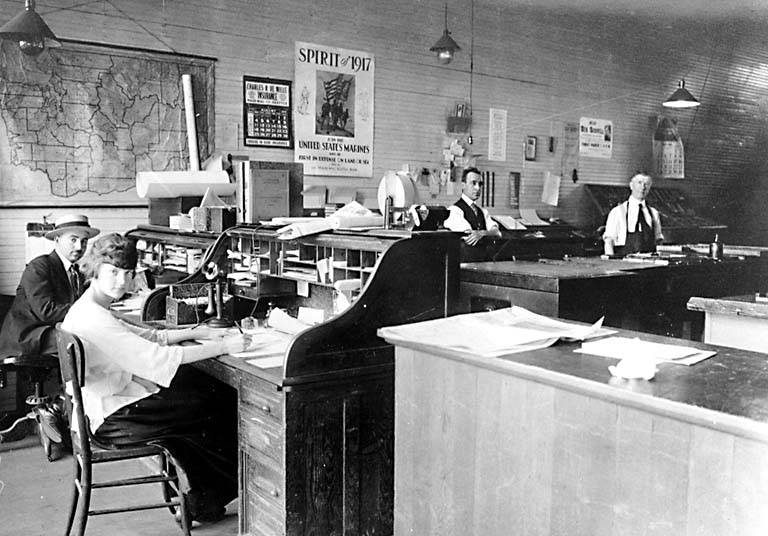
The beginner who sits through a county commission meeting with a notebook is filling a hole that keeps getting bigger. The figures below count the newspapers that closed over twenty years, the counties left with one source or none, and how few readers pay for what is left.
By the numbers
- Close to 3,500: U.S. newspapers that have vanished since 2005, almost 40% of all local papers. More than 130 shut down in the past year alone. Medill State of Local News Report, Northwestern University, 2025
- 212: U.S. counties with no local news source at all in 2025, up from 206 a year earlier. In 2005, just over 150 counties had none. Medill, 2025
- 1,525: counties with only one local news source left, usually a weekly newspaper. Medill, 2025
- Almost 50 million: Americans, about one in seven, living with limited or no access to local news. Medill, 2025
- 3 to 1.6: newspapers for every 100,000 Americans in 2005 and in 2025. Medill, 2025
- 70%: drop in U.S. print newspaper circulation since 2005, an estimated 80 million copies. Medill, 2025
- 15%: share of Americans who say they paid for local news in the past year. Pew Research Center, 2024
Current: In the News
News coverage
- "Trump's lawsuit against Wall Street Journal over Epstein story dismissed for now", Reuters, via Bangor Daily News, April 13, 2026. A federal judge found the complaint did not show actual malice and noted the paper had asked for comment and printed the denial; the plaintiff was allowed to refile.
- "Local News Deserts Rose to Record Levels as Federal Funding Cuts Threaten Public Broadcasting, New Report Finds", WTTW News, October 20, 2025. News coverage of the Medill report behind this lesson's local news numbers.
External resources
- "News deserts hit new high and 50 million have limited access to local news, study finds", Medill School, Northwestern University, 2025. The school's own summary of the 2025 State of Local News findings.
Check yourself
1. Under New York Times Co. v. Sullivan (1964), what must a public official prove to win a defamation case over a statement about their official conduct?
Sullivan set the actual malice standard for public officials, later extended to public figures. 'Malice' here means knowledge of falsity or reckless disregard, not spite.
2. Which statement is the most legally risky to publish without proof?
Accusing a named person of a crime is a factual claim that can be proven true or false. Without solid evidence, it's the classic recipe for defamation.
3. Does labeling a sentence 'opinion' protect it automatically?
In Milkovich v. Lorain Journal Co. (1990), the Supreme Court said there's no blanket opinion exemption. 'I think he lied under oath' implies a provable fact.
4. You're writing that a business failed two health inspections. When should you ask the owner for comment?
Fairness means giving people a real chance to respond to claims about them before publication. It often catches errors, too.
5. You discover a published number was wrong. What should you do?
Readers trust writers who correct openly. A clear correction note shows what changed and when.
6. For a private person (not a public figure), the U.S. Supreme Court in Gertz v. Robert Welch (1974) said states:
Gertz let states set a lower bar, often negligence, for private plaintiffs. Private people have more protection, so be extra careful with them.
Terms in this lesson
- Defamation
- A false statement of fact, published to others, that harms someone's reputation. Libel is the written form; slander is spoken.
- Actual malice
- Publishing a false statement knowing it was false or with reckless disregard for whether it was false. Not the same as spite or ill will.
- Public figure
- A person with wide fame or power, or one who has stepped into a public controversy. Public officials are treated similarly.
- Right of reply
- Giving people you write about a fair chance to respond before publication.
- Correction
- A published note that fixes an error and says what was wrong.
Sources
- New York Times Co. v. Sullivan, 376 U.S. 254 (1964), Cornell Legal Information Institute checked 2026-10
- New York Times Co. v. Sullivan, 376 U.S. 254, official U.S. Reports (GovInfo) checked 2026-10
- Curtis Publishing Co. v. Butts, 388 U.S. 130 (1967), U.S. Reports (GovInfo) checked 2026-10
- Gertz v. Robert Welch, Inc., 418 U.S. 323 (1974), Cornell Legal Information Institute checked 2026-10
- Milkovich v. Lorain Journal Co., 497 U.S. 1 (1990), Cornell Legal Information Institute checked 2026-10
- Idaho Code 6-712, correction demand and damages in defamation actions against newspapers and broadcasters checked 2026-10
- SPJ Code of Ethics, Society of Professional Journalists checked 2026-10