Lesson 9 of 9 · about 19 minutes
The Advocacy Groups and How They Work Idaho Government
You'll be able to
- Name the main organized groups on each side of Idaho's transmission and market fights
- Match each group to the venue it works in and the record it left
- Describe the state government actions on Lava Ridge and transmission from 2024 to 2026
- Explain intervenor funding and other limits on who can afford to take part
The fights over Idaho's grid projects are not two-sided. Irrigators who opposed SWIP-N's certificate have nothing in common with the ranchers who opposed Lava Ridge except a distrust of who pays. Conservation groups that intervene to protect ratepayers in one case may support new transmission in another. And the most effective participants are often the least visible: the industrial and irrigation customer groups with lawyers and expert witnesses in nearly every major Idaho Power case. This lesson maps the players by what they have actually filed and said on the record.
The groups, by side and venue
| Group | General stance | Where it works | Documented record |
|---|---|---|---|
| Idaho Irrigation Pumpers Association | Ratepayer protection for irrigators | Idaho PUC | Intervened in B2H (2023) and SWIP-N (2025); recommended denial of the SWIP-N certificate or strict limits on cost recovery, and was awarded $14,525.70 in intervenor funding for that case (Order 36903, January 2026); intervened in the large-load cost case IPC-E-26-07 |
| Industrial Customers of Idaho Power | Ratepayer protection for large industrial customers | Idaho PUC | Intervened in B2H and IPC-E-26-07 |
| Micron Technology | Largest-customer interests | Idaho PUC | Intervened in B2H, SWIP-N and IPC-E-26-07 |
| Idaho Conservation League | Conservation; clean energy with ratepayer guardrails | Idaho PUC, Legislature | Intervened in B2H; tracked 2026's SB 1368 on large power consumers |
| City of Boise | Local government customer interests | Idaho PUC | Intervened in B2H and IPC-E-26-07 |
| NW Energy Coalition; Clean Energy Opportunities for Idaho | Clean energy and efficiency | Idaho PUC | Intervened in IPC-E-26-07 |
| Renewable Northwest | Renewable industry and allied groups in OR, WA, ID and MT | State commissions, BPA, regional market forums | Says it works toward "an efficient and connected west-wide electricity market" |
| Idaho Energy Freedom | Business coalition for more energy development | Legislature, public events | Launched in 2023; says Idaho needs new generation soon and that siting and permitting rules are outdated |
| Stop Lava Ridge, Inc. | Opposes Lava Ridge and SWIP-N | Idaho PUC, FERC, county hearings, federal reviews | Filed comments in the SWIP-N case arguing it fails the necessity test and risks abandonment costs; intervened at FERC and filed a late protest in Great Basin's rate case, ER25-2025, citing Interior's August 2025 action on Lava Ridge |
| Hidden Valley Organic Dairy | An organic dairy business | FERC | Protested Great Basin's request for the abandoned-plant incentive in ER25-2025, citing federal changes to renewable tax credits; FERC granted the incentive |
| CPUC, California Department of Water Resources, Northern California Power Agency | California ratepayer and public power interests | FERC | Protested Great Basin's proposed tariff in 2025, then withdrew after Great Basin cut its base return on equity from 10.8 to 9.8 percent and its equity share from 60 to 51 percent |
| Star Lake grazing permittees | Ranching families with BLM grazing permits in Lincoln and Jerome counties | BLM, CAISO | Commented repeatedly in the Lava Ridge review from 2021 on; wrote CAISO in September 2024 asking it to defer SWIP-N approvals |
| Minidoka Pilgrimage Planning Committee; Friends of Minidoka | Protect the Minidoka National Historic Site | BLM, CAISO, FERC, Congress | The committee asked CAISO in September 2024 to defer SWIP-N approvals, then protested at FERC in ER25-2025 and ER25-3372. FERC granted it party status over Idaho Power's objection but rejected the protests in October and November 2025 |
| Stop B2H Coalition | Opposes B2H | Oregon agencies and courts | Grassroots group of nearly 1,000 people; challenged condemnation authority in Oregon in 2025 |
The Idaho Farm Bureau Federation does not appear as an intervenor in the B2H or SWIP-N orders, and no filed position from it turned up in those dockets. Check its policy book and legislative testimony before describing its stance.
What state government did, 2024 to 2026
| Date | Actor | Action |
|---|---|---|
| December 2024 | BLM | Approved Lava Ridge on public land in Jerome, Lincoln and Minidoka counties |
| January 2025 | Gov. Brad Little | Executive Order 2025-01, the "Gone with the Lava Ridge Wind Project Act," directing state agencies to cooperate with the federal review |
| January 22, 2025 | Attorney General Raúl Labrador | Announced Idaho's opening brief in the Ninth Circuit challenging the FAA's review of Lava Ridge's turbines |
| February 21 to March 25, 2025 | Legislature | HCR 8 adopted (House 68-0-2, Senate voice vote) opposing Lava Ridge; HJM 5 adopted asking Congress and the President for federal intervention |
| 2025 | Idaho Rep. David Leavitt | Commented in the SWIP-N PUC case asking for denial or a hold; testified at the Jerome County appeal hearing that SWIP-N and Lava Ridge are linked |
| August 6, 2025 | Interior | Moved to cancel the Lava Ridge approval, citing the governor's order and state agency letters |
| October 2025 | Jerome County commissioners | Voted 2-1 on October 7 against the approval over missing highway district documentation, KIVI reported; the October 28 written decision upheld most of SWIP-N's special use permit with a limited remand (lesson 6) |
| December 12, 2025 | Idaho PUC | Granted SWIP-N certificate, leaving cost recovery for later |
| March 20 to April 2, 2026 | Legislature and governor | HB 898 passed the House 53-16-1 and the Senate 23-12 and was signed April 2. It moves the State Historic Preservation Office, which consults on federal permits such as SWIP-N's, from the Idaho State Historical Society to the governor's new Office of Species, Minerals, and Energy Coordination, effective July 1, 2026 |
| March 2026 | Legislature | HCR 32 adopted, saying transmission in Idaho must show a "clear, measurable, and durable net benefit" to Idaho ratepayers |
Notice the pattern. On Lava Ridge, the governor, attorney general, Legislature and county commissions lined up together, and Interior moved to cancel the project's federal approval. On SWIP-N, the same political energy produced comments, a resolution and a permit appeal, but the decisions that counted went the other way: the PUC found need, the county found its ordinance largely satisfied, and construction started. The difference is jurisdiction. Lava Ridge needed a federal approval a new administration could revisit. SWIP-N had federal approvals in hand, a PUC need finding grounded in Idaho winter capacity, and a county process limited to land-use questions.
The strongest arguments, side by side
Opponents of SWIP-N's terms rely on CAISO's own memo tying the line to 1,000 MW of Idaho wind for California, on the irrigators' testimony that Idaho Power's modeled need was 48 MW in 2028 and 86 MW in 2029 rather than staff's larger figures, and on stranded-cost risk if California's demand or policies shift. Jeff Pierson's Feeding the Beast series adds the governance point: decisions made in California and by an unelected regional board, costs billed in Idaho.
Supporters rely on staff's analysis that SWIP-N was least-cost and least-risk against a 200 MW gas plant, on contract terms that delay payments until construction is complete, on the fact that Idaho Power's block only flows north, and on the market savings Western utilities already report. Business groups add that Idaho needs more generation and transmission soon and that delay raises costs.
Advocates on either side should be ready for both lists. The commission weighed exactly these points in Order 36874.
Example: who can afford to show up
Idaho Code 61-617A lets the PUC order a utility to pay part of intervenors' costs, but caps the total for all intervenors at $40,000 per proceeding, and only if the commission finds the intervenor materially contributed, faced financial hardship, differed materially from staff and spoke to concerns of customers generally.
- If three groups qualify and split the cap evenly: $40,000 / 3 = about $13,333 each.
- Suppose an expert witness bills $250 an hour (an invented round figure) for 120 hours of analysis and testimony: 250 x 120 = $30,000 for one witness.
- One group's share covers 13,333 / 30,000 = about 44 percent of one witness.
Awards are charged to the class the intervenor represented. The arithmetic explains why the regular intervenors are organized customer groups with members paying dues, and why individual residents mostly appear as commenters.
Common mix-ups
- Claim: Environmental groups always support big transmission. What the evidence shows: The Idaho Conservation League intervened in B2H, where intervenors test costs. Positions vary by project and venue.
- Claim: The Legislature's resolutions blocked SWIP-N. What the evidence shows: Resolutions state positions. HCR 32 was adopted months after the SWIP-N certificate, and construction began in 2026.
- Claim: Public comments decide PUC cases. What the evidence shows: Comments are part of the record, and 17 of 28 timely SWIP-N comments opposed it. The commission decides on the evidence, mostly from parties with testimony.
Reporting angle
- For every big case, list the intervenors and read each one's direct testimony. Ask each what number it thinks the utility got wrong.
- Check the Idaho Secretary of State's lobbyist filings for who represents utilities, developers and customer groups at the Capitol.
- Request state agency letters sent to the BLM during the Lava Ridge review, which Interior cited, under Idaho Code 74-102.
- Ask legislators who carried HCR 32 what they expect the PUC to do with it in the coming SWIP-N and B2H cost cases.
- Numbers to check: intervenor funding awarded in each case ($14,525.70 to the irrigators in IPC-E-25-08), comment counts for and against, and votes on each resolution.
- Ask the State Historic Preservation Office, now under the governor's energy coordination office, which SWIP-N consultations it has handled since July 1, 2026, and request its correspondence with the BLM under Idaho Code 74-102.
- At FERC, list intervenors and protesters in each SWIP-N docket. The ER25-2025 order names them and says who withdrew and why.
Research angle
- Idaho PUC case files for IPC-E-23-01, IPC-E-25-08 and IPC-E-26-07, including petitions to intervene and comments.
- Idaho Legislature pages for HCR 8, HJM 5 and HCR 32, with committee minutes.
- Idaho Code 61-617A on intervenor funding and Order No. 36903, the SWIP-N award.
- HB 898 (2026) and its statement of purpose.
- FERC orders listing who took part: ER25-2025 and ER25-3372.
- CAISO's public comment letters on SWIP-N, such as those from the Star Lake permittees and the Minidoka Pilgrimage Planning Committee.
- Group sites: Renewable Northwest, Idaho Energy Freedom, Stop B2H Coalition. On this site, Testimony and Comments covers how to take part.
Pictures, Numbers and Infographics
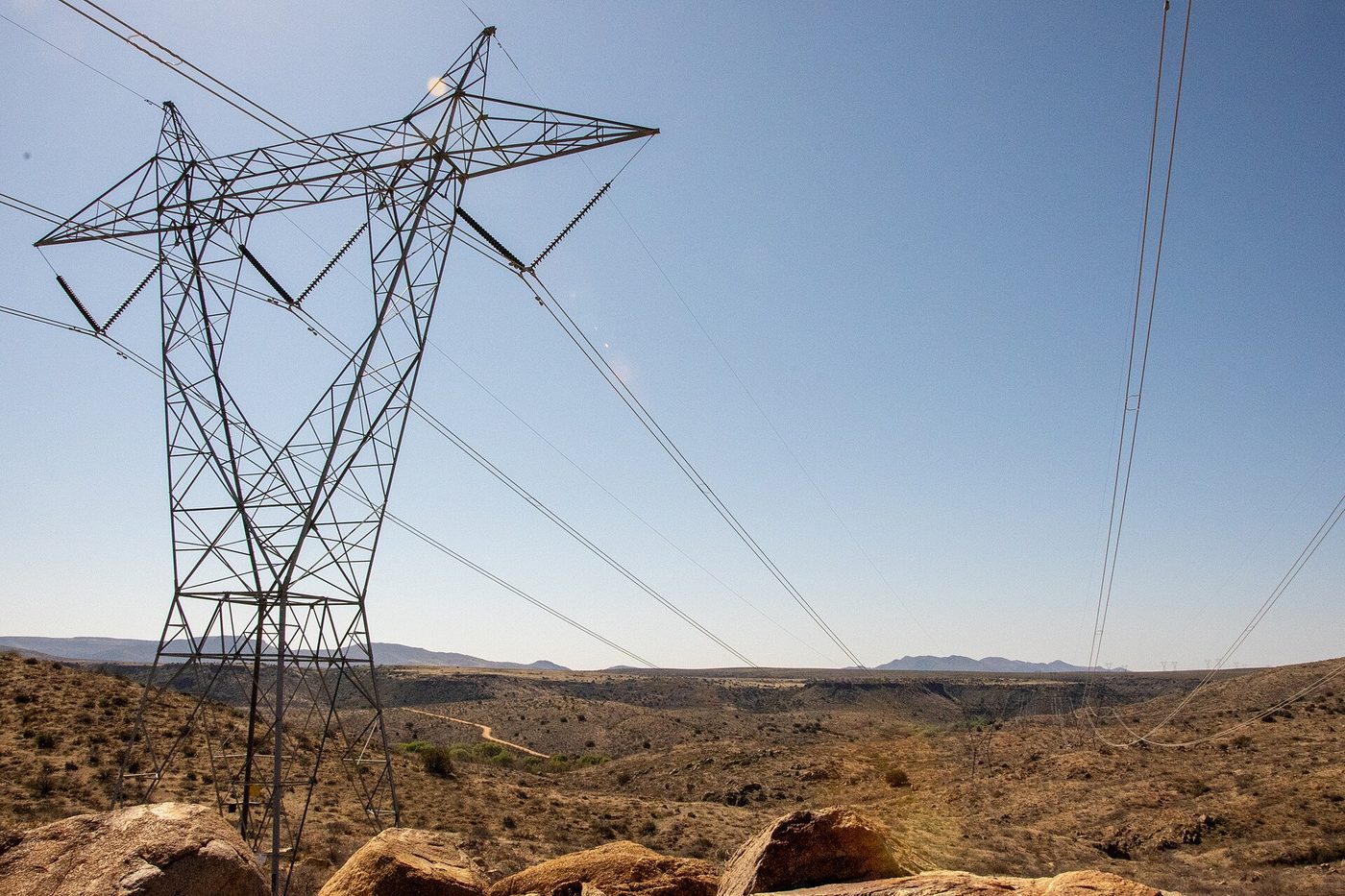
The West runs more balancing areas than the much larger Eastern grid, and the market that ties many of them together reports billions in savings. The SWIP-N record shows how one 500 kV line splits into a California block and an Idaho block, each paid for and reviewed in a different place.
By the numbers
- 37 balancing authorities: the count in the Western Interconnection (34 in the U.S., 2 in Canada, 1 in Mexico), against 36 in the much larger Eastern Interconnection. EIA, Today in Energy, 2016
- $8.62 billion: cumulative savings CAISO reports for the Western Energy Imbalance Market from its 2014 launch through the first quarter of 2026. These are the operator's own benefit calculations. CAISO news release, April 28, 2026
- 22 balancing authorities in 11 states: WEIM membership as of April 2026, representing 80 percent of electricity demand in the Western Interconnection. CAISO news release, April 28, 2026
- About 285 miles: the length of SWIP-N, from the Midpoint substation near Shoshone, Idaho, to the Robinson Summit substation near Ely, Nevada. Idaho PUC Order No. 36874, 2025
- $1,230 million: SWIP-N's cost in nominal dollars, excluding financing, in CAISO's 2024 decision memo, with CAISO funding 77.169 percent. CAISO board memo, September 27, 2024
- 500 MW: Idaho Power's south-to-north entitlement, 22.83 percent of Great Basin's 2,190 MW of total SWIP capacity. Idaho PUC Order No. 36874, 2025
- 11 for, 17 against: the split among the 28 public written comments filed on time in the SWIP-N certificate case. Seven more arrived late. Idaho PUC Order No. 36874, 2025
- $15.8352 per MWh: CAISO's regional high-voltage transmission access charge from June 1, 2026, which spreads $3,233,492,029 a year in revenue requirements over 204,197,048 MWh of load. SWIP-N's California share will join that pool once the line is in service. CAISO rate sheet, June 2026
Check yourself
1. Which groups intervened in Idaho Power's Boardman to Hemingway certificate case in 2023?
Order No. 35838 lists those five intervenors. The Oregon-based Stop B2H Coalition worked mainly before Oregon agencies.
2. What was the Idaho House vote on HCR 8, the 2025 Lava Ridge resolution?
The legislature's status page shows the House adopted HCR 8 on February 21, 2025 by 68-0-2. The Senate adopted it by voice vote on March 25.
3. Under Idaho Code 61-617A, what is the most the PUC can order a utility to pay toward all intervenors' costs in one proceeding?
The statute caps intervenor cost awards at $40,000 for all intervening parties combined in any proceeding, and sets four findings the commission must make.
4. What did Governor Little's Executive Order 2025-01 do?
Interior's August 2025 release says the order, titled the Gone with the Lava Ridge Wind Project Act, directed state agencies to cooperate with the federal review.
5. In the SWIP-N certificate case, which commenter asked the PUC to hold the case until the Legislature acted?
Order No. 36874 records Rep. Leavitt asking for denial or a hold pending legislative action. He later carried HCR 32 on the House floor in 2026.
6. Of the 28 timely public comments in the SWIP-N case, what share opposed the certificate?
17 of 28 opposed: 17 / 28 = 0.607, about 61 percent. Eleven, about 39 percent, supported.
Terms in this lesson
- Intervenor
- A party granted formal standing in a PUC case, with the right to file testimony, ask written questions and cross-examine.
- Commenter
- A person or group that files written comments in a PUC case without becoming a party.
- Concurrent resolution
- A measure adopted by both chambers of the Idaho Legislature stating a position; it does not have the force of law.
- Joint memorial
- A formal message from the Idaho Legislature to Congress or the President asking for federal action.
- Intervenor funding
- A PUC award under Idaho Code 61-617A paying part of a qualifying intervenor's costs, charged to the class it represented.
Sources
- Idaho PUC Final Order No. 35838, Case IPC-E-23-01 (June 30, 2023) checked 2026-10
- Idaho PUC Final Order No. 36874, Case IPC-E-25-08 (Dec. 12, 2025) checked 2026-10
- Idaho PUC: Case IPC-E-26-07 summary page checked 2026-10
- Idaho Code 61-617A, Award of costs of intervention checked 2026-10
- Idaho Legislature: HCR 8 (2025) status page checked 2026-10
- Idaho Legislature: HJM 5 (2025) status page checked 2026-10
- Idaho Legislature: HCR 32 (2026) status page checked 2026-10
- U.S. Department of the Interior: Interior moves to cancel approval of Lava Ridge Wind Project (Aug. 6, 2025) checked 2026-10
- Idaho Attorney General: Labrador Letter on Lava Ridge (Jan. 31, 2025) checked 2026-10
- Star Lake grazing permittees comment letter to the CAISO Board on SWIP-N (Sept. 27, 2024) checked 2026-10
- Minidoka Pilgrimage Planning Committee comment letter to the CAISO Board on SWIP-N (Sept. 27, 2024) checked 2026-10
- Idaho Conservation League bill tracker: SB 1368 (2026) checked 2026-10
- Renewable Northwest home page checked 2026-10
- Idaho Energy Freedom home page checked 2026-10
- Stop B2H Coalition home page checked 2026-10
- KIVI: Jerome County delays decision on appeal to withdraw 30-year-old SWIP energy transmission line permits (Sept. 23, 2025) checked 2026-10
- FERC, Great Basin Transmission, LLC, Order on Transmission Incentives and Accepting Transmission Owner Tariff and Formula Rate, 193 FERC 61,083, Docket ER25-2025 (Oct. 31, 2025) checked 2026-10
- FERC, Idaho Power Co. and Great Basin Transmission, Order Accepting Participation and Joint Ownership Agreement, 193 FERC 61,094, Dockets ER25-3372 and ER25-3376 (Nov. 4, 2025) checked 2026-10
- Idaho PUC Final Order No. 36903, intervenor funding, Case IPC-E-25-08 (Jan. 6, 2026) checked 2026-10
- Idaho Legislature: House Bill 898 (2026), State Historic Preservation Officer, bill page and history checked 2026-10
- Idaho Legislature: HB 898 (2026) Statement of Purpose, RS33726 checked 2026-10
- KIVI: Jerome County pauses major transmission line project over missing documentation (Oct. 8, 2025) checked 2026-10