Lesson 9 of 9 · about 18 minutes
Following the Money Into Ads, and Describing It Fairly
You'll be able to
- Trace a political ad from its disclaimer to the report that shows who paid
- Use station political files, expenditure schedules and independent expenditure reports together
- Know which questions campaign finance records can and cannot answer
- Apply a fairness check so a claim does not imply wrongdoing the evidence does not show
Every political ad leaves a paper trail, and it starts on the ad itself. The disclaimer names who paid. That name leads to a report, the report leads to donors and vendors, and the vendors lead back to the stations and platforms that ran the ad. Follow it one step at a time and you can show your neighbors who is paying to persuade them.
Step one: the disclaimer
The rules for what an ad must say are covered in depth in the Video and Radio Ad Development module, in its lesson Political and Issue Ad Rules. In short:
- Idaho Code 67-6614A requires the person responsible for a political communication to be clearly indicated. In practice, "Paid for by" plus the committee's name.
- Idaho Code 67-6628A lets a candidate sue over deceptive synthetic media (realistic but false AI-made audio or video of the candidate) in electioneering communications. A clear "This (video/audio) has been manipulated" disclosure is a defense.
- For federal races, 52 U.S.C. 30120 requires a "paid for by" statement and, for candidate radio and TV ads, a statement by the candidate that the candidate approved the message.
- Broadcasters must announce the sponsor under FCC rules and keep a political file.
Note the exact sponsor name from the ad. A committee called "Citizens for a Better Basin" might be registered as "Citizens for a Better Basin PAC" or "CBB Inc." Small differences matter when you search.
Step two: who is the sponsor?
| Sponsor type | Where its money shows up |
|---|---|
| Idaho candidate committee | Its monthly and 48-hour reports on the Sunshine portal |
| Idaho PAC or ballot measure committee | Its reports on the Sunshine portal, listing contributors over $50 |
| Independent spender in an Idaho race | Independent expenditure statements (67-6611) listing payees over $50; 48-hour reports for $1,000 or more in the last 16 days |
| Group running an electioneering communication | 67-6628 statements listing contributors of $50 or more to the filer |
| Federal candidate | Form 3 on FEC.gov; payees on Schedule B |
| Super PAC or federal PAC | Form 3X; donors on Schedule A, ads on Schedule E, plus 24- and 48-hour reports |
| Nonprofit that does not report donors | IRS Form 990 for revenue, officers and grants; donors generally not public |
Step three: match the ad to the spending
Campaigns rarely pay stations directly. They pay a media buyer or consultant, who pays the stations. So a report may show $40,000 to "Summit Strategies LLC, media" and nothing to any TV station. To connect the two:
- Station political files. Broadcasters post records of requests to buy political time in their public files at publicfiles.fcc.gov. Look for the sponsor's name, flight dates and the buyer's name.
- Independent expenditure reports. For federal races, a 24-hour report should appear within a day after an ad runs in the last 20 days, once spending reaches $1,000. For Idaho races, a 48-hour report is due for $1,000 or more after the 16th day before the election. If the ad is on the air and the report is not on file, ask why.
- Platform ad libraries. The large online ad platforms publish political ad libraries with sponsor names and spending ranges. The Video and Radio Ad Development module notes their current rules as of October 2026.
Worked example: one mailer, three records
A glossy mailer opposing an invented library levy in the town of Aspen Draw says "Paid for by Taxpayers for Responsible Libraries." Mailers are not in station political files, so start with the committee.
- Sunshine portal: the committee's October report shows $14,200 in contributions: $10,000 from a single donor, the invented Plainsview Property Owners Association, and $4,200 from 31 individuals. (Idaho's contribution limits in 67-6610A apply to candidates, so a $10,000 gift to a ballot measure committee is not over any limit.)
- Same report, expenditures: $8,600 to an invented print shop, $3,150 to the U.S. Postal Service.
- Arithmetic: 10,000 / 14,200 = 70.4 percent from one donor. 8,600 + 3,150 = $11,750 spent on the mailer, or 11,750 / 14,200 = 82.7 percent of what the committee raised.
- Follow-up: the association is a nonprofit. Its Form 990 lists officers and total revenue, not donors. The next step is a call asking who decided to give $10,000 and why. They answer, or they decline.
A fair one-sentence summary, at a meeting or online: "Most of the money behind the mailers opposing the Aspen Draw library levy came from a single property owners' association, which gave $10,000 of the $14,200 the committee raised." Every word ties to a record.
Questions the records can answer
| Question | What you need | Watch out for |
|---|---|---|
| Who is funding the race | Top donors for each candidate or side, computed the same way | Treating a donor list as a motive |
| Donors with business before the government | Contracts, permits, zoning or rate cases, with dates, matched to donors | Implying a trade. Show timing and let officials respond. |
| Out-of-state or out-of-district money | Shares with a named denominator | Calling legal money suspicious |
| Self-funding and loans | Candidate contributions and loans, repayment terms | Equating self-funding with wealth or virtue |
| Burn rate and cash | Spending as a share of receipts, cash on hand, debts | Predicting the race from money alone |
| Outside spending | Independent expenditures and electioneering statements versus candidate spending | Assuming coordination without evidence |
| Compliance | Late reports, missing 48-hour notices, apparent over-limit gifts, amendments | Turning a small fixable error into a scandal |
| Where the money goes | Vendors, especially a candidate's own business or relatives | Forgetting that some payments to related parties are legal and reported |
Keeping it fair
Campaign finance records are a gift to anyone following a race, and they are easy to misuse. A contribution is a fact. A motive is a guess. Most of the unfairness in claims about money comes from sliding from one to the other in a single verb.
Worked example: the comparison that changes the picture
An invented county commission race, two candidates.
| Candidate A | Candidate B | |
|---|---|---|
| Money raised from others | $38,000 | $29,500 |
| From people in real estate and construction (identified through business records) | $6,840 | $5,900 |
| Share | 6,840 / 38,000 = 18.0% | 5,900 / 29,500 = 20.0% |
"Candidate A took 18 percent of her money from developers" sounds damning. Next to Candidate B's 20 percent, it is a description of who gives in county races. The fair version gives both, with the same method, and says how donors were classified.
Checklist
- Every number ties to a named report, period and filing date.
- Shares name their denominator and use the same method for every candidate or side.
- Verbs describe what the record shows: gave, received, spent, reported. Not "funneled," "bought" or "bankrolled" unless you can prove it.
- Legal is labeled legal. Out-of-state gifts, bundling with each person's own money, and self-funding are all legal.
- Apparent violations are called apparent until confirmed, and the campaign was asked.
- Everyone named had a fair chance to respond, with enough time to actually do it.
- Amended reports were checked.
- Small private donors are named only when it matters to the point.
- The symmetry test: would you make this claim, the same way, about the other side?
Common mix-ups
- Claim: A donation followed by a favorable vote proves a deal. What the evidence shows: Donors usually give to candidates who already agree with them. Timing is worth noting; a trade requires evidence of an agreement.
- Claim: The candidate who raises the most wins. What the evidence shows: Money helps, but well-funded candidates lose often enough that you should never call a race from a report.
- Claim: No disclaimer means an illegal ad. What the evidence shows: Some communications are exempt or covered by different rules. Check the statute for that kind of communication before you call it illegal.
Reporting angle
- Build a race file for each contest: every report for every candidate and committee, with filing dates, in one spreadsheet. The Article Values Graph can help you map which findings matter most before you write.
- Collect ads as they appear: screenshots of mailers, recordings of radio and TV spots, links to online ads, each with the date seen and the disclaimer text.
- Match ads to reports weekly in the last month. A visible ad with no matching report is a question to ask, not yet a story.
- Request records such as public contracts and permit files for top donors with the Idaho FOIA / Public Records Letter Generator.
Research angle
- Idaho Code 67-6611: independent expenditures.
- Idaho Code 67-6614A: publication or distribution of political statements.
- Idaho Code 67-6628A: electioneering communications and synthetic media.
- 52 U.S.C. 30120: federal disclaimer rules for ads.
- FCC political programming: broadcaster rules and public file records.
- FEC independent expenditure reporting: outside spending reports.
Pictures, Numbers and Infographics
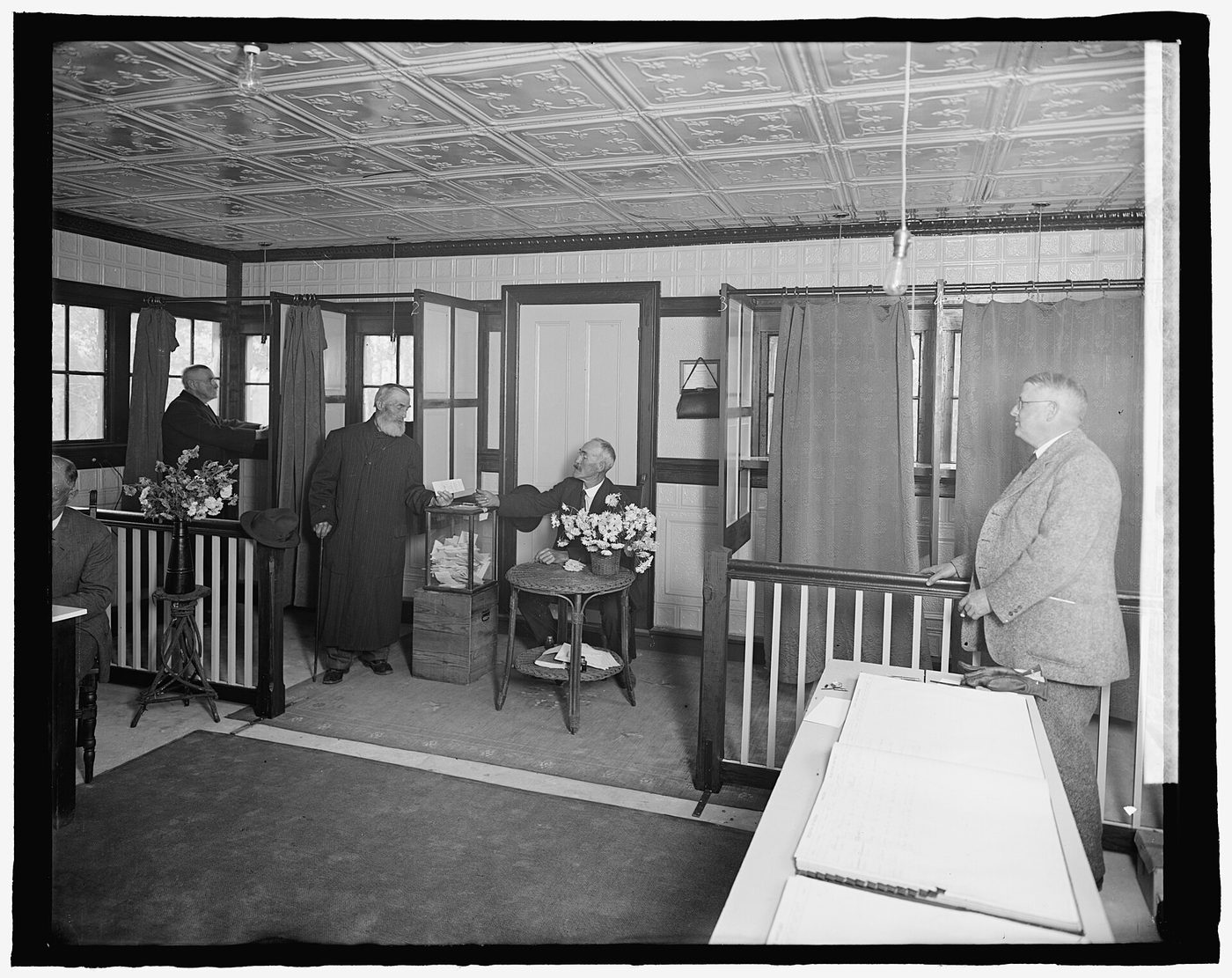
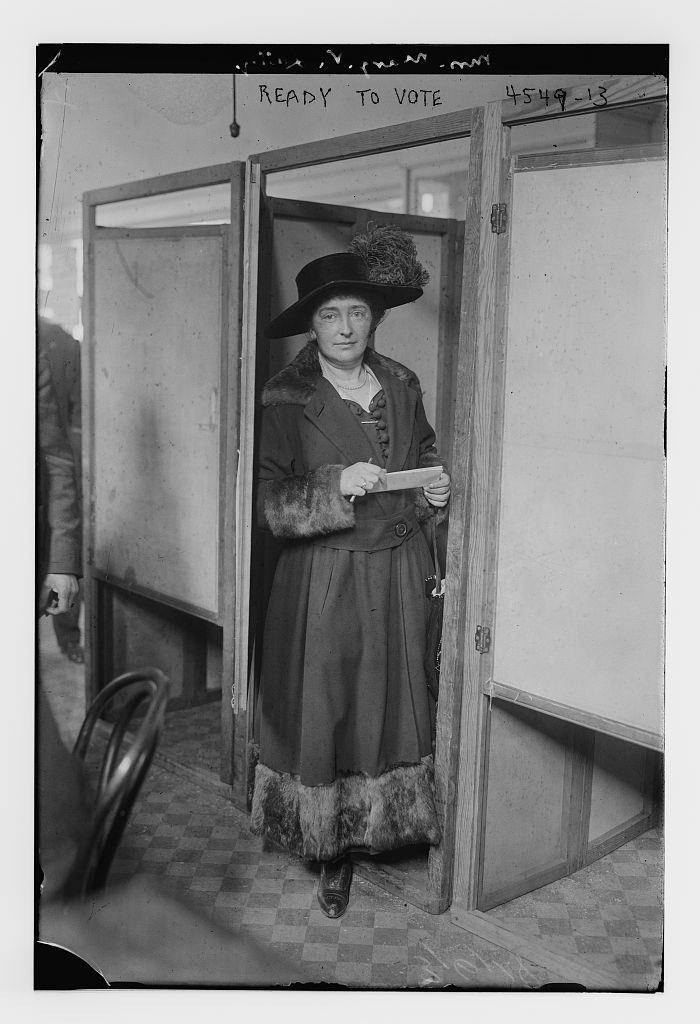
Idaho's 44 county clerks ran a 2024 general election in which more than three of every four registered voters returned a ballot. The pictures show how voting looked a century ago; the numbers cover turnout, contribution limits and the margins that set off a free recount.
By the numbers
- 917,469 ballots: cast in Idaho's November 2024 general election, from 1,178,750 registered voters, for 77.8 percent turnout. Idaho Secretary of State, 2024 general election turnout
- 121,015: Idahoans who registered on election day in November 2024, up from 87,330 in November 2020. Idaho Secretary of State, 2024 turnout and 2020 voting statistics
- 81.2 percent: Idaho general election turnout in 2020, with 878,527 ballots from 1,082,417 registered voters. Idaho Secretary of State, 2020 voting statistics
- $1,000 and $5,000: Idaho's per-election limits on what one donor may give a legislative, judicial or local candidate, and a statewide candidate. Idaho Code 67-6610A
- $3,500: the federal limit per election on an individual's gift to a congressional or presidential candidate for 2025 to 2026. FEC, Contribution limits for 2025-2026
- 0.1 percent or 5 votes: a margin at or below one-tenth of one percent of votes cast, or five votes, whichever is greater, qualifies for a recount at public expense. Idaho Code 34-2309
- 15: election-related bills the Legislature enacted in 2026, all signed by the governor, including the voter ID affidavit change in S 1322. Ballotpedia News, April 2026
Check yourself
1. An Idaho ad says 'Paid for by Valley Voters United.' Where do you look first to see who funds that committee?
The disclaimer names the payer. The payer's own reports, on the Sunshine portal for Idaho committees, list its contributors.
2. Where can the public view broadcast stations' political files online?
The FCC hosts stations' public inspection files, including political files, at publicfiles.fcc.gov.
3. A candidate's report shows $40,000 paid to a consulting firm and nothing paid to TV stations, yet the candidate's TV ads are everywhere. What is the likely explanation?
Campaigns often pay a media buyer that pays stations. Station political files and the firm's invoices help connect the two.
4. Candidate A got 18 percent of her money from real estate interests. Before repeating that, what comparison makes the number fair?
A share means little alone. Computing it the same way for every candidate in the race shows whether it is unusual.
5. Which wording stays within what a contribution record shows?
The first option states two checkable facts and lets people weigh them. The others claim a deal the record does not show.
6. When does it make sense to leave a small donor's name out when you talk about a campaign's money in public?
Public does not mean relevant. Naming a private $60 donor rarely helps anyone understand the race and can expose them to harassment.
Terms in this lesson
- Disclaimer
- The 'paid for by' statement on a political ad that identifies who paid; required by Idaho, federal and FCC rules in different forms.
- Political file
- The part of a broadcaster's public inspection file that records requests to buy political ad time; posted online by the FCC.
- Media buyer
- A firm that buys ad time or space for a campaign and pays the outlets, so the campaign report shows the firm, not the stations.
- Quid pro quo
- An exchange of something of value for an official act; a contribution alone is not evidence of one.
- Base rate
- How common something is in general, which you need before calling any one case unusual.
Sources
- Idaho Code 67-6614A, Publication or distribution of political statements checked 2026-10
- Idaho Code 67-6628A, Electioneering communications, use of synthetic media checked 2026-10
- Idaho Code 67-6611, Independent expenditures checked 2026-10
- 52 U.S.C. 30120, Publication and distribution of statements and solicitations checked 2026-10
- FCC: Political programming (political files at publicfiles.fcc.gov) checked 2026-10
- FEC: Reporting independent expenditures on Form 3X checked 2026-10