Lesson 9 of 9 · about 16 minutes
Who regulates nuclear power and how
You'll be able to
- Describe what the NRC does and what DOE, states and FERC do instead
- Explain the Part 50, Part 52 and Part 53 licensing paths
- Summarize the main provisions of the ADVANCE Act of 2024 and the May 2025 executive orders
- Find a reactor's docket, filings and hearing opportunities
The Nuclear Regulatory Commission is the most important agency for any U.S. reactor project, and also one of the most open. Almost every document it receives and issues is public, filed under a docket number, searchable online. Anyone who learns to use that record gets ahead of press releases by months. In 2024 and 2025, Congress and the White House changed the NRC's rules of the road more than at any time since Three Mile Island, so this lesson covers both how the system works and what changed.
Who does what
| Agency | Role in nuclear power |
|---|---|
| Nuclear Regulatory Commission (NRC) | Licenses, inspects and enforces rules for civilian reactors, fuel facilities, spent fuel storage and radioactive materials. Five commissioners appointed by the president, confirmed by the Senate; no more than three from one party. |
| Department of Energy (DOE) | Runs national labs including INL; authorizes its own research and demonstration reactors; funds advanced reactors; owns defense waste and the obligation to take commercial spent fuel. |
| Environmental Protection Agency (EPA) | Sets environmental radiation standards, including for a geologic repository. |
| Federal Energy Regulatory Commission (FERC) | Regulates interstate transmission and wholesale power markets, including deals where a data center connects directly to a nuclear plant. |
| State utility commissions | Decide whether utilities can build plants and charge customers for them; approve power contracts. |
| Agreement States | About 40 states regulate certain nuclear materials (medical isotopes, some uranium mills) under agreements with the NRC. Reactors stay federal. |
The NRC was created in 1974 when Congress split the old Atomic Energy Commission in two: one agency to promote nuclear power (which became part of DOE) and one to regulate it. That split, made because the AEC was seen as too cozy with the industry it regulated, is the background to every current argument about how fast the NRC should move.
Licensing paths
A commercial reactor can be licensed by any of these paths.
- Part 50 (two steps): the original path. A construction permit lets you build. Later, an operating license lets you load fuel and run. TerraPower's Natrium and TVA's Clinch River BWRX-300 both got Part 50 construction permits in 2026 and will need operating licenses.
- Part 52 (one step): created in 1989 to fix the delays of the 1970s and 80s. A vendor can get a design certified once, a utility can get an early site permit, and a combined license (COL) authorizes building and operating together. Vogtle 3 and 4 used this path.
- Part 53 (new): a "risk-informed, technology-inclusive" framework meant to fit non-water reactors better, required by the Nuclear Energy Innovation and Modernization Act of 2019. The NRC page shows the final rule published in the Federal Register in March 2026.
The safety review produces a safety evaluation report. The environmental review, required by the National Environmental Policy Act, produces an environmental impact statement or a shorter environmental assessment. The independent Advisory Committee on Reactor Safeguards (ACRS) reviews safety questions and writes letters to the commission. The Atomic Energy Act requires a hearing on construction permits; members of the public who meet standing rules can petition for a contested hearing before a licensing board. The commissioners then vote.
The ADVANCE Act of 2024
The Accelerating Deployment of Versatile, Advanced Nuclear for Clean Energy Act passed with large bipartisan majorities and became law on July 9, 2024, as Division B of Public Law 118-67. Key sections:
- Fees (Sec. 201): caps the hourly rate the NRC charges advanced reactor applicants starting October 1, 2025; a similar cap for pre-applicants ends September 30, 2030.
- Prizes (Sec. 202): lets DOE reimburse NRC fees for the first reactors in several categories, subject to appropriations.
- Russian and Chinese fuel (Sec. 102): bars licensing possession of fuel assemblies made by companies owned or controlled by those governments, unless the Energy and State secretaries find it does not threaten national security.
- Brownfields and coal sites (Sec. 206): requires the NRC to evaluate and streamline licensing at retired fossil plant and brownfield sites.
- Expedited licensing (Sec. 207): creates a faster combined license process for reactors at or next to existing reactor sites, with a 25-month target for a decision.
- Microreactors (Sec. 208): requires risk-informed licensing guidance for microreactors within 18 months.
- Mission statement (Sec. 501): requires the NRC to update its mission so licensing is efficient and does not "unnecessarily" limit the benefits of nuclear technology.
Supporters, including the industry and most members of Congress, saw it as overdue modernization. Groups like the Union of Concerned Scientists warned that changing the mission statement could tilt the regulator toward promotion, the problem the 1974 split was meant to solve. Both views show up in NRC commission votes on how to apply the new mission.
The May 2025 executive orders
On May 23, 2025, President Trump signed four nuclear executive orders. The three most relevant to this course:
| Order | Main directives |
|---|---|
| EO 14300, Ordering the Reform of the NRC | Goal of 400 GW of U.S. nuclear capacity by 2050 (from about 100 GW); maximum 18 months for decisions on new reactor applications and 1 year for existing reactor renewals; "wholesale revision" of NRC rules, with final rules within 18 months; reconsider the linear no-threshold model and ALARA; reorganize the agency, possibly with staff reductions; cut ACRS to its statutory minimum |
| EO 14301, Reforming Nuclear Reactor Testing at DOE | Affirms DOE authority over research reactors it controls that do not sell commercial power; pilot program with a goal of three reactors critical by July 4, 2026 |
| EO 14302, Reinvigorating the Nuclear Industrial Base | 10 new large reactors with complete designs under construction by 2030; 5 GW of uprates; plans to expand conversion and enrichment, including HALEU; a recommended national policy on spent fuel and recycling |
The fourth order dealt with reactors for national security and military bases.
Effects are already visible. NRC reviews that once took years have been finishing faster: the Natrium construction permit review took 18 months against an initial 27-month schedule, and TVA's Clinch River review took 14 months. Three test reactors reached criticality by the July 4 goal (lesson 4). Supporters credit the orders and the ADVANCE Act together. Critics, including former NRC officials and some members of Congress, have argued that White House deadlines and staff cuts undermine the NRC's independence, and that rushing reviews risks missing problems the process exists to catch. Legal scholars have also debated how far a president can direct an independent commission. These arguments were still active in October 2026.
Example: counting the 18 months
An invented applicant, Harlan Ridge Power, files a construction permit application on March 1, 2026. The NRC dockets it on May 15, 2026.
EO 14300 counts the 18 months from the first required regulatory step. If that step is docketing, the decision deadline would be about November 15, 2027 (May 15, 2026 plus 18 months).
If a contested hearing is granted, ask the NRC how the hearing fits within the schedule. And remember a construction permit is only half of Part 50: the operating license is a second review with its own clock.
Where the documents are
- ADAMS: the NRC's document system, searchable by docket number, with applications, requests for more information, safety evaluations, inspection reports and meeting transcripts.
- Project pages: the NRC lists active new reactor and advanced reactor applicants with review schedules.
- Federal Register: notices of applications, hearing opportunities (usually a 60-day window to petition) and proposed rules.
- Inspection reports and the Reactor Oversight Process: every operating plant gets color-coded performance ratings (green, white, yellow, red) updated quarterly.
- Event reports: plants must report certain events to the NRC, and daily event reports are published online.
Common mix-ups
- Claim: The NRC is part of DOE. What the evidence shows: The NRC is an independent commission. DOE runs labs and promotes nuclear technology; the two were split in 1974 to separate promotion from regulation.
- Claim: A reactor at INL is licensed by the NRC. What the evidence shows: Test and demonstration reactors under DOE control, such as the pilot program reactors, are authorized by DOE. Commercial power reactors need NRC licenses.
- Claim: The ADVANCE Act removed safety from the NRC's mission. What the evidence shows: It directed a mission update emphasizing efficient licensing and not unnecessarily limiting benefits. Safety and security remain the agency's statutory job.
Reporting angle
For any reactor near your readers: get the docket number first. Set up a search in ADAMS for it. Watch the Federal Register for the hearing opportunity notice, because that is when residents and groups can formally intervene, and it is a fixed deadline. Read the NRC's requests for additional information, which show what the staff found weak in an application. For an existing plant, check its Reactor Oversight Process rating and recent inspection findings. And for any story on review speed, ask the NRC for the planned and actual review schedule in months, and what the staff cut or combined to get there.
Pictures, Numbers and Infographics
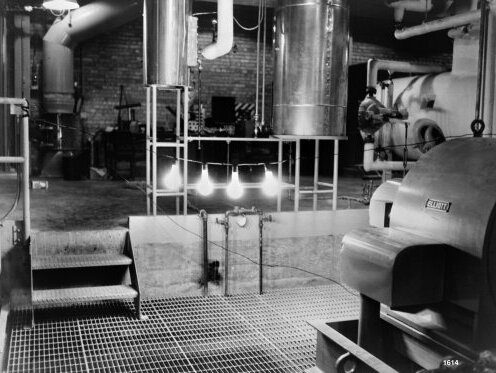
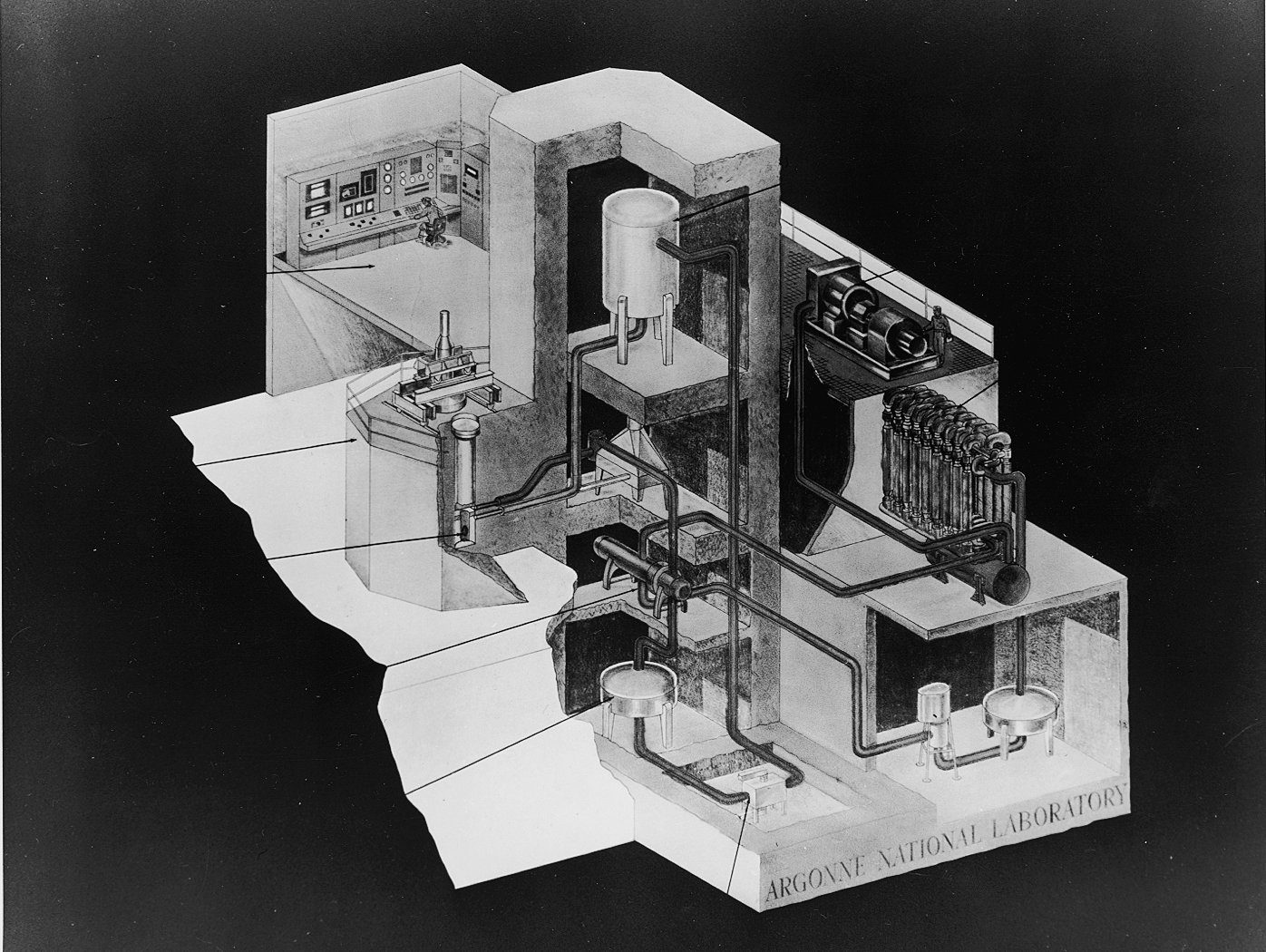
The first usable nuclear electricity came from an Idaho test reactor in 1951. The pictures go back to that reactor; the numbers describe the fleet that followed, what it costs to build, the spent fuel it leaves and its safety record per unit of power.
By the numbers
- 94 reactors: operating U.S. commercial reactors as of March 2026, at 54 plants in 28 states, with 98,441 MW of combined net summer capacity. Their average age is about 44 years. EIA, U.S. nuclear industry, 2026
- 91 percent: average capacity factor of U.S. nuclear plants in 2025, higher than any other type of power plant. EIA, U.S. nuclear industry, 2026
- About 18 percent: nuclear's share of U.S. utility-scale electricity generation in 2025. EIA, Electricity in the U.S., 2026
- $14 billion to more than $30 billion: Vogtle Units 3 and 4 in Georgia, from the original cost estimate to Georgia Power's later estimate. Construction began in 2009; Unit 4 entered commercial operation in 2024, years behind the original 2017 target. EIA, Today in Energy, May 2024
- About 90,000 metric tons: spent fuel generated by U.S. commercial reactors since the 1950s, growing about 2,000 metric tons a year and stored at more than 70 sites in 35 states. DOE Office of Nuclear Energy, 5 Fast Facts about Spent Nuclear Fuel
- 620 millirem: average yearly radiation dose to an American from all sources. Half comes from natural background, mostly radon. NRC, Doses in our daily lives
Check yourself
1. When was the ADVANCE Act signed into law?
The ADVANCE Act of 2024 is Division B of Public Law 118-67, approved July 9, 2024.
2. Executive Order 14300 set what maximum time for the NRC to decide on an application for a new reactor?
EO 14300 directs the NRC to set a maximum of 18 months for a final decision on a new reactor application.
3. What does a two-step Part 50 license involve?
Part 50 is the traditional path: build under a construction permit, then apply for an operating license. Part 52 combines them.
4. Which reactors can DOE authorize without an NRC license?
EO 14301 describes DOE jurisdiction over advanced reactors under its control that do not produce commercial electric power, such as the pilot program reactors at INL.
5. What did the ADVANCE Act direct the NRC to do with its mission statement?
Section 501 required an updated mission statement reflecting efficient licensing that does not unnecessarily limit nuclear energy's benefits, while safety remains the agency's job.
6. EO 14300 set what national goal for U.S. nuclear capacity by 2050?
Section 2(c) of EO 14300 sets a goal of expanding from about 100 GW in 2024 to 400 GW by 2050.
Terms in this lesson
- NRC
- The Nuclear Regulatory Commission, the independent federal agency that licenses and inspects civilian reactors and nuclear materials.
- Docket
- The official file number and record for a licensing case; every filing and NRC decision is posted under it.
- Combined license (COL)
- A Part 52 license that authorizes both building and operating a reactor at a site.
- ACRS
- The Advisory Committee on Reactor Safeguards, an independent expert panel that reviews safety issues for the NRC.
- Contested hearing
- A trial-like proceeding before an NRC licensing board where people who meet standing rules can challenge an application.
- Agreement State
- A state that has taken over NRC authority for certain nuclear materials, such as uranium mills or medical isotopes, under an agreement with the NRC.
Sources
- Public Law 118-67, Fire Grants and Safety Act and ADVANCE Act of 2024 checked 2026-10
- NRC: ADVANCE Act pages checked 2026-10
- Executive Order 14300, Ordering the Reform of the Nuclear Regulatory Commission checked 2026-10
- Executive Order 14301, Reforming Nuclear Reactor Testing at the Department of Energy checked 2026-10
- Executive Order 14302, Reinvigorating the Nuclear Industrial Base checked 2026-10
- NRC: Part 53, risk-informed technology-inclusive framework checked 2026-10
- NRC Backgrounder: Three Mile Island Accident (regulatory changes) checked 2026-10
- TerraPower: NRC Approves the Natrium Reactor Construction Permit checked 2026-10
- World Nuclear News: First construction permit issued for BWRX-300 SMR in the US checked 2026-10
- 10 CFR 20.1301, Dose limits for members of the public checked 2026-10