Treasurers · Module 4
Module 4: Custody, Deposits and Investment of Public Money
How Idaho law makes you the custodian of county money, who picks the banks, what you may buy with idle cash, and where your own signature carries personal exposure.
The Treasurer as Custodian
Idaho law uses the word in so many words. The Public Depository Law defines "Treasurer" as "the official custodian of public moneys as defined in this chapter." Public moneys are everything that reaches your hands as treasurer, and for a county that includes what comes in as tax collector and as public administrator.1 Section 31-2101(1) adds the working duty: receive the money, "safely keep the same," and pay it out as the law requires.2
"The county treasurer must keep all moneys belonging to this state or to any county of this state in his own possession until disbursed according to law. He must not place the same in the possession of any person to be used for any purpose; nor must he loan or in any manner use or permit any person to use the same, except as provided by law; but nothing in this section prohibits him from making special deposits for the safe-keeping of the public moneys."
Idaho Code § 31-2119
Read beside the deposit law, that means you keep county money in the depositories the board designated, and nowhere else.
The county is the "depositing unit" for money held for school districts, cities, fire districts and the rest while it sits in your custody. The commissioners, as the "supervising board," decide where all of it is kept.3 Tax collector and public administrator money must sit in separate accounts with those names (§ 57-132), and other county officers may park money in a federally insured designated depository until they turn it over to you (§ 57-145).
The penalties are blunt. Profiting from county money, or depositing it contrary to law, is a felony with up to two years in prison, a fine up to $5,000, or both, and you answer on your bond for the profit. Willfully failing a deposit duty is a misdemeanor with a fine up to $5,000. A bank that gives you a reward to induce a deposit contrary to law commits a felony too.4
Liberty Perspective: Whose Money Is It
It belongs to taxpayers and to the districts they elect. The chapter says it is "designed to safeguard and protect the funds of all political subdivisions." Practice has drifted from a vault and a ledger to a balance on a screen, and a screen can be wrong, stale or spoofed. Part of custody now is proving, in writing and on schedule, that it matches the bank, the books and the auditor.
Depositories, Insurance and the Collateral Gap
Who Picks the Bank
Not you. Section 57-128 gives designation to the supervising board, which for a county is the board of commissioners, and says the choice "shall be determined by competitive bidding or by other means generally accepted as standard business practice." The statute sets no rebid interval, and a designation "shall continue in force until revoked."5
A designated depository is an Idaho bank, trust company, savings and loan association or credit union that the board designates (§ 57-110). Each must file an officer's affidavit of capital and surplus before holding public deposits, and it runs only through the next January 31 (§ 57-113). You may not deposit with an institution that has no current affidavit on file, or one that has not paid its state and local taxes (§ 57-111A).
Your part is to police the paper. Under § 57-127 the board must certify to you the capital and surplus of each depository at least every six months. If you have not received it, ask.
"In no case shall the deposit or deposits of public funds of any depositing unit in any public depository, exceed at any one (1) time in the aggregate the total of the capital and surplus or reserves and unallocated or undivided earnings, as applicable, of such public depository."
Idaho Code § 57-128
December and June collections can push an operating account past a bank's capital and surplus in a day, so check the cap at each large deposit. If every designated depository is full, § 57-130 lets the board designate other Idaho institutions, and out-of-state banks only when no Idaho depository will take the money. Accounts must be demand or transaction accounts, with time deposits only for surplus or idle funds and only with board approval (§ 57-131).6
Practical Scenario: The Balance That Outgrew the Bank
You are the treasurer of invented Tamarack County. The week after December 20, the operating account at Valley Community Bank, the only designated depository, holds $31 million. Its affidavit shows $26 million in capital and surplus. The next board meeting is nine days out.
The cap is already broken, and your deposit broke it. Call the chair today and ask whether a special meeting can designate a second depository or approve a pool account before the regular one. Write down the balances, the affidavit figure and each call. If the bank failed first, § 57-137 protects you only if you kept deposits "in accordance with" the chapter.
Insurance and Pledges
FDIC rules treat each official custodian of a county's funds as a separate depositor, insured up to the standard maximum amount (now $250,000) for time and savings deposits combined, and again for demand deposits, at an insured institution in Idaho.7 Whether tax money held for a school district earns its own coverage inside the county's account is a question for the bank, the FDIC and your prosecuting attorney. Do not assume it does.
Now the gap. The chapter as it reads today has no section requiring a bank to pledge securities or post a depository bond against county deposits. Sections 57-112, 57-114 through 57-126, 57-129 and 57-136 do not appear in the current listing, and I found no collateral rule in the 32 sections that do.8 What the statute offers is the cap, the certification and this shield:
"Where the treasurer in accordance with the terms and provisions of this chapter has deposited and kept on deposit any public moneys in designated depositories, he shall not be liable personally or upon his official bond for any public moneys that may be lost by reason of the failure or insolvency of any such depository."
Idaho Code § 57-137
The shield has a condition in its first clause, and the Idaho Supreme Court enforced the older version against a treasurer in 1925 (see below). If you want pledged collateral, the board has to require it in a written policy and the bank has to agree in a contract the prosecuting attorney has reviewed. Securities you own may be held by a designated depository or a Federal Reserve bank against a receipt (§ 57-127A).
Liberty Perspective: The Quiet Gap
Many assume county money at a local bank is secured. Under the statute it is insured up to the federal limit and capped at the bank's capital and surplus, and that is all the chapter promises. Say so at a board meeting, on the record, when the balance is large. A written policy turns the gap from a surprise into a decision the board made with its eyes open.
Accounts, Signatures and the Cash Drawer
The books come first. Section 31-2101(3) and (4) call for an entry showing the amount, time, payer and purpose of every receipt and disbursement, separate accounts for each fund or appropriation, and one general cash account showing the whole. Give a receipt for every payment (§ 31-2104). Take money into the treasury only when the auditor's certificate documents it, though electronic transfers followed by the required documentation are fine (§ 31-2103).9
The Code does not say who may sign on a county bank account. That falls to the board's depository resolution, the bank's signature card and your office procedures. What does matter is § 31-2008: when a law imposes a duty or liability on an officer by title, it includes the officer's deputies. A deputy's mistake is your mistake. Appoint deputies in writing and file the appointment with the recorder (§ 31-2007), name a senior deputy (§ 31-2006), and make every signature card and online login match the filed list. Remove a departing employee the same day.10
On deposit deadlines, no Idaho statute I found gives the treasurer a number of days. The rule is § 57-127: unless less than $1,000 is in your custody at one time, you must "at all times keep on deposit" public moneys in designated depositories. So set it in office policy and set it tight: every business day, cash and checks deposited intact. I found no general turnover deadline for other offices either, so ask the board to set one in writing.11
No statute requires segregation of duties, and auditors insist on it anyway. If one person takes cash, posts it, deposits it and reconciles the account, nobody else can find a mistake or a theft until it is large. Split those jobs between at least two people. In a two-person office the control is someone outside it, a board member or the auditor's staff, who opens the bank statement and initials your reconciliation. The board and the auditor can inspect your books and count your money whenever they ask (§§ 31-2122, 31-2123, 57-143).12 Invite the count.
Warrants, Payment and Reconciliation
The common summary says the commissioners allow the claim, the auditor writes the warrant and the treasurer pays it. That is almost right. Section 31-2101(6) says you "disburse the county moneys only on county warrants issued by the county auditor, based on orders of the board of commissioners or as otherwise provided by law." But § 31-1511 puts your name on the warrant itself.
"Warrants payable on demand and drawn by order of the board of county commissioners on the county treasury shall be jointly issued and signed by the county auditor and the county treasurer. If the board of commissioners chooses to issue warrants not payable upon demand, they shall be issued by the county auditor and redeemed by the county treasurer."
Idaho Code § 31-1511
On demand warrants you are a co-issuer, not a cashier. Warrants are paid in order of presentation, and when a fund is short they are registered and paid in that order. The board may not prefer a creditor or move money between funds except by recorded resolution (§§ 31-1508, 31-1510).13 Officials who issue warrants beyond a fund's levy are liable "both personally and on their official bonds" (§ 31-2017), and a co-signing treasurer sits inside those words.14
The warrant statutes were written for paper. I found no section authorizing or setting rules for ACH payments or wires by a treasurer; the only electronic reference is § 31-2103 on money coming in. If your county pays electronically, rest it on a board resolution, written procedures and the prosecuting attorney's review.15
The statutes never use the word reconciliation, but they build it from parts. Each depository must send you and the auditor, at the start of every month, a statement "showing the daily balance of the public moneys of the depositing unit held by it during the month next preceding" (§ 57-134). You settle with the auditor on the first Monday of each month on a sworn statement and report to the board at every regular meeting. Miss either and you forfeit $500 per neglect, and the board "must institute suits" to collect (§ 31-2114).16
Section 57-135 adds a monthly written report to the board, due the last business day of the month, showing "exactly how much cash is in the treasury and in what financial institutions such funds may be deposited or invested." It applies if no other statute already requires the same report, and it goes into the next board packet. A willful false statement lets the board suspend or remove you.
In practice, reconcile each month as a three-way match: the bank statement balance, plus deposits in transit, less outstanding warrants and checks, must equal your cash book and the auditor's ledger. Give every difference a name and a date, and reconcile investments the same way to the safekeeping or pool statement. The books must meet generally accepted accounting principles or GASB standards and follow the State Controller's uniform manual when the Controller so notifies the county, and a county spending over $300,000 a year needs an annual independent audit filed within nine months (§§ 31-1509, 67-1075, 67-450B).17
Liberty Perspective: The Report in the Packet
The § 57-135 report goes into the board packet, which makes it a place a taxpayer can see where county cash sits. In too many offices it is a single total with no names. Write it by institution and account, list investments with maturity dates, and attach the reconciliation sign-off. A detailed report draws fewer questions than a thin one.
Investing Idle Money
Who Decides
Both of you do, on different parts. Section 31-2127 says the county treasurer "is authorized and empowered to invest surplus or idle funds pursuant to section 57-127," and § 57-127 conditions that: the investing happens "with the approval of the supervising board of the depositing unit." The board approves the program and the policy. You decide what to buy within it, when to sell and when to leave money in the bank.18
"Surplus or idle funds" is a cash-flow test: the excess of available money, including reasonably anticipated revenue, over reasonably anticipated expenditures, with attention to timing (§ 57-131).
What You May Buy
County treasurers get their list by cross-reference. Sections 57-127 and 31-2127 point to the investments § 67-1210 permits. The section was written for the state treasury, but the reference makes the list yours.19 Paraphrased, it covers:
- Obligations of the United States and of Idaho, and bonds of any Idaho county, city, school or other taxing district (§ 67-1210(1)(a) to (c)).
- Federal agency and farm credit obligations, and bonds or notes of Idaho public corporations (d), (e).
- Repurchase agreements "covered by any legal investment for the state of Idaho," and anticipation notes of the state and of Idaho taxing districts (f), (g), (h).
- Time and savings accounts in state depositories, in savings and loans only up to the FDIC amount, and in credit unions only up to share insurance (i), (j), (l).
- Idaho higher education revenue bonds (k), and money market funds holding only allowed investments (m).
Corporate notes and commercial paper are not on that list. Section 67-1210A authorizes them for the state treasurer, and § 31-2127 lets you reach them only "through the state treasurer pursuant to a joint exercise of powers agreement."20 A broker who calls a corporate ladder "basically agency paper" is asking you to step outside the list. The lawful door is a larger pool allocation, if the board wants one.
Standard of Care and Written Policy
Section 57-127A mentions "the prudent man investment rule," excusing a treasurer for safekept securities "except insofar as a violation by the treasurer of the prudent man investment rule contributes to any loss." The Code does not define it for county treasurers. The state treasurer is bound by the Idaho Uniform Prudent Investor Act (§ 67-1203B(3)); the statutes I read do not say it reaches you, and I found no Idaho appellate decision that does. Ask your prosecuting attorney. Meanwhile the statute describing investing for the state tells the investor to consider "the probable safety of the capital, the probable income to be derived, and the liquidity of the assets" (§ 67-1210(6)). Safety comes first on that list, and should in your decisions.21
No section I found requires a written investment policy. Section 57-127 does require board approval, and a written policy is the clean way to prove it. Name the allowed instruments, the longest maturity, where securities are held, who may place orders and how reports reach the board. Keep a quarter-end list with cost, maturity and rate.
The Pool and the Interest
The Local Government Investment Pool, run by the Idaho State Treasurer, rests on § 67-1226: "Any public agency is hereby authorized to invest funds not immediately required for activities of such entity in the pooled investment program." The State Treasurer's page calls it a "safe liquid vehicle" and says plainly that an investment in it "is not insured or guaranteed by the Federal Deposit Insurance Corporation (FDIC) or any other government agency" and that "it is possible to lose money." Joining takes an application signed by a board member other than the listed contact. Section 67-1226 lets the state treasurer put pool money into any investment the state's own idle money may buy, which is how a county reaches more than § 67-1210 offers.22 Joining is the board's decision under § 57-127, so put it in a motion.
Section 57-127 sends investment interest, "unless otherwise required by law," to "the general fund of the depositing unit." Interest on other officers' pending-turnover accounts goes to the county current expense fund (§ 57-145). For district tax money awaiting settlement the words point to the county general fund too, because § 57-104 makes the county the depositing unit. But I found no section addressing that money directly and no Idaho appellate decision on it. If your office has never decided who keeps those earnings, get the prosecuting attorney's written opinion before an audit asks. Grant agreements and bond documents may carry their own interest rules.23
Liberty Perspective: Yield Is Not the Job
The pressure to chase income is real and it comes from honest places: tight budgets, a board that wants tax relief, a neighboring county bragging about earnings. But county money is not a portfolio you own. Your job is to have it on the day the warrant needs paying, with whatever interest safe instruments earn along the way. When a pitch sounds smarter than the list, suspect the pitch.
Unclaimed Property and Uncashed Warrants
The statute is the Revised Unclaimed Property Act, Idaho Code Title 14, chapter 5, enacted in 2024 (session law ch. 27). The "administrator" is the State Treasurer's office. The Act's definitions of "person" and "property" reach a "government or governmental subdivision," so a county that owes a payee money can be a holder.24
Property held by a governmental subdivision is presumed abandoned one year after it becomes distributable, and wages or other pay for services one year after payable (§ 14-5-201(1)(i), (j)). That reaches warrants never cashed. Holders report before November 1 each year for the twelve months before July 1. They mail the owner a notice 60 to 180 days before filing if the property is worth $50 or more and an address exists, and keep records ten years. A late report costs 12 percent annual interest and up to $200 a day in penalties, capped at $5,000, subject to waiver.25
Counties have a way out. Section 14-5-406 makes Idaho counties eligible for a certificate of exemption if the commissioners file a written election with the administrator, the county keeps a revolving fund to pay claimants holding the lesser of 25 percent of the accumulated unclaimed property or $20,000, and the county gives the administrator the information a holder's report would carry. If the election is revoked or the administrator finds noncompliance, the property and records go to the state.26
Find out whether your county has an election on file. And I found no Idaho statute that lets a county simply cancel, void or write off an uncashed warrant after some age. Do not void warrants on your own.
Practical Scenario: The Old Warrants
Your June reconciliation in invented Basalt County turns up 140 warrants more than a year old, totaling $38,400: seasonal payroll, refunds and a few vendors. The auditor suggests voiding them and returning the money to the general fund, "since nobody wants it."
Money no one has claimed is still owed to someone. Ask in writing whether the county holds a § 14-5-406 exemption, whether notice went to payees owed $50 or more, and what the prosecuting attorney says about voiding. With no exemption, the report is due before November 1 and the money goes to the State Treasurer, not the general fund. Keep the list, the notices and the advice in the file.
Fraud, Wires, ACH and Cyber
No Idaho statute I found prescribes wire, ACH or cyber controls for a county treasurer. The duty is safe keeping, and the law supplies the liability line. Under § 31-2018, county officials "shall strictly account for all public moneys," but are not personally liable for losses caused by disaster or "by theft, robbery, or the criminal conduct of another person who is not a county official or employee." The county indemnifies officials except for losses that "are the result of negligence, gross negligence, or intentional conduct."27
An outsider's theft does not land on you personally. An insider's theft, or a loss traceable to your negligence, can. If a stranger poses as a vendor and you release a payment without checking, the statute does not say which clause governs, and you do not want to find out in an audit.
Most losses arrive by one road: an email or call that changes bank instructions, an urgent wire request, or a stolen login. These controls close it:
- Verify any change to payee bank details by calling a number already in your records, never one in the message.
- Two people for each electronic release: one prepares, a different one approves in the bank's portal, each with separate credentials.
- Bank-side limits and filters: wire limits, positive pay on checks, and debit blocks on accounts that should only receive.
- Multi-factor sign-in on banking, the LGIP portal and office email.
If it goes wrong, call the bank first. Speed matters, and a recall request in the first hours gives the best chance of getting wired money back. Then call the auditor, your prosecuting attorney and ICRMP, and report to the FBI's Internet Crime Complaint Center. ICRMP lists crime coverage (employee dishonesty, embezzlement, bonding) and cyber coverage (including cyber extortion and data recovery). Read your county's policy before you need it.28
Practical Scenario: The Vendor Wire
In invented Tamarack County, an email arrives from the contact at the paving contractor. The company has "changed banks," and a $214,000 progress payment due Friday should go to new wire instructions. The auditor's office forwards it to you: "They say it's urgent. Can you do it?"
No. Call the contractor at the number in the signed contract, not the email, and ask for written confirmation of the change on a form signed by an officer. Have a second person confirm the call. Until then the payment goes to the account on file. Log each step. If the request was fraud, you stopped it. If it was real, the contractor loses a day.
Bond, Coverage and Personal Exposure
The board fixes your bond at double the probable amount of money that may at any time come into your hands. If a surety bond is given under § 41-2707 (which I did not read), it need not exceed 25 percent of that probable amount, and may not be less than $10,000 (§ 31-2015(2)). Counties may cover treasurers by individual surety bond, blanket bond or suitable crime insurance, approved by the governing body and filed with the clerk (§ 59-804). Crime insurance qualifies if it covers employee dishonesty and depositors' forgery, among other losses, and carries the insurer's stipulation that it provides the coverage the bond chapter describes (§ 59-802(4)). The board must review the sufficiency of official bonds at least twice a year (§ 59-806).29
The shields: §§ 57-137, 31-2018 and 57-127A, covered above. The swords: the felony and misdemeanor in §§ 57-139 and 57-140; the $500 forfeiture (§ 31-2114); suspension while an official misconduct action is pending (§ 31-2120); and the public-servant statutes, which bar using public funds for your own benefit without authorization, being interested in a contract you make officially (§ 18-1359(1)(a), (d)), and taking a benefit from anyone interested in a payment or claim you control (§ 18-1356(2)). Those violations are misdemeanors with a fine up to $1,000 or up to a year in jail, plus possible forfeiture of office and restitution (§ 18-1360).30
What the Idaho Supreme Court Said
Buhl Highway District v. Allred, 41 Idaho 54, 238 P. 298 (1925), is old and the statute has changed, but it is a direct Idaho treatment of a treasurer's bond liability for deposits. Russ Allred was treasurer of a highway district and also a stockholder, director and cashier of the Citizens State Bank, where the district's money sat. When the bank failed on December 2, 1921, it held $91,861.61 of district funds, and the district sued Allred and his surety on the bond.31
The Court held, in substance: a deposit is "lost" when the depository fails to repay it through insolvency, even if part may later be recovered from the bank or its bond. Allred was liable for failing to call outstanding warrants when funds were on hand, because leaving the money in the bank was an appropriation not authorized by law. The commissioners had "no power or authority to waive" his duty, and Allred's claim that they knew and that the bank would pay seven percent was no excuse. He was also liable for the $18,201.75 he put in one bank that the 1921 act required to be spread among designated depositories in proportion to capital and surplus. The judgment was affirmed at $68,378.62 plus costs.
What carries forward: a board cannot excuse a duty the statute puts on you, and a stake in the institution makes every fact harder to defend. What does not: the apportionment rule came from the 1921 act, I did not find it in the current chapter, and I did not trace a successor to the warrant-calling statute the Court applied.
Liberty Perspective: Conflicts at the Bank
Allred wore two hats. A modern version is a treasurer whose spouse sits on the board of the designated bank. The liability and ethics module deals with that formally. Tell the board about any relationship with a depository or broker before it votes to designate or approve, put it in the minutes, and let the board decide without your input.
Practice Points for the Officeholder
Deadlines You Must Meet
- First Monday of every month: sworn settlement with the auditor (§ 31-2112). Every regular board meeting: detailed report (§ 31-2113).
- Last business day of every month: cash and depository report to the board (§ 57-135). Start of every month: depository statements of daily balances due (§ 57-134).
- First Tuesday after the first Monday of October: annual settlement before the commissioners (§ 31-2112).
- Before November 1: unclaimed property report, unless the county holds a § 14-5-406 exemption (§ 14-5-403).
- Each January 31: depository affidavits lapse (§ 57-113). Every six months: board certification of capital and surplus (§ 57-127) and review of your bond (§ 59-806).
Monthly Reconciliation and Controls Checklist
- Bank balance, adjusted for items in transit, agrees to your cash book and the auditor's ledger by fund. Differences are named, dated and cleared.
- Deposits made intact, same business day or next morning, and agree to receipts issued.
- Each depository checked against its current capital and surplus. Affidavit on file.
- Investment list agrees to the safekeeping or pool statement, and every item sits on the § 67-1210 list or came through the pool.
- Warrants outstanding over 90 days reviewed. Any over one year listed for the unclaimed property decision.
- Bank users and signature cards match the filed deputies list.
- Reconciliation signed by the preparer and reviewed, with a date, by someone outside the cash-handling chain.
- Payee bank-detail changes verified by call-back and logged. Cash counted by two people.
Records
Keep settlements, depository statements, reconciliations, the board's designations and approvals, investment lists, the bond or crime policy and its reviews, and every unclaimed property notice. The Act requires ten years for unclaimed property records (§ 14-5-404); for the rest follow the board's retention schedule. Expect requests for reconciliations and statements, and ask the prosecuting attorney which account details to remove before release.
What the Auditor and the Board Will Ask
- The depository designation, current affidavits and six-month certifications.
- The board's investment approval and policy. Who may place orders?
- This month's reconciliation, and who reviewed it.
- Who can sign or release wires, and when that list was last matched to the bank.
- Your bond and crime coverage, and what happens to warrants nobody cashes.
Where Treasurers Get Into Trouble
A balance past a bank's capital and surplus. Investing on a broker's pitch without board approval or outside § 67-1210. One person handling cash, books and the reconciliation. Releasing a payment on an email request. Voiding old warrants without advice. A late settlement. Covering one fund with another's cash without a recorded resolution.
When to Call
Call your prosecuting attorney for anything that changes who pays, who keeps the interest, what to buy or whether to void a warrant. Call IAC or IACT to learn how other counties handle a practice, and ICRMP when coverage is unclear. For fraud, call the bank first, then the auditor and prosecutor. The Attorney General enters under § 31-2002 when a criminal allegation reaches an elected officer.
Pictures, Numbers and Infographics
County money waits in banks the commissioners designate, and idle balances can go to the State Treasurer's Local Government Investment Pool. The pool's size and yield show how much public cash moves through it and how fast the return on idle money changed after 2021.
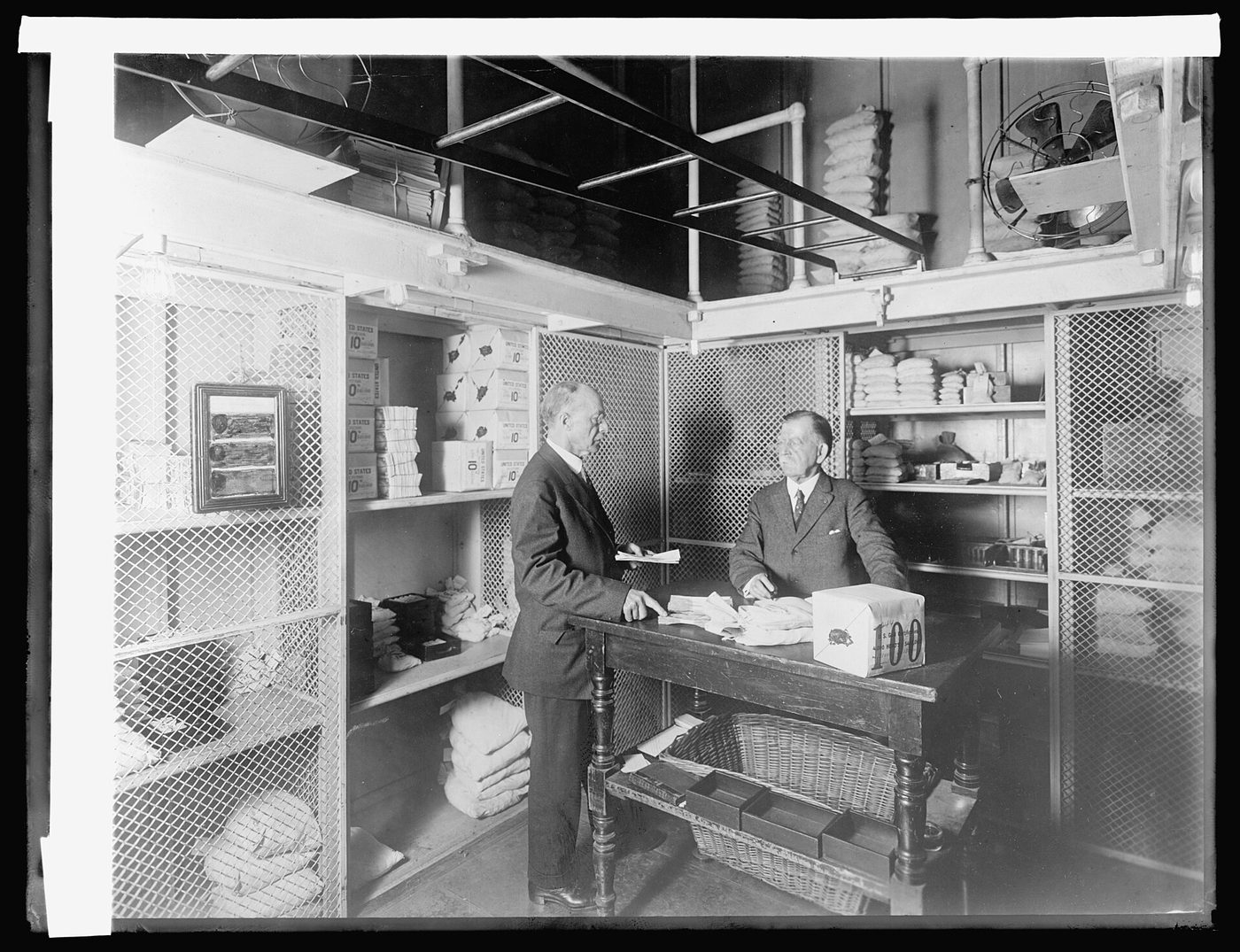
By the numbers
- $5,676,360,377: market value of the Local Government Investment Pool on June 30, 2026, up from $3,272,072,027 on June 30, 2020. Idaho State Treasurer, LGIP Portfolio Summaries, 2020 to 2026
- 3.91%: LGIP distribution yield for September 2026. The December figure was 0.12% in 2021 and 5.42% in 2023. Idaho State Treasurer, LGIP Investment Rates, 2026
- 129: days to maturity for the pool portfolio as of June 30, 2026. Pool policy says no investment may mature in more than 5 years. Idaho State Treasurer, LGIP Investment Report, June 2026
- $250,000: FDIC deposit insurance per depositor, per insured bank, for each ownership category. The State Treasurer warns that an LGIP investment is not insured or guaranteed by the FDIC. FDIC, 2026; Idaho State Treasurer, LGIP
- $3,046,598,558: business email compromise losses reported to the FBI's Internet Crime Complaint Center in 2025, from 24,768 complaints. These scams target people who send wire payments. FBI IC3, Internet Crime Report, 2025
Sources & Further Reading
Primary Sources
- Idaho Code Title 57, Chapter 1 (Public Depository Law)
- Idaho Code Title 31, Chapter 21 (County Treasurer); Chapter 15 and Chapter 20
- Idaho Code Title 67, Chapter 12 (State Treasurer), including §§ 67-1210, 67-1210A and 67-1226
- Idaho Code Title 14, Chapter 5 (Revised Unclaimed Property Act)
- Idaho Code §§ 59-802, 59-804, 59-806; §§ 67-450B, 67-1075, 67-2328; §§ 18-1356, 18-1359, 18-1360
- 12 C.F.R. § 330.15, accounts held by government depositors
- Buhl Highway District v. Allred, 41 Idaho 54, 238 P. 298 (1925), Caselaw Access Project text
Agency Guidance
- Idaho State Treasurer, Local Government Investment Pool
- Idaho State Controller
- Idaho Association of Counties
- ICRMP coverages
- Legislative Audits Division
Related Training Modules
Knowledge Check
Check your understanding. No scores are saved.
1. Under Idaho Code §§ 57-106 and 57-128, who designates the depositories for county money?
Section 57-106 makes the official governing body the supervising board, and § 57-128 gives it designation, "determined by competitive bidding or by other means generally accepted as standard business practice." The treasurer does not pick the banks. The governing body, acting as the supervising board, designates them under § 57-128.
2. Which statement about collateral under the Public Depository Law (Title 57, chapter 1) is accurate?
Section 57-128 sets the capital-and-surplus cap, and no section in the current chapter requires a pledge or depository bond. Collateral exists only by written agreement. The current chapter has no percentage pledge and no depository bond section. It has the cap in § 57-128, the federal insurance limit and the loss shield in § 57-137.
3. Who has authority to invest a county's surplus or idle funds under Idaho Code §§ 31-2127 and 57-127?
Section 31-2127 authorizes the treasurer to invest and § 57-127 conditions that on the supervising board's approval. The permitted list is § 67-1210; the extra § 67-1210A instruments are available only through the state treasurer under a joint exercise of powers agreement. Investing is the treasurer's power, but only with board approval and only within the § 67-1210 list (plus § 67-1210A through the state treasurer).
4. Under Idaho Code § 31-1511, who signs warrants payable on demand drawn on the county treasury?
Section 31-1511 says demand warrants "shall be jointly issued and signed by the county auditor and the county treasurer." Only non-demand warrants are issued by the auditor and redeemed by the treasurer. The statute puts both signatures on demand warrants. The auditor-issues, treasurer-redeems split applies only to warrants not payable on demand.
5. How can an Idaho county be exempt from filing unclaimed property reports under Idaho Code § 14-5-406?
Section 14-5-406 makes counties eligible for a certificate of exemption on the commissioners' written election, a revolving fund, and reporting the information the administrator needs for its registry. There is no automatic exemption. It takes the commissioners' written election, the revolving fund and the registry information, and the Code gives no authority to void warrants.
Reference Materials
Use your browser's print function (Ctrl+P / Cmd+P) to save this page as a PDF for offline reference.
- The Treasurer as Custodian: jump to section
- Depositories, Insurance and the Collateral Gap: jump to section
- Accounts, Signatures and the Cash Drawer: jump to section
- Warrants, Payment and Reconciliation: jump to section
- Investing Idle Money: jump to section
- Unclaimed Property: jump to section
- Fraud, Wires, ACH and Cyber: jump to section
- Bond, Coverage and Exposure: jump to section
- Related Organizations: jump to section
- Practice Points: jump to section
Footnotes
- Idaho Code § 57-107 ("Treasurer" is "the official custodian of public moneys as defined in this chapter"); § 57-105 (public moneys; for a county, includes money in the hands of its tax collector or public administrator); § 57-102 (the chapter "is designed to safeguard and protect the funds of all political subdivisions"). Idaho Code is read at legislature.idaho.gov; the site notes that statutes are updated each July 1 after the session.
- Idaho Code § 31-2101(1) through (6); § 31-2119. The reference to the Public Depository Law is § 57-127: all public moneys are kept on deposit in designated depositories except where less than $1,000 is in the treasurer's custody at one time.
- Idaho Code § 57-104 (the county "shall be deemed to be the depositing unit" for money of other units in the custody of the county treasurer or tax collector); § 57-106 ("supervising board" means the official governing body of a depositing unit); § 57-132 (separate "Tax Collector's Account" and "Public Administrator's Account"); § 57-145 (other county officers; interest on those deposits goes to the county current expense fund).
- Idaho Code § 57-139 (felony; up to two years, fine up to $5,000, or both; liable on the official bond for profits); § 57-140 (willful failure to perform a deposit duty is a misdemeanor, fine not exceeding $5,000); § 57-141 (bribery of a treasurer by a depository, a felony with the same maximums as § 57-139).
- Idaho Code §§ 57-128, 57-110, 57-111, 57-113. Section 57-113 refers to the filing date "specified by the state treasurer pursuant to section 67-2739(2)." Section 67-2739(2) also contains a certification requirement for state depositories; I did not determine whether it reaches county depositories through § 57-113 and rely only on what § 57-113 says on its face.
- Idaho Code § 57-130 (depositories outside the unit, then outside the state, only when inside depositories are unavailable or unwilling); § 57-131 (accounts must be demand or negotiable-order accounts, except surplus or idle funds invested with board approval); § 57-133 (service charges set by board rules, uniform among depositories; interest on time deposits at not less than rates paid to investors); § 57-111A (no deposits in an institution that has not paid its state and local taxes).
- 12 C.F.R. § 330.15(a)(2) (official custodian of funds of a county or political subdivision is separately insured up to the "SMDIA" for time and savings deposits in the aggregate and up to the SMDIA for demand deposits, at insured institutions in the state of the public unit), https://www.law.cornell.edu/cfr/text/12/330.15. The FDIC states its standard coverage as "$250,000 per depositor, per FDIC-insured bank, for each account ownership category," https://www.fdic.gov/resources/deposit-insurance/understanding-deposit-insurance. The public unit rule has additional conditions; confirm with the bank and the FDIC before relying on a figure.
- Idaho Code Title 57, ch. 1 index and all 32 listed sections read in October 2026; the listing skips §§ 57-112, 57-114 through 57-126, 57-129 and 57-136. Title 67, ch. 27 (state depositories) was also read and contains no pledge requirement I could find. The section histories show amendments in 1983, 1986 and later; I did not trace what happened to the missing numbers. Absence of a statute does not prevent a board from requiring collateral by contract.
- Idaho Code § 31-2101(2), (3) and (4); § 31-2103 (money received only when documented by the auditor's certificate, but electronic transfers followed by documentation are allowed); § 31-2104 (receipt to payer, filed with the auditor); § 31-2304 (the auditor keeps accounts current with the treasurer).
- Idaho Code § 31-2003 (county officers other than commissioners may appoint deputies); § 31-2006 (senior deputy designation); § 31-2007 (appointments documented and filed with the county recorder); § 31-2008 (use of a principal officer's name in a law imposing "duties or liabilities" includes deputies).
- Idaho Code § 57-127; § 31-2119. I read Title 31, chapters 15, 20, 21, 22, 23, 24, 26 and 32, and Title 57, chapter 1, looking for a number of days within which a county treasurer or another county officer must deposit or turn over receipts, and found none. Individual statutes elsewhere in the Code may set deadlines for particular fees or funds.
- Idaho Code § 31-2122 (books, accounts and vouchers "at all times subject to the inspection and examination of the board of commissioners and grand jury"); § 31-2123 (commissioners and auditor may examine books and count the money whenever they wish); § 57-143 (supervising board or its written designee may inspect books and count money in the treasurer's presence or that of a deputy).
- Idaho Code § 31-2101(6); § 31-1510(1) and (2) (definitions of warrant and registered warrant; type of warrant set by the board after consultation with the treasurer and auditor); § 31-1511; § 31-1508 (no transfers between funds without a recorded resolution; no preferred creditor); § 31-1501 (claims must be documented and presented within a year of the bill date).
- Idaho Code § 31-2017 ("officials who issue orders or warrants or approve bills or order county warrants to be drawn in excess of the levies ... shall be liable, both personally and on their official bonds"). Whether a co-signing treasurer is within the section has not, to my knowledge, been decided; the text reaches officials who "issue" warrants and § 31-1511 makes the treasurer a joint issuer of demand warrants.
- Idaho Code Title 31, chapters 15 and 21 searched for "electronic," "ACH" and "wire." The only hit was § 31-2103 (electronic transfers into the treasury). Registered warrant procedures in an emergency are in §§ 31-1507 and 31-2126, which refer to an emergency declared under § 31-1608; I did not read § 31-1608.
- Idaho Code § 57-134; § 31-2112 (monthly settlement on the first Monday; annual settlement on the first Tuesday after the first Monday of October in the presence of the commissioners); § 31-2113 (detailed report at every regular board meeting); § 31-2114 ($500 forfeit for each neglect; board "must institute suits"); § 57-135 (monthly report by last business day; amended 2017, ch. 129).
- Idaho Code § 31-1509; § 31-2101(4); § 67-1075 (State Controller maintains the uniform accounting manual for local governments); § 67-450B (annual audit if expenditures exceed $300,000, biennial option between $200,000 and $300,000, no minimum below $200,000; audit report filed with the Legislative Services Office within nine months; amended 2025, ch. 71).
- Idaho Code § 31-2127 (added 2023, ch. 19); § 57-127; § 57-131 (definition of "surplus or idle funds," which "shall not apply to idle funds in the state treasury"). The 2023 addition appears to have made explicit what § 57-127 already provided by cross-reference to § 67-1210.
- Idaho Code § 67-1210(1)(a) through (m), as last amended by 2021, ch. 160. Subsections (2) through (6) of § 67-1210 (definition of idle moneys, deposit of interest in the state general fund, administration fees, definition of "to invest") are written for the state treasury; county interest is governed by § 57-127.
- Idaho Code § 67-1210A(1) (prime banker's acceptances, prime commercial paper, covered call options and rated corporate bonds, debentures and notes, for the state treasurer and for "any public agency invested pursuant to joint exercise of powers agreements"); § 67-1210A(2) ("shall not be construed to enlarge the powers of other public agencies" to make those investments except through the state treasurer under a joint exercise of powers agreement); § 31-2127.
- Idaho Code § 57-127A; § 67-1203B(3) (the state treasurer, the investment advisory board and investment managers "shall be governed by the Idaho uniform prudent investor act, chapter 5, title 68, Idaho Code"); § 67-1210(6). I did not read chapter 5, title 68, and make no claim about its reach beyond what § 67-1203B says on its face.
- Idaho Code § 67-1226 (added 2011, ch. 213; amended 2017, ch. 138); § 67-2327 and § 67-2328 (joint exercise of powers; agreements require appropriate action of the governing bodies of participating agencies); Idaho State Treasurer, LGIP page, https://www.sto.idaho.gov/Investments/Local-Government-Investment-Pool-LGIP (viewed October 2026). The page describes fees, rates and the application; those details change and are not repeated here.
- Idaho Code §§ 57-127, 57-104, 57-145. No section examined for this module says who keeps earnings on tax money held for other districts between settlements, and I located no Idaho Supreme Court or Court of Appeals decision on the question. Treat the reading in the text as an inference to be confirmed by your prosecuting attorney.
- Idaho Code § 14-5-101 (short title, "Revised Unclaimed Property Act," added 2024, ch. 27); § 14-5-102(1) (administrator is the state treasurer's office), (12) (holder), (23) (person), (24) (property). Text read from the legislature's chapter PDF, https://legislature.idaho.gov/wp-content/uploads/statutesrules/idstat/Title14/T14CH5.pdf. The earlier uniform act that this replaced was not reviewed.
- Idaho Code § 14-5-201(1)(i) and (j); § 14-5-401; § 14-5-403(1); § 14-5-501(1); § 14-5-404; § 14-5-603(1) (holder pays or delivers on filing the report); § 14-5-1204 (12 percent annual interest; $200 per day up to $5,000); § 14-5-1206 (administrator may waive).
- Idaho Code § 14-5-406(1) through (3). The text does not say when or how often a county must renew its election; ask the State Treasurer's unclaimed property office.
- Idaho Code § 31-2018 (added 1988, ch. 4). The section makes the county the indemnitor "pursuant to the authority in the Idaho tort claims act"; I did not analyze that Act.
- ICRMP coverages page, https://www.icrmp.org/coverages/ (Crime: Employee Dishonesty, Embezzlement, Bonding; Cyber: Privacy and Cyber Security, Cyber Extortion, Data Recovery, Business Interruption); risk management page, https://www.icrmp.org/risk-management/. Coverage depends on the county's own policy. FBI Internet Crime Complaint Center, https://www.ic3.gov/.
- Idaho Code § 31-2015(2); § 59-802(4) and (7); § 59-804(1), (2) and (4); § 59-805; § 59-806 (board review at least twice yearly; summons and new bond if sureties are insufficient). Amended 2022, ch. 111 (§ 31-2015).
- Idaho Code §§ 31-2120, 18-1356(2) and (5)(c) (trivial benefits up to $50 excepted), 18-1359(1)(a) and (d), 18-1360, and 31-2002 (Attorney General investigations of elected county officers; amended 2025, ch. 296). The next module treats these in full.
- Buhl Highway District v. Allred, 41 Idaho 54, 238 P. 298 (June 29, 1925) (Taylor, J.; Lee, C.J., Lee, Budge and Givens, JJ., concurring), text at https://static.case.law/idaho/41/cases/0054-01.json (Caselaw Access Project) and https://case-law.vlex.com/vid/buhl-highway-dist-v-891677169. The Court quoted § 33 of the 1921 depository act (Sess. Laws 1921, ch. 256), which excused a treasurer from bank-failure losses "except in so far as his violation of any trust ... or any of the provisions of this law shall contribute to such loss." Current § 57-137 reads differently and should be applied as written.