Lesson 7 of 7 · about 15 minutes
Copyright, registration and getting paid
You'll be able to
- Explain when copyright starts and what registration adds
- Tell a musical work from a sound recording and pick the right registration
- Estimate the filing fee for one song, a batch of songs or an album
- Describe what BMI, ASCAP and The MLC collect for songwriters
- Check whether an old tune is in the public domain before borrowing it
This is general education on US copyright law, Title 17 of the United States Code. Rules and fees change, so every number below links to the Copyright Office or the organization that sets it, checked in October 2026. Read the source before you file.
Copyright starts when the song is fixed
Under US law, copyright "exists automatically from the moment the original work of authorship is fixed," in the words of the Copyright Office's Circular 1. Fixed means captured in a form that lasts: a lyric sheet, a notebook page, a phone memo. A song you've only sung in the truck has no copyright yet. The minute you record that work tape from lesson 6, it does.
Copyright protects expression, meaning your exact words and your melody. Your idea for a song about a bank closing gets no protection, and neither do common chord progressions, stock phrases or a title on its own.
Why register at all
Registration is optional for protection. It matters if anything goes wrong. Per Circular 1:
- Suing: for a US work, you need a registration (or a refusal) before you can file an infringement suit.
- Statutory damages and attorney's fees: available only if you registered before the infringement started, or within three months after publication.
- Evidence: a registration made before or within five years of publication is prima facie evidence that the copyright is valid and the facts in it are true.
So the cheap insurance is to register before you release, or within three months after.
Two copyrights in every recording
This trips up almost every new writer. A recorded song holds two separate works (Circular 56A):
| Musical work | Sound recording | |
|---|---|---|
| What it is | The song: melody, chords as written, lyrics | One specific recorded performance |
| Authors | Songwriters and lyricists | Performers, producers, engineers |
| Class | Performing arts (PA; paper Form PA) | Sound recording (SR; paper Form SR) |
| Who gets paid when it's played | Writer and publisher | Owner of the recording (often the artist or label) |
If a band records your song, you own the musical work and they own their recording. If you record your own song, you may own both.
How to register with the US Copyright Office
Registration happens online through the Copyright Office's electronic system. Paper forms PA and SR still exist, but online filing is cheaper and faster. According to Circular 50, for a song alone you choose "Work of the Performing Arts" at the start (pick wrong and you have to begin again), describe your authorship (lyrics, music, or both), pay the fee and upload a deposit. For an unpublished song, the deposit can be a complete lyric-and-music copy or a complete recording.
Fees from the Copyright Office's fee page, as of October 2026:
| Option | When it fits | Fee |
|---|---|---|
| Single Application | One work, one author who is also the only claimant, not made for hire | $45 |
| Standard Application | Co-written songs, or anything that doesn't fit the Single Application | $65 |
| Group of unpublished works (GRUW) | Up to 10 unpublished songs by the same author or authors | $85 |
| Group of works on an album | Songs published together on one album | $65 |
Money savers from Circular 56A and Circular 50:
- If you wrote the song, you're the only performer on the recording, and you own both, one Single Application can cover the song and the recording together.
- If you have a notebook of finished, unreleased songs, GRUW covers up to ten in one filing, as long as every song has the same author or authors and every author is named as a claimant. Circular 50 notes that naming a band, without naming the members who wrote the songs, isn't enough.
A note on AI-assisted songs
In its January 29, 2025 report on copyrightability, the Copyright Office concluded that prompts alone don't make you the author of AI output. Human-written material in the work stays protectable, and so do creative selection, arrangement and changes a human makes. If you used MusicStudio for a demo, your lyric is still yours; the AI-generated music is a different question. When you register a work that contains AI-generated material, the Office's March 2023 registration guidance says you must disclose it, claim only the human-authored parts, and exclude AI content that is more than de minimis. Never list an AI tool as an author.
Getting paid: PROs and The MLC
When a song is played in public (radio, a bar's speakers, a concert, many streams), the writer is owed a performance royalty. Performing rights organizations collect it. You can belong to only one at a time for your songs.
- BMI: no annual dues. BMI's joining page lists no writer fee; publishers pay a one-time fee ($175 for an individual publisher, as of October 2026). BMI requires that you not belong to any other PRO.
- ASCAP: a one-time $50 processing fee for writers, and $50 for publishers, as of October 2026.
Other US PROs include SESAC and GMR. Once you join, you register each song with your PRO, listing every co-writer and the split. Royalties for a song nobody registered sit unclaimed.
Streams and downloads in the US also generate mechanical royalties. The MLC (Mechanical Licensing Collective) collects these from streaming and download services under a blanket license and pays songwriters and publishers, including self-administered writers. Its site says joining is free.
Borrowing old tunes: check the public domain
Lesson 5 showed how protest singers set new words to old hymns. That's still fine with a tune that's in the public domain. As of January 1, 2026, musical compositions published in 1930 or earlier are in the US public domain, per Duke's Center for the Study of the Public Domain. Watch for these traps:
- Recordings follow other rules. Sound recordings run on a separate schedule; Duke reports 1925 recordings entered the public domain in 2026. An old hymn tune is free, but a specific old recording of it may not be. Learn the tune, then record your own.
- Arrangements can be newer. A 1960s arrangement of an 1890s hymn can carry its own copyright on the new parts. Work from the oldest published version you can find.
Hymnals and public domain sheet music archives usually list a tune's composer and date. Check them, and keep a note of what you found.
Try it
- Pick one finished song. Write down which copyrights exist in your latest demo: the musical work, the sound recording, or both, and who owns each.
- Decide which Copyright Office option fits: Single, Standard, GRUW or album. Write the current fee from the fee page.
- If the song was co-written, write a one-line split sheet and get everyone to sign it.
- Read BMI's and ASCAP's joining pages. Write two sentences on which you'd choose and why.
- Find one hymn tune you could borrow. Confirm its publication date is 1930 or earlier, and note your source.
Checklist
- Dated lyric sheet and work tape saved for every song
- Know whether you own the song, the recording or both
- Registration filed before release or within three months after
- Split sheet signed for every co-write
- Song registered with your PRO and The MLC
- Any borrowed tune confirmed public domain, source noted
Pictures, Numbers and Infographics
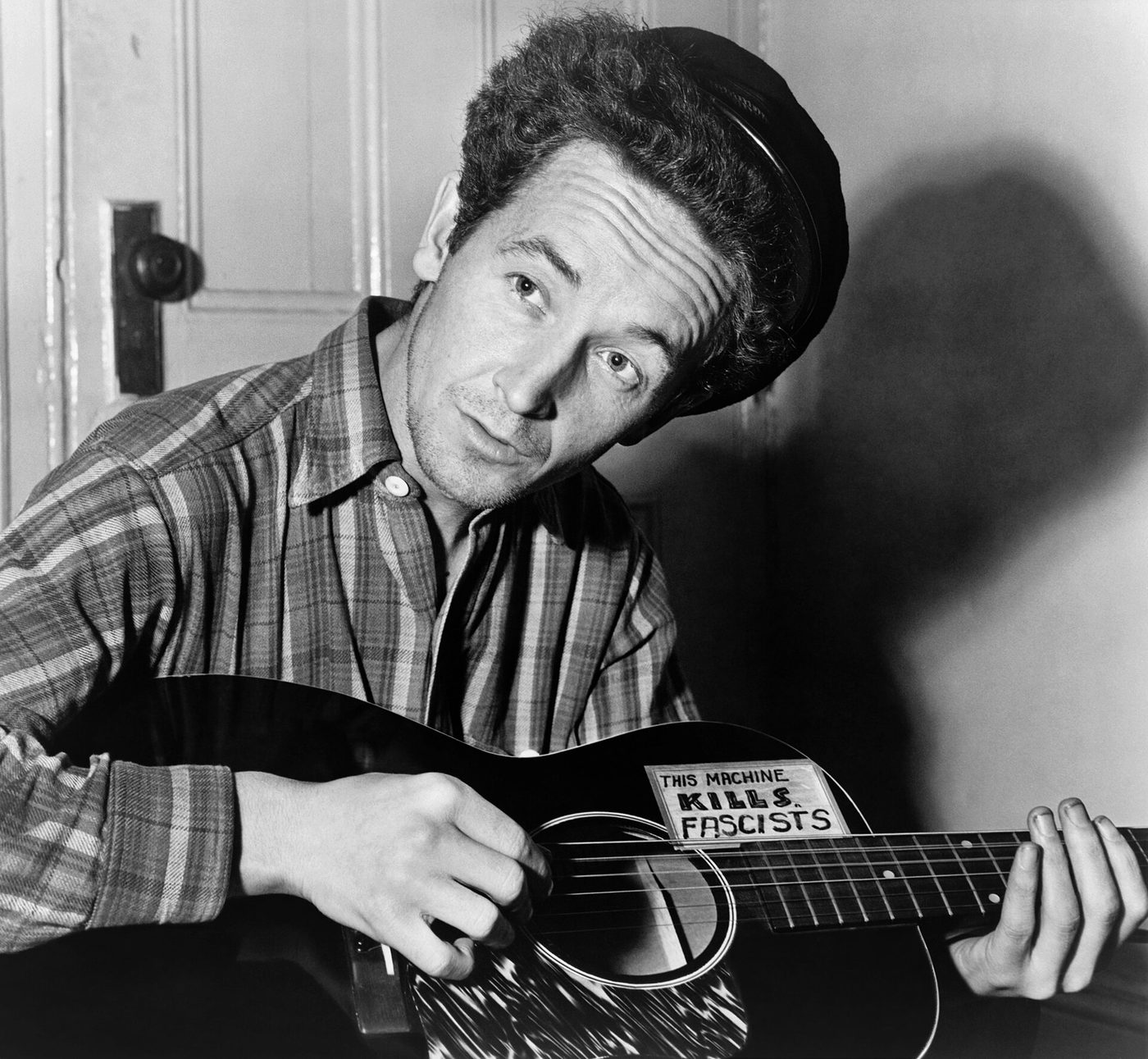
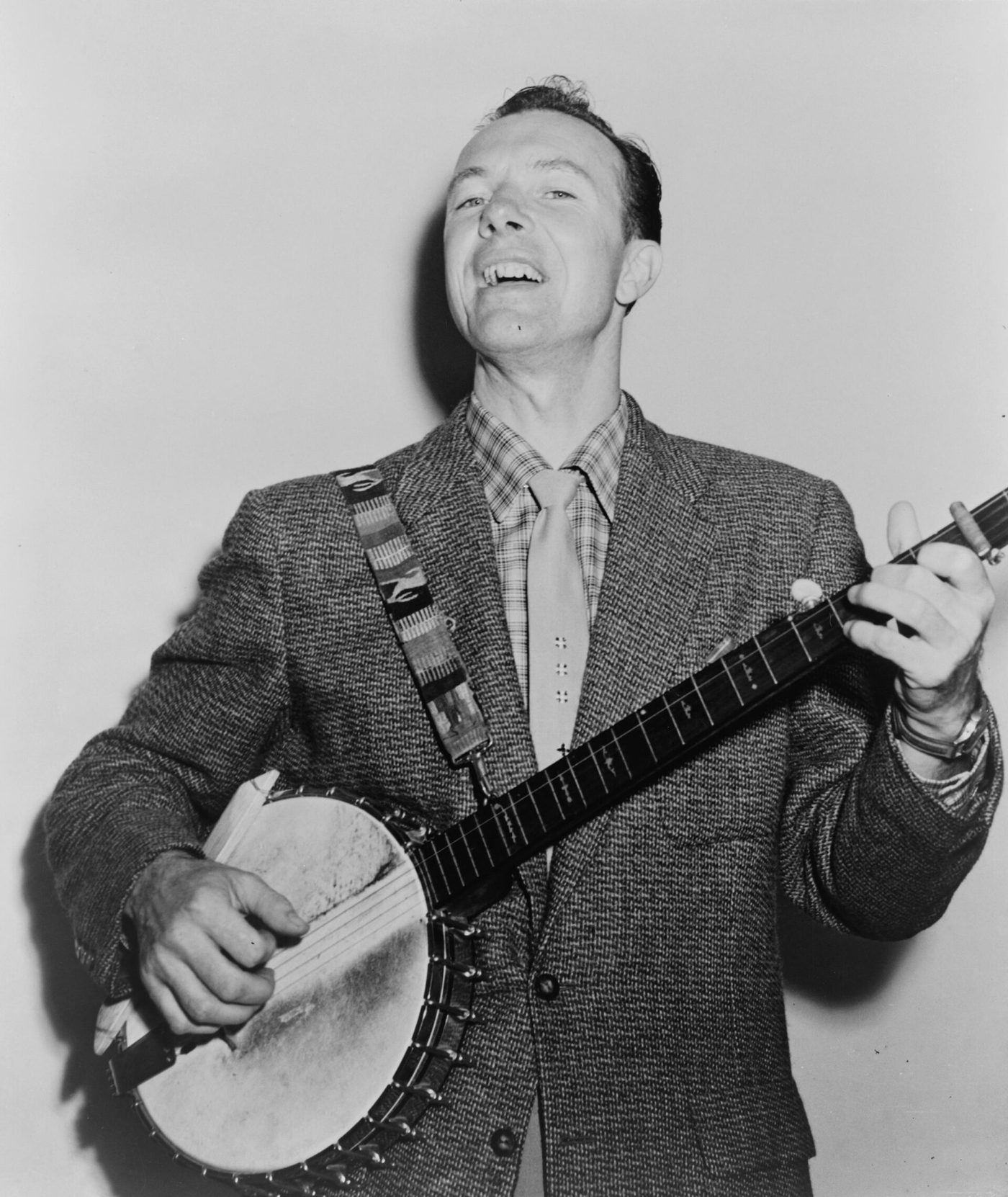
The protest singers in lesson 5 wrote for union halls and marches, and the two photographs below come from that tradition. The numbers show where song money comes from today, almost all of it from streams, and how much flows back to writers once the paperwork in lesson 7 is done.
By the numbers
- $31.7 billion: global recorded music revenue in 2025, up 6.4% and the eleventh straight year of growth, by the record industry's count. IFPI Global Music Report, 2026 (industry data)
- 837 million: users of paid music streaming subscription accounts worldwide in 2025. IFPI, 2026 (industry data)
- $17.7 billion: U.S. recorded music revenue in 2024 at estimated retail value. Streaming made up 84% of it for the third year in a row. RIAA 2024 Year-End Revenue Report (industry data)
- 43% to 2%: downloads' share of U.S. recorded music revenue at their 2012 peak and in 2024. RIAA, 2025 (industry data)
- More than $4.2 billion: total royalties The Mechanical Licensing Collective had distributed to songwriters and publishers since January 2021, as of September 29, 2026. It had more than 100,000 members. Music Business Worldwide, 2026
- 54,094: sound recording registrations by the U.S. Copyright Office in fiscal year 2024, out of 424,155 registrations of all kinds. U.S. Copyright Office Annual Report, 2024
- 1930 and 1925: songs published in 1930, such as "Georgia on My Mind" and "I Got Rhythm," and sound recordings from 1925 entered the U.S. public domain on January 1, 2026. Duke Center for the Study of the Public Domain, 2026
Current: In the News
News coverage
- "The MLC has paid out more than $4.2B to songwriters and publishers to date, and will begin market share distributions of unmatched and unclaimed royalties in April 2027", Music Business Worldwide, October 6, 2026. Unclaimed mechanical royalties go out by market share starting April 2027, so self-published writers should register songs now.
- "Universal and Sony sue Suno for a second time, claiming platform's v6 models are 'the fruit of the same poisoned tree'", Music Business Worldwide, September 18, 2026. A new lawsuit over AI training on recordings, with Suno's response that its v6 models use licensed content.
- "US Copyright Royalty Board proposes extending physical and download mechanical rates through 2032", Music Business Worldwide, July 13, 2026. Explains the proposed Phonorecords V settlement on CD and download rates, who objects, and that streaming rates are still open.
- "The MLC Launches Music Registration 101 Micro-Course Covering Copyright, Music Registration, and Royalties", The MLC, May 4, 2026. Free course on Copyright Office registration, PROs, The MLC and SoundExchange.
- "Thaler v. Perlmutter", SCOTUSblog, March 2, 2026. The Supreme Court declined to hear the case, leaving in place the rule that a work made only by AI cannot be registered.
- "ASCAP Hits All-Time High In Revenue And Royalties In 2025.", Inside Radio, February 13, 2026. ASCAP's 2025 results, a current number for the performance royalty section.
- "The cultural works becoming public domain in 2026, from Betty Boop to Nancy Drew", NPR, December 26, 2025. Names 1930 songs now free to use, such as "Georgia on My Mind" and "I Got Rhythm."
Audio and video
- "Learning Engine Video Series", U.S. Copyright Office. Free official short videos, including what musicians need to know about copyright and what the public domain is.
External resources
- "What Musicians Should Know about Copyright", U.S. Copyright Office. Official plain-language page on the two copyrights in a recording, registration benefits and registering with The MLC.
- "Group Registration of Works on an Album of Music (GRAM) (FAQ)", U.S. Copyright Office. Explains registering up to twenty songs from one album on a single application.
- "How to Register Works/Songs with The MLC", The MLC. Step-by-step guide to registering songs one at a time or in bulk so mechanical royalties can be matched.
- "Resources - Songwriters", The MLC. The MLC's hub of videos, guides and FAQs for songwriters, including how The MLC differs from a PRO.
Check yourself
1. When does a song get copyright protection in the US?
Copyright Office Circular 1 says copyright exists automatically from the moment an original work is fixed.
2. Your demo has your own song, performed only by you, and you own both. Which registration can cover the song and the recording together most cheaply?
Circular 56A allows one Single Application for both when the composition and recording are in the same recording, you are the only performer, and you own both.
3. What does registering before infringement (or within three months of publication) add?
Circular 1 says statutory damages and attorney's fees may be available when registration is made before infringement or within three months after publication.
4. What does a PRO like BMI or ASCAP collect for songwriters?
Performing rights organizations license public performances of songs and pay the writers and publishers.
5. As of January 1, 2026, which musical compositions are in the US public domain by age alone?
Duke's Center for the Study of the Public Domain reports works published in 1930 entered the public domain on January 1, 2026. Sound recordings follow different rules.
6. Is mailing yourself a copy of a song (the 'poor man's copyright') a substitute for registration?
The Copyright Office FAQ says copyright law has no provision for it and it does not replace registration.
Terms in this lesson
- Fixation
- Capturing a work in a lasting form, like a lyric sheet or a recording. Copyright attaches at that moment.
- Musical work
- The song itself: melody, harmony, rhythm and lyrics. Registered as a work of the performing arts (the PA class).
- Sound recording
- One specific recorded performance. Registered in the sound recording (SR) class.
- PRO
- Performing rights organization, such as BMI or ASCAP, which licenses public performances and pays songwriters.
- Mechanical royalty
- Money owed to the songwriter each time a song is reproduced, such as on a stream, download or CD.
- Public domain
- Works no longer under copyright, free for anyone to use.
Sources
- US Copyright Office, Circular 1: Copyright Basics checked 2026-10
- US Copyright Office, Circular 50: Copyright Registration for Musical Compositions checked 2026-10
- US Copyright Office, Circular 56A: Copyright Registration of Musical Compositions and Sound Recordings checked 2026-10
- US Copyright Office: Fees checked 2026-10
- US Copyright Office: General FAQ (poor man's copyright, registration) checked 2026-10
- US Copyright Office NewsNet: Copyright Office Releases Part 2 of Artificial Intelligence Report (January 29, 2025) checked 2026-10
- Federal Register: Copyright Registration Guidance: Works Containing Material Generated by Artificial Intelligence (March 16, 2023) checked 2026-10
- BMI: Joining FAQ checked 2026-10
- ASCAP: Join checked 2026-10
- The MLC (Mechanical Licensing Collective) checked 2026-10
- Duke Center for the Study of the Public Domain: Public Domain Day 2026 checked 2026-10